Physical Address
304 North Cardinal St.
Dorchester Center, MA 02124
Physical Address
304 North Cardinal St.
Dorchester Center, MA 02124

Discover the LGBTQ drivers making waves in F1 racing. Our listicle reveals "Who is LGBTQ in F1?"
For over seven decades, the high-speed world of professional racing remained a strictly guarded, traditional space. Remarkably, only four individuals have ever come out as openly gay throughout the entire history of the sport. This scarcity highlights the immense pressure and cultural barriers that have long defined the paddock.
In July 2024, the landscape shifted significantly when Ralf Schumacher announced his truth to the world. By becoming the fourth openly gay driver, he sparked a vital conversation about progress and representation. His decision serves as a powerful catalyst for change within a traditionally conservative environment.
As the sport evolves, fans and teams alike are beginning to embrace a more diverse future. Understanding the journey of these pioneers helps us appreciate the courage required to be authentic on the world stage. We are witnessing a new era where personal identity and professional excellence can finally coexist.
For decades, the world of racing maintained a rigid, hyper-masculine image, but that is finally beginning to evolve. The sport is currently navigating a significant cultural shift, moving away from traditional barriers toward a more open and welcoming environment for all participants.
Historically, motorsport was often viewed as a closed circle, dominated by a strictly macho culture that left little room for diverse identities. This environment made it difficult for individuals to express their true selves without fear of judgment or exclusion. Change was slow, but the industry has started to recognize that the thrill of racing should be accessible to everyone, regardless of their background.
Today, we see a refreshing wave of progress as drivers and teams become increasingly vocal about their support for the community. Diversity in Formula 1 is no longer just a buzzword; it is becoming a core value integrated into team operations and public messaging. Several key trends are currently shaping this movement:
The push for LGBTQ visibility in F1 serves as a powerful catalyst for cultural change within the paddock and among global fans. When prominent figures stand up for inclusion, it sends a clear message that the sport is evolving. This shift is essential for several reasons:
First, it creates a safer space for staff and fans who may have previously felt alienated. Second, it helps dismantle outdated stereotypes that have persisted for generations. Ultimately, prioritizing LGBTQ representation in Formula 1 ensures that the sport remains relevant and inspiring for a new, diverse generation of enthusiasts. By embracing diversity in Formula 1, the racing community proves that it is ready to lead on and off the track.
The ongoing commitment to LGBTQ visibility in F1 is not just about optics; it is about building a sustainable future. As the sport continues to grow, these efforts will remain vital to maintaining a culture of respect and belonging.
Many fans often ask, “Who is LGBTQ in F1?” when looking back at the sport’s rich, albeit hidden, history. While the modern era embraces open dialogue, the past was defined by quiet resilience and personal sacrifice. These pioneers navigated a challenging landscape where visibility was rarely an option.
Sir Stirling Moss remains a legendary figure in the world of racing. While his personal life was often kept private, his influence on the sport’s culture is undeniable. He represents an era where professional excellence was the primary focus, even as social norms began to shift behind the scenes.
Leena Gade stands out as a monumental figure in engineering and team leadership. As one of the most successful race engineers in history, she broke significant gender barriers. Her presence has been a catalyst for change, proving that talent and dedication are the only metrics that truly matter in the paddock.
The history of LGBTQ+ drivers in F1 includes individuals who faced immense pressure to remain closeted. Mike Beuttler, who competed between 1971 and 1973, is a prime example of this struggle. He raced during a time when being open about one’s identity was nearly impossible for professional athletes.
Other figures like Lella Lombardi and Mário de Araújo Cabral also left their mark on the sport. Lombardi, in particular, made history with her points-scoring finish, proving that determination knows no bounds. These LGBTQ athletes in motorsports paved the way for the more inclusive environment we see today.
Beyond the checkered flag, Formula 1 is actively shaping the conversation around equality and inclusion. The sport has evolved from a purely technical pursuit into a global platform where LGBTQ rights in Formula 1 are openly discussed and defended.
Prominent figures within the paddock have become vital voices for change. In 2021, drivers like Lewis Hamilton and Sebastian Vettel used their massive platforms to challenge discriminatory policies during the Hungarian Grand Prix.
By wearing rainbow-colored gear and speaking out against anti-LGBTQ+ legislation, these athletes brought international attention to the cause. Their actions proved that influential stars can effectively shift public discourse, even in countries with restrictive laws.
“It is important to stand up for what is right, regardless of the pressure to remain silent. We must ensure that everyone feels welcome in this sport.”
The commitment to progress is now moving beyond individual gestures toward institutional change. F1 teams and governing bodies are increasingly forming strategic partnerships with advocacy groups to foster a more welcoming environment for LGBTQ athletes in motorsports.
These collaborations focus on several key areas to ensure long-term impact:
These formal alliances demonstrate that the industry is serious about creating a culture where talent is the only metric that matters. By aligning with experts, the sport is building a foundation that supports lasting equality for all participants.
When asking who is LGBTQ in F1?, the answer is becoming increasingly visible through courageous personal choices. The sport is currently undergoing a significant cultural shift that encourages individuals to embrace their authentic selves both on and off the track.
A major milestone occurred in July 2024 when Ralf Schumacher publicly announced his relationship with his partner, Étienne Bousquet-Cassagne. This moment marked a pivotal shift for the sport, signaling that the paddock is becoming a more welcoming space for everyone.
The reaction to this news was overwhelmingly positive, highlighting a new era of acceptance. His son, David, expressed his full support, while prominent figures like Lewis Hamilton praised the move as a step forward for inclusivity. These actions help normalize the presence of LGBTQ+ drivers in F1 and staff, proving that talent and identity are not mutually exclusive.
Personal narratives are powerful tools for change within high-pressure environments like Formula 1. By sharing their lives, individuals provide a roadmap for others who may feel hesitant to live openly. This transparency fosters a culture where authenticity is celebrated rather than hidden.
The following table outlines the positive impacts of these recent cultural developments within the racing community:
| Initiative | Primary Benefit | Impact Level |
|---|---|---|
| Public Coming Out | Increased Visibility | High |
| Peer Support | Community Solidarity | High |
| Family Advocacy | Emotional Security | Medium |
Ultimately, these stories serve to liberate others within the community. As more people share their experiences, the sport continues to evolve into a more inclusive and diverse environment for future generations of racers.
Building a culture of inclusion requires more than just words; it demands active participation from every team on the grid. For decades, the sport maintained a rigid, traditional image that often felt closed off to outsiders. Today, the industry is working hard to dismantle these barriers and foster a more welcoming atmosphere for all.
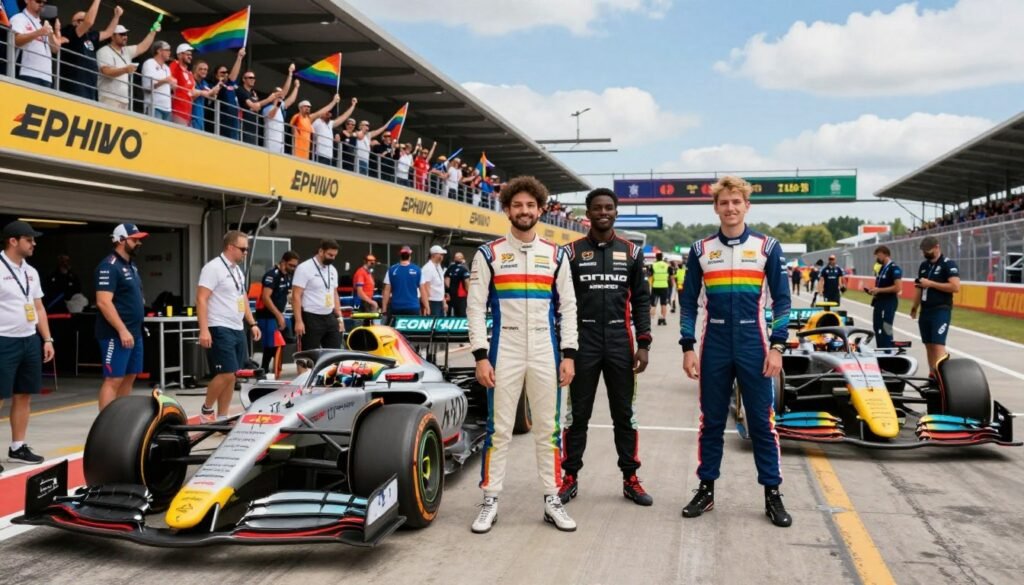
The push for diversity in Formula 1 is no longer a secondary concern; it is becoming a core part of the sport’s identity. Leaders are recognizing that a wider range of perspectives leads to better innovation and stronger team dynamics. By prioritizing these values, organizations are creating a sustainable framework where talent can thrive regardless of background.
This shift involves updating internal policies and training staff to recognize unconscious bias. These steps are essential for ensuring that LGBTQ inclusion in motorsports becomes a standard practice rather than an exception. When the environment is safe and supportive, everyone performs at their best.
Individual teams are taking bold steps to lead by example. A notable milestone occurred in June 2021, when Aston Martin announced a formal partnership with Racing Pride. This collaboration was designed to promote inclusivity and integrate advocacy directly into the team’s public branding.
Such initiatives provide a roadmap for other organizations to follow. By aligning with specialized advocacy groups, teams can ensure their efforts are authentic and impactful. Consider the following ways these programs benefit the community:
While the spotlight often shines on the cockpit, the real engine of change in Formula 1 lies within its diverse workforce. True progress requires looking beyond the drivers to the entire paddock ecosystem. Supporting LGBTQ athletes in motorsports is only one piece of a much larger puzzle that involves every person who keeps the wheels turning.
The culture of a racing team is shaped by its leadership, engineers, and strategists. When management prioritizes inclusive hiring practices, it creates a ripple effect that touches every department. By fostering an environment where staff feel safe to be their authentic selves, teams can attract the best talent from all backgrounds.
Diverse voices in decision-making positions are essential for long-term cultural change. When LGBTQ individuals hold roles in technical and management teams, they bring unique perspectives that help challenge outdated norms. This holistic approach ensures that the sport remains relevant and welcoming to everyone involved in the high-stakes world of racing.
Journalists and broadcasters play a vital role in shaping the public narrative of Formula 1. Their influence helps normalize the presence of LGBTQ athletes in motorsports by providing fair and respectful coverage. When media professionals use inclusive language, they help educate the global fanbase and promote a culture of acceptance.
Having diverse voices in the press room ensures that stories are told with depth and empathy. This representation helps dismantle stereotypes and highlights the human side of the sport. The following table outlines how different roles contribute to a more inclusive F1 environment:
| Professional Role | Primary Contribution | Impact on Inclusion |
|---|---|---|
| Team Principals | Policy Development | Sets the tone for team culture |
| Technical Engineers | Workplace Environment | Promotes collaboration and safety |
| Media Broadcasters | Public Narrative | Educates fans and reduces bias |
| Strategic Analysts | Diverse Perspectives | Challenges traditional decision-making |
Ultimately, the goal is to build a sport where talent is the only metric that matters. By empowering staff and media members, Formula 1 can continue to evolve into a more equitable space for all LGBTQ athletes in motorsports and their allies.
Beyond the roar of the engines, a vibrant community of supporters is reshaping the culture of motorsport. The LGBTQ community in Formula 1 has found an unexpected but powerful ally in the global fan base. These supporters are no longer just passive spectators; they are active participants in the push for a more inclusive paddock.
Modern fandom has evolved into a digital and physical force that demands accountability and progress. Through social media platforms, fans organize, share stories, and amplify messages of equality that reach the highest levels of the sport. This engagement creates a supportive atmosphere that is impossible for teams and governing bodies to ignore.
The relationship between fans and drivers is deeply reciprocal. When fans show unwavering support for diversity, it provides a safety net for those who wish to live authentically. This validation is crucial for athletes who might otherwise feel isolated in a high-pressure environment.
Authenticity is a powerful tool for change. When drivers feel the backing of a massive, inclusive fan base, they are more empowered to advocate for LGBTQ rights in Formula 1. This collective energy transforms the sport into a space where everyone feels welcome to compete and succeed.
Major events throughout the season have become vital touchpoints for the LGBTQ community in Formula 1. These gatherings serve as more than just celebrations; they act as public declarations of the sport’s commitment to evolving alongside modern societal values. By integrating these moments into the race calendar, the industry ensures that inclusion remains a priority.
Pride-themed events provide a unique platform for education and awareness regarding the challenges faced by marginalized groups. These initiatives help normalize conversations about identity within the paddock and among the global fanbase. Visibility is the first step toward true acceptance, and these events ensure that the sport remains welcoming to all.
When teams and organizers host these events, they send a powerful message of support. This increased LGBTQ visibility in F1 helps dismantle outdated stereotypes that once hindered progress. It creates a space where fans and staff feel empowered to bring their authentic selves to the track.
Beyond symbolic gestures, the sport has invested in tangible change through strategic charity partnerships. These collaborations help fund essential programs that support diversity and inclusion in racing at every level. By providing financial backing, F1 ensures that the next generation of talent has a fair path forward.
These initiatives often focus on grassroots development and educational outreach. They aim to remove barriers for underrepresented groups, ensuring that the LGBTQ community in Formula 1 has access to the same opportunities as their peers. The following table highlights how these efforts create a lasting impact on the sport.
| Initiative Type | Primary Goal | Impact Level |
|---|---|---|
| Pride Awareness | Education & Visibility | High |
| Diversity Grants | Financial Support | Medium |
| Mentorship Programs | Career Development | High |
| Inclusive Policy | Systemic Change | Very High |
Formula 1 stands at a pivotal crossroads where it must decide how to foster true inclusivity for all. While the sport has made strides, systemic change is required to move beyond temporary awareness campaigns. Ensuring that LGBTQ representation in Formula 1 becomes a standard reality rather than a seasonal highlight is the next great challenge.
The industry must address the lack of diversity in technical and leadership roles. Currently, many teams lack formal structures to support minority staff members, which can lead to isolation. Improving LGBTQ inclusion in motorsports requires a top-down approach where leadership actively recruits from diverse talent pools.
Furthermore, the sport needs to standardize its approach to LGBTQ rights in Formula 1 across all global race locations. Consistency is vital to ensure that every team member feels safe, regardless of the country hosting the Grand Prix.
“True inclusion is not just about being invited to the table; it is about having a voice that is heard and respected in every decision-making process.”
To build a more equitable future, teams should implement mandatory diversity and sensitivity training for all personnel. Establishing clear, enforceable policies against discrimination will provide a safer environment for everyone. Mentorship programs can also help bridge the gap for underrepresented groups looking to enter the engineering and management sectors.
| Strategy | Current Status | Future Goal |
|---|---|---|
| Diversity Training | Optional/Ad-hoc | Mandatory/Annual |
| Anti-Discrimination Policy | General Guidelines | Strict Enforcement |
| Recruitment Focus | Traditional Networks | Inclusive Outreach |
By adopting these strategies, the sport can solidify its position as a global leader in athletic competition. Prioritizing LGBTQ inclusion in motorsports will ultimately attract a broader, more loyal fan base. The commitment to LGBTQ rights in Formula 1 must remain a permanent fixture of the sport’s evolving culture.
Understanding the path toward a more inclusive sport starts with the voices of those who live it every day. Real progress in Diversity in Formula 1 requires more than just policy changes; it demands a fundamental shift in how the paddock views identity and belonging. By engaging with those at the heart of this movement, we gain a clearer picture of the work still ahead.
Industry leaders emphasize that structural support is the backbone of any meaningful cultural evolution. Many executives now recognize that the LGBTQ community in Formula 1 deserves a safe, welcoming environment that fosters both professional and personal growth. These leaders are actively working to dismantle outdated barriers that have historically hindered progress.
When discussing the impact of visible support, many point to the collective efforts of the grid. As noted in recent discussions, it sends such a positive message when drivers lead for marginalized groups. This top-down advocacy creates a ripple effect that encourages staff and fans alike to embrace a more inclusive mindset.
For many, the conversation is deeply personal and centers on the need for authentic representation. Advocates often highlight that while the presence of LGBTQ+ drivers in F1 is a vital goal, the daily experience of mechanics, engineers, and media personnel is equally important. Transparency remains a key demand for those pushing for lasting change.
These voices remind us that inclusion is not a destination but a continuous process of learning and adaptation. By amplifying these perspectives, the sport can better address the unique challenges faced by individuals within the community. The following table outlines the primary focus areas identified by these advocates for future growth.
| Focus Area | Primary Objective | Expected Outcome |
|---|---|---|
| Policy Reform | Inclusive hiring practices | Diverse talent pipeline |
| Education | Sensitivity training | Reduced unconscious bias |
| Visibility | Public allyship | Stronger community trust |
| Accountability | Annual progress reports | Measurable cultural shifts |
Building a welcoming environment requires access to the right tools and information. Fans and teams can drive meaningful progress by engaging with established networks that prioritize equality on and off the track.
Organizations like Racing Pride serve as vital hubs for those seeking to support LGBTQ representation in Formula 1. These groups offer mentorship, networking opportunities, and a platform for voices that have historically remained unheard in the paddock.
Awareness programs play a critical role in shifting the culture of the sport. By participating in workshops and diversity training, stakeholders gain the skills needed to foster genuine LGBTQ inclusion in motorsports. These educational efforts ensure that every team member feels valued and respected.
Real change relies on the active participation of the entire racing community. You can help shape a more equitable future by staying informed and supporting these ongoing initiatives. The journey toward a truly inclusive sport is a shared responsibility that continues with every race weekend.