
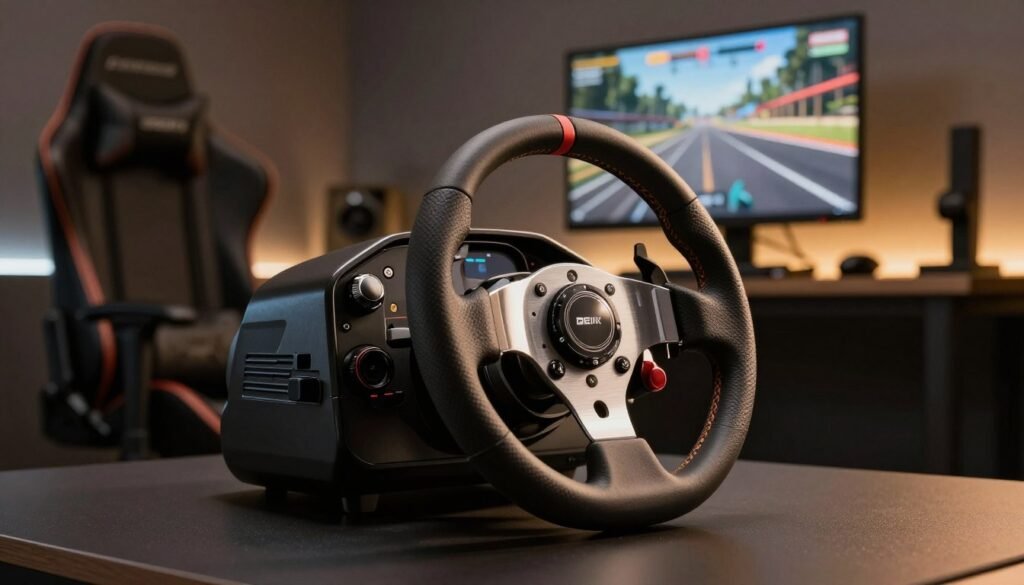
Surprising stat: in the last three years, entry prices for serious sim racing wheel bases fell by nearly 40%, making high-torque setups common in home rigs.
That shift changes how you buy. You don’t just want a great base today — you want a setup that sells later without major loss. Brands like Fanatec and MOZA now compete with premium names such as Simucube and Asetek, and choices have widened fast.
You’ll learn how to pick an ecosystem that stays liquid in the US market. I’ll answer the question, “What is the best direct drive wheel to buy?” by matching budget and future resale goals in later sections.
Quick preview: resale is less about one model and more about platform compatibility, quick-release rims, and sensible torque targets. Too much torque or niche features can make a wheel hard to sell, even if it feels amazing.
Key Takeaways
- Prices dropped; more buyers now consider high-quality wheel bases.
- Resale depends on ecosystem choice, not just a single model.
- Pick common quick-release patterns and platform-friendly parts.
- Match torque and features to mainstream demand, not extremes.
- Later chapters will map budgets to resale-friendly buying steps.
Best direct drive ecosystem for resale value: what actually holds value in today’s market
Picking gear that sells fast is more about the platform around a wheel than raw torque numbers. You want parts that a broad pool of buyers recognize and trust.
Why the platform matters more than the base alone
Resale value here means how quickly you sell, how many offers you get, and how little haggling follows—not MSRP. A base with common quick-release patterns, widely compatible rims, and steady firmware updates holds interest longer.
Mainstream demand vs niche premium
Mainstream products move fastest in the US market. Brands that support lots of wheels, pedals, and adapters create buyers. Niche premium setups fetch higher price tags but sell slower and invite more scrutiny.
Hidden resale killers to avoid
- Proprietary lock-in that only works with one brand’s wheels.
- Old quick releases that develop play after years (Fanatec QR1 is a common caution).
- Poor firmware support or dropped products that scare secondhand buyers.
Buy smart now: pick a base and wheels with clear upgrade paths and strong support so your kit sells quickly. If you want help choosing, choose the right wheel that fits both your needs and future liquidity.
Direct drive basics you need before you buy
Start by seeing why the steering shaft and motor pairing changes every feedback cue you feel.
What it is: a direct drive setup mounts the motor to the wheel shaft so the torque moves the rim with a 1:1 link. That means the road feels less filtered and more immediate.
Why it feels more detailed: you get clearer road texture, sharper weight-transfer hints, and earlier tire-slip warnings. Those micro cues help you push harder and correct faster on track.
Compare belt and gear systems: belts can stretch and blur subtle signals. Gears add backlash and can feel clunky. Both types act like a low-pass filter on force feedback.
- Motor-to-shaft = faster, cleaner feedback.
- Belts smooth but lose fidelity over time.
- Gears may introduce play and damp tiny cues.
| System | Feel | Typical buyers |
|---|---|---|
| Motor-on-shaft | High detail, sharp cues | Serious sim racers |
| Belt | Smoother, less fine detail | Casual to mid-level users |
| Gear | Stiff, possible backlash | Budget or legacy setups |
Practical note: detail comes from engineering and firmware as much as torque. If you want car-like feedback without overspending, aim for a balanced setup that emphasizes signal quality and parts compatibility.
Resale-first checklist: the factors buyers look for on the used market
Think like a used buyer: what questions will make or break a sale when you list your wheel base?
Start simple. Buyers scan listings for torque output that fits common rigs, broad compatibility, and signs of care.
What sells fastest
- Torque tiers: mid-range torque often hits the largest pool—too low limits appeal, too high narrows buyers.
- Compatibility: PC plus console licenses widen interest and speed listings.
- Quick-release quality: any play is a deal breaker; it lowers perceived quality and muddles force feedback.
Support and parts
Firmware update history matters. Buyers pay more when a base gets steady updates that improve feedback and fix bugs over time.
“Quick-release play reduces detail and buyer confidence; firmware updates can meaningfully change feel.”
| Factor | Why it matters | Seller tip |
|---|---|---|
| Torque output | Matches buyer rigs and expectations | List measured output and usable range |
| Compatibility | Wider buyer pool | Note PC/PlayStation/Xbox support clearly |
| Quick release quality | Affects feedback clarity | Show close photos and state play/noise |
Buyer questions to expect: Does it have firmware updates? Any play on the QR? Which wheels and pedals fit?
Torque and value: how much Nm you should pay for in 2026
Picking a torque range is less about the biggest number and more about usable performance. You want a wheel that delivers clear force feedback without forcing you to buy a heavy rig or overspend.
The practical sweet spot most sim racers settle into
Most adults find 10–15 Nm gives the best balance of detail and comfort. That range preserves subtle feedback while still feeling substantial on long sessions.
Why more torque doesn’t always mean better force feedback
Strength alone doesn’t equal quality. Motor design, signal processing, quick-release rigidity, and tuning shape how feedback translates to the rim.
“Diminishing returns show up early—engineering matters more than headline Nm.”
Entry-level ranges and what they’re best at
Entry-level direct drive kits often sit around 3–6 Nm. They are ideal for learning, casual sim racing, and smaller rigs, but they lack headroom for heavy corrections.
- 3–6 Nm: learning and drifting basics.
- 7–9 Nm: confident lap times, more headroom.
- 10–15 Nm: broad appeal, best mix of feel and market demand.
Is 3.9 Nm enough for sim drifting? You’ll get a direct answer next, tied to how much headroom you need.
Is 3.9 Nm enough for sim drifting with a direct drive wheel?
Torque isn’t just a number—it’s the feel you trust when you countersteer mid-slide. At 3.9 Nm (the MOZA R3 peak spec), you get a true entry-level direct drive experience that teaches technique without overwhelming your rig.
Yes—3.9 Nm can be enough to learn sim drifting and have fun. Expect a lighter wheel feel, gentler snap on transitions, and less automatic self-centering. That makes it a solid “minimum viable” setup for consistent countersteer authority.
Still, many drifters upgrade to 5–8 Nm for extra headroom. The extra strength helps the wheel recover faster during long slides and keeps feedback clearer when you need rapid corrections.
How drifting priorities differ from other styles
Drifting values quick, readable feedback about wheel angle and slip. GT3 prefers steady weight and nuance. Rally needs sudden hits and suspension cues. Open-wheel demands razor-sharp, high-detail feedback.
| Torque Tier | Typical Drift Feel | Who it’s best suited to |
|---|---|---|
| 3.9 Nm | Light, teachable, less headroom | Beginners, casual drifters, Xbox-friendly rigs |
| 5–8 Nm | Noticeably firmer, faster recovery | Committed drifters, club racers |
| 10–15 Nm | Heavy, detailed, wide usability | Serious sim racers, multi-discipline use |
When to upgrade
Upgrade trigger list:
- Persistent fatigue from light wheel feel
- Frequent clipping or loss of control on long slides
- Slow transitions or lack of self-recovery
- You want a heavier, more car-like sensation
“3.9 Nm is a great learning tool; step up when you need faster self-steer and more control headroom.”
What is the lifespan of a direct drive wheel base?
A wheel’s usable life depends less on a headline spec and more on build quality, support, and what you maintain. Expect a well-made base to serve you for 5–10 years of regular home use before major parts need replacement or service.
Why that range? Motor-on-shaft designs reduce mechanical wear because they omit belts and gears that stretch or grind. Industrial-style motors and solid encoders mean the core hardware often outlives the plastics and fasteners around it.
What actually fails first
The usual culprits are small, not the motor.
- Quick releases can develop play after years—tightness and wear matter more than model names.
- Cable connectors and strain points get stressed by daily plug cycles.
- Mounting bolts and brackets loosen or dent with repeated setup changes.
How firmware changes your ownership time
Good firmware support can extend a base’s useful life dramatically. Updates tune feedback, add compatibility, and fix bugs that would otherwise make a unit feel dated.
Conversely, abandoned firmware shortens useful time and hurts buyer confidence when you sell.
Simple maintenance that protects your price later
Use correct torque on mounts, route cables with strain relief, clean quick releases, and keep original boxes and documentation.
“A cared-for base with recent firmware updates tells a buyer it’s worth a fair price.”
Tie lifespan to your exit plan: the longer the product stays supported and the fewer worn parts you show, the easier it is to sell at a good price when the time comes.
Console compatibility in the US: the easiest way to protect resale value
A quick compatibility check saves you time and price cuts later. Console support widens your buyer pool in the US market and keeps listings competitive. If a base works on PlayStation and Xbox, more buyers will notice your ad.
Why PlayStation support narrows choices fast
PlayStation-ready options are limited. Practically only a few brands—Fanatec and Logitech—offer wheel bases that officially support PlayStation. That makes PlayStation-compatible products easier to sell if you pick common models.
Xbox: base vs wheel-rim licensing realities
Xbox compatibility can be tricky. Some companies bake support into the base. Others require an Xbox-licensed rim to unlock console use.
Example: Fanatec and Logitech often provide base-level Xbox support. MOZA’s R3 can appear on Xbox lists but only when paired with licensed wheels.
Practical buying tips: choose a base that lists PC and both consoles, keep original boxes, and document licenses. That protects price stability when you sell.
| Console | Common brands | What to verify |
|---|---|---|
| PlayStation | Fanatec, Logitech | Official PS support on base, firmware updates |
| Xbox | Fanatec, Logitech, MOZA (R3) | Base support vs rim-locked licensing |
| PC | All brands | Driver support, firmware, peripheral compatibility |
Compatibility checklist (screenshot this):
- Console support listed on company site (PS/Xbox/PC).
- Which part controls licensing: base or rim?
- Firmware update history and active support.
- Included cables, adapters, and official license evidence.
Fanatec ecosystem and resale value: when it’s the safest bet
Many used buyers scan ads for known names and clear console support before they read torque numbers. Fanatec often behaves like that default option in US listings.
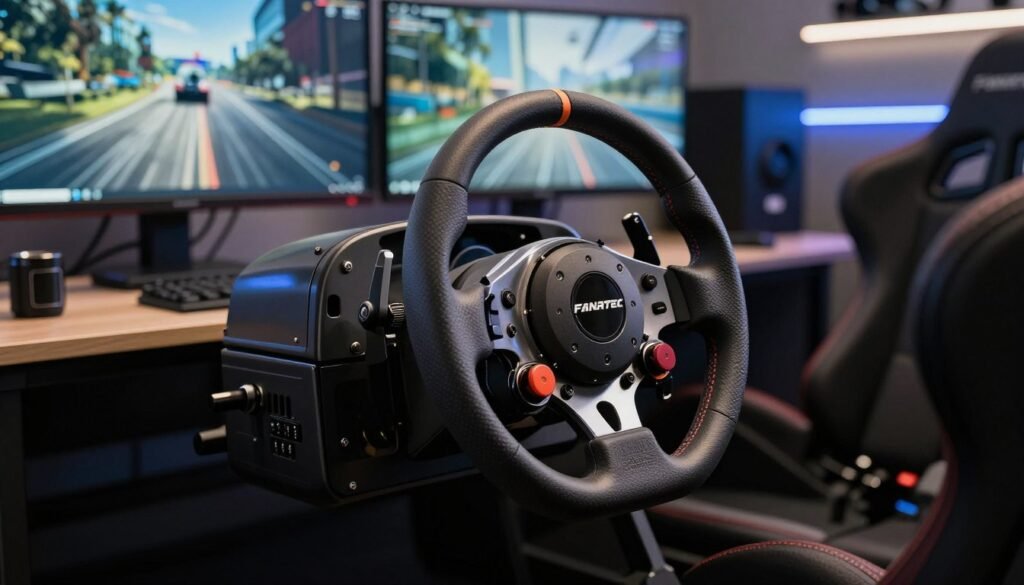
Where Fanatec shines in the market
Recognition matters. Your listing gets more views when buyers already own compatible wheels and pedals from the same brand. That familiarity speeds sales and reduces haggling.
Liquid bases and who buys them
- CSL DD (5–8 Nm) — entry-to-mid buyers wanting gentle headroom.
- GT DD Pro (8 Nm, PS5) — console-first racers who want official compatibility.
- ClubSport DD (12 Nm) — serious sim users who seek stronger performance.
- ClubSport DD+ (15 Nm, PS) — heavy-duty buyers chasing high torque and longevity.
Known gotchas that affect final price
Factor these in: add-on costs for wheels and adapters, older QR1 wear, and missing power supplies. A used listing that shows firmware updates and original boxes nets a higher price.
| Base | Torque | Main buyer | Sell note |
|---|---|---|---|
| CSL DD | 5–8 Nm | Entry to mid | Fast turnover, lower asking price |
| GT DD Pro | 8 Nm | Console users | Good liquidity if PS support listed |
| ClubSport DD | 12 Nm | Enthusiasts | Holds price if well maintained |
| ClubSport DD+ | 15 Nm | Serious racers | Top tier, buyers expect full kit |
How to vet a used Fanatec listing: check QR condition, confirm included power supplies and boost mode, verify firmware state, and keep original packaging. Do that and you protect your asking price when it’s time to sell.
Is Moza better than Fanatec for your next direct drive setup?
MOZA Racing often wins on headline price-to-torque, while Fanatec wins on wide buyer recognition and console reach.
Price-to-torque value: where MOZA competes hardest
In raw performance-per-dollar terms, MOZA gives strong torque options at aggressive price points. Models like the R12 (about 12 Nm) make it tempting if you want more Nm for less cash.
Compatibility differences that affect your future upgrades
Fanatec has broader console coverage and a deeper line of wheels and bases. That eases upgrades and widens the pool of buyers if you sell later.
MOZA is improving firmware and adding products, but console support remains more limited. If you’re PC-first, MOZA’s price-to-torque trade-off can be a smart path.
Resale reality: demand, support momentum, and buyer confidence
Resale depends on recognition and ongoing support. Fanatec usually moves faster in the US market. MOZA resale relies on local awareness and steady firmware updates to build trust.
“Separate performance-per-dollar from market liquidity when you decide.”
| Pick | When to choose | Why |
|---|---|---|
| MOZA Racing | PC-first, want torque per dollar | Strong price-to-torque, improving firmware |
| Fanatec | Console owners, easier resale | Broader support, known buyer base |
Decision tree: If you want max torque per price and will stick to PC, lean MOZA. If you need console compatibility and easier listings later, lean Fanatec. For a focused comparison, see the MOZA R5 vs Fanatec CSL DD review.
Is MOZA a Chinese brand, and does it impact quality or resale?
Short answer: MOZA is China-based, yet that fact rarely decides a used buyer’s offer alone. What buyers actually weigh is support, documented condition, and how well the company maintains firmware and parts supply over time.
What buyers typically assume and what actually matters
Many assume a China-based company will have lower quality or scarce spare parts. That belief can make some buyers cautious.
Reality: community feedback, steady firmware updates, and clear parts lists matter far more than origin. If the brand shows active support and solid product reviews, buyers grow confident quickly.
How to protect price with documentation and condition
Keep receipts, serial numbers, and a short changelog of firmware versions. Note any repairs and include clear photos of connectors and the quick release.
Condition tips: keep original boxes, avoid cosmetic dings, and show proof of gentle use. These small details cut negotiation time and back up your asking price.
Warranty transferability and transparent terms
If a company allows warranty transfer, mention it in your listing and attach proof. If warranties don’t transfer, be upfront and list firmware history and parts availability instead.
Practical takeaway: you can buy moza racing gear confidently if you treat it like an asset: document it, keep it neat, and show active support links. That approach protects market interest much more than the brand’s origin.
Why Simagic is better than MOZA for some sim racers
Not every high-torque option is the same—what you prefer in feel and finish matters a lot when you later list your gear. Simagic often leans toward an industrial, servo-like character that some users and buyers equate with higher fidelity and predictability.
Servo-motor “character” vs smoother outrunner feel
Simagic uses servo-style motors that deliver a more immediate, punchy response. That translates to crisper force feedback and quicker recovery during rapid transitions.
Outrunner-style motors, common on some moza racing models, tend to feel smoother and more forgiving. That’s pleasant for casual sessions but can blur micro cues when you push hard.
Buyers notice tight encoders and low-latency response. Simagic’s encoder/response positioning often reads as more “pro” because it prioritizes rigidity and repeatable feedback over soft damping.
That perception affects used-market interest: listings that advertise solid encoder specs and clean, tight quick releases draw more attention from serious sim racers.
Alpha Mini vs Alpha vs Alpha‑U — what moves fastest
| Model | Typical buyer | Market note |
|---|---|---|
| Alpha Mini | Entry to confident hobbyists | Fast turnover; broad appeal |
| Alpha | Club racers, experienced users | Balanced demand; steady pricing |
| Alpha‑U | Pro-level, hotlap seekers | Tougher to sell quickly; attracts premium offers |
Practical cautions
Simagic can cost more up front and local demand varies. Your success depends on condition, firmware history, and how clearly you list specs and photos.
“If you want a more raw, industrial motor feel and buyers who prize crisp feedback, Simagic can be the smarter pick.”
High-end ecosystems with strong long-term value: Simucube and Asetek
Top-tier bases often sell to buyers who prize engineering and long-term firmware support over headline torque numbers. If you want gear that holds interest among pro users, these brands sit at the top of the market.
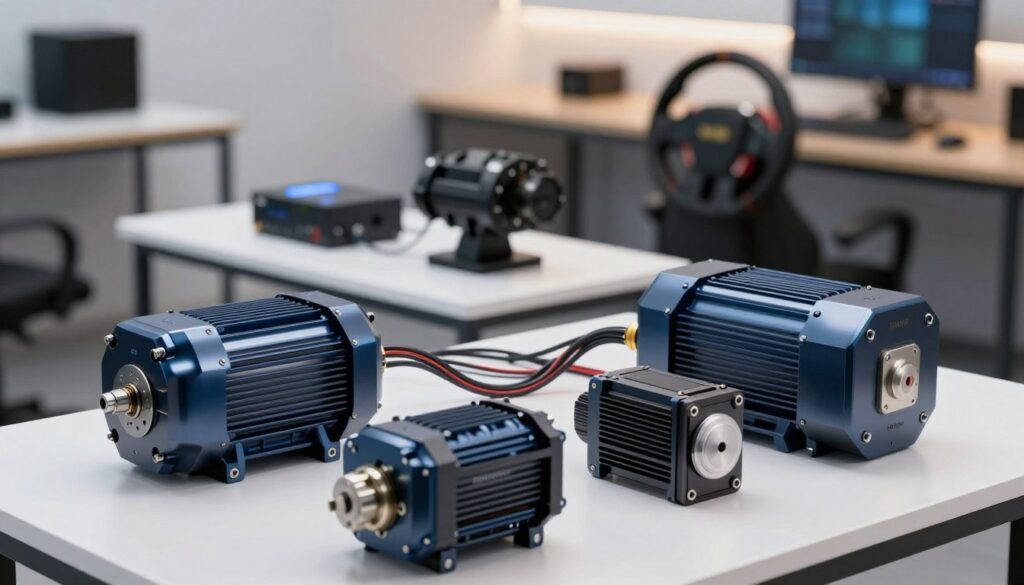
Who should choose Simucube 2 Sport, Pro, or Ultimate
Simucube buyers are usually riders with heavy rigs, a taste for precise force feedback, and a plan to keep their kit for several years.
The Sport, Pro, and Ultimate tiers scale from usable high-end performance to pro-grade torque (up to 32 Nm). Sellers and buyers expect excellent firmware, tight encoders, and premium build quality.
Asetek La Prima, Forte, and Invicta — where they sit
Asetek aims to blend price and high performance. La Prima, Forte, and Invicta top out around 27 Nm and offer strong feedback tuning and modern technology.
If you prefer raw torque per price and top-tier engineering, these bases deliver a confident wheel feel that appeals to advanced users.
When premium makes sense vs diminishing returns
Diminishing returns are real: most racers get the majority of the driving experience below flagship tiers. More torque is mainly extra headroom and fidelity, not a guaranteed lap-time gain.
Simple rule: buy premium when you plan to keep the unit long, need pro-level tuning, and accept a smaller buyer pool at resale.
| Brand | Top torque | Buyer note |
|---|---|---|
| Simucube 2 Ultimate | 32 Nm | Pro rigs, long-term support expected |
| Asetek Invicta | 27 Nm | High performance with competitive price |
| Midrange alternatives | 10–15 Nm | Wider market, easier to sell |
Mid-range ecosystems that move quickly on Facebook Marketplace and eBay
Mid-range bases in the 12–15 Nm bracket hit the sweet spot between usable performance and broad market appeal. That torque range gives most adults enough headroom without scaring buyers who worry about rig strength or extra costs.
Why 12–15 Nm sells fast
Practical headroom: 12–15 Nm feels substantial on track but doesn’t demand industrial mounts or heavy frames. Buyers see this as a real upgrade without flagship price tags.
Market demand: US shoppers often search this torque range because it matches daily comfort, performance, and expected longevity.
Fanatec ClubSport DD/DD+ vs MOZA R12 vs Simagic Alpha
Compare the three in plain terms:
- Fanatec ClubSport DD / DD+ (12–15 Nm): Broad wheel compatibility, strong firmware history, and the DD+’s PlayStation listing make it easier to sell to console households.
- MOZA R12 (12 Nm): Very competitive price-to-torque ratio and solid PC performance. It appeals to buyers who prioritize performance per dollar and don’t need PlayStation support.
- Simagic Alpha (15 Nm): Punchier, servo-like feel that attracts serious sim racing users. It trades slightly slower turnover for buyers seeking crisp feedback and quality components.
Listing checklist to sell quickly
When you post on Marketplace or eBay, include these items to justify your price and cut negotiation:
- Original power supply and mounting hardware.
- Quick-release type and condition photos (show no play).
- Firmware version and any included console licenses.
- Notes on performance feel and typical use (lightly used, garage-kept).
Pricing stance: Position your asking price near recent completed listings, then highlight included accessories and clear photos to keep offers serious. In this mid-range segment, accessories and platform compatibility often decide the final sale.
Best direct drive wheel to buy right now based on your budget and goals
Aim at setups that balance price, torque, and broad compatibility to keep offers coming. Below are four practical, resale-minded picks so you can match a purchase to your budget and exit plan.
Entry-level pick that stays liquid
Fanatec CSL DD (5–8 Nm) — low price, familiar name, and broad market interest. Who it’s for: budget buyers who want usable torque and quick turnaround when selling. Who should skip: you want heavy headroom or pro-tuned feedback.
All-around choice: torque, features, and stable listings
MOZA R12 or Logitech G Pro (11–12 Nm) — solid torque, modern quick-release standards, and broad appeal. Who it’s for: you want strong performance without chasing flagship prices. Who should skip: strict console-only buyers seeking official PS support.
Console-first pick with painless compatibility
Fanatec GT DD Pro / ClubSport DD+ (8–15 Nm) — clear PlayStation support and wide accessory fit. Who it’s for: PS owners who want easy resale listings. Who should skip: PC-only users chasing max torque per dollar.
PC-performance pick that still sells well
MOZA R3 (3.9 Nm) or ClubSport DD+ (15 Nm) — choose R3 if budget or Xbox use matters; choose ClubSport DD+ if you want strong headroom and confident buyers. Who it’s for: PC-first racers who value performance and documented condition. Who should skip: buyers who need console licensing included.
| Pick | Torque | Platform | Quick notes |
|---|---|---|---|
| Fanatec CSL DD | 5–8 Nm | PC/console (varies) | Liquid listings; budget-friendly |
| MOZA R12 / Logitech G Pro | 11–12 Nm | PC (G Pro also broad) | Balanced performance and features |
| Fanatec GT DD Pro / ClubSport DD+ | 8–15 Nm | PlayStation & PC | Console-friendly; easier to sell |
| MOZA R3 | 3.9 Nm | PC/Xbox (check licensing) | Entry direct drive experience; low price |
How to buy smart for resale: bundles, timing, and condition strategy
Smart buying means thinking like a future seller the moment you hit checkout. That mindset changes which products you keep, how you package them, and when you sell.
When bundles help: a complete setup can attract new sim buyers who want one-stop shopping. Bundles with compatible wheels, pedals, and a tidy mount often command a higher asking price and faster sales.
When bundles limit your buyer pool
Experienced buyers often want the base alone or specific rims. Too many extras can narrow interest and reduce offers.
What to keep in the box
- Original boxes and manuals — they raise trust.
- Power supplies, extra bolts, and adapters — small parts remove buyer friction.
- Quick-release parts and any branded licenses or receipts.
- Clear photos of serial numbers and firmware/version screenshots.
Timing and pricing strategy in the US market
Sell before a new model floods listings. Shop during sales or just after a new launch when older models dip; sell in the months before that next-gen release to capture better price.
| When to buy | When to sell | Why it matters |
|---|---|---|
| During promo cycles | Before new model releases | Protects your asking price and shortens time on market |
| When console licensing is clear | When local demand is high (holiday season) | Wider buyer pool, easier to price competitively |
How to price for a fast, fair sale: account for shipping and platform fees (eBay, Marketplace), check recent completed listings, and set a slight room for negotiation. Be honest about wear — listings with transparency close quicker and attract less haggling.
“Overpricing based on what you paid is the most common mistake; price by current market signals, not emotions.”
Conclusion
When you buy a wheel today, you’re also choosing who might buy it later.
Pick by platform, not just torque. A well-supported base with modern quick releases and clear console notes holds interest in the US market. A 3.9 Nm entry unit can teach drifting, but 5–8 Nm gives safer headroom and broader appeal.
Build quality and connector condition matter more than origin. MOZA’s country of manufacture rarely hurts a sale when firmware and parts are steady. Simagic often attracts buyers who prize a punchier, premium feel.
Practical next steps: decide your platform, pick a torque tier, confirm quick-release generation, and keep firmware receipts and boxes. That way your sim racing setup gives great feedback now and sells with less hassle later.