Physical Address
304 North Cardinal St.
Dorchester Center, MA 02124
Physical Address
304 North Cardinal St.
Dorchester Center, MA 02124

Explore the surprising similarities between sim racing and real-life driving in this insightful listicle. Discover how "Is sim racing close to real life?"
Did you know over 80% of pro Formula 1 drivers now spend more time in digital cockpits than on real tracks? This change shows how big tech has made a difference. Modern technology has made home setups feel like real cars.
Many fans ask if these virtual experiences really feel like real racing. We look into how advanced tech and top-notch gear help drivers feel like they’re on the track. Is sim racing close to real life? We talk to experts to see if this digital world is a real training ground for future champions.
Today, playing games and learning to drive are closer than ever. What was once just for fun has grown into a serious skill. It needs precision, focus, and a good grasp of how cars work.
This change has made us see sim racing realism in a new light. It’s not just for fun anymore. It’s about learning to drive well from home.
Sim racing is a special kind of gaming. It focuses on real car physics and how cars move. Unlike games that are all about speed, sim racing tries to feel like the real thing.
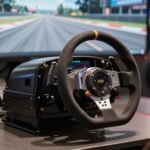
Players use special gear like steering wheels and pedals. This lets them feel the road, how tires grip, and how the car moves. These are key parts of sim racing realism.
The journey of sim racing has been amazing. It’s gone from simple graphics to very real-looking worlds. Early games were just about racing, but now they offer a complete training space for all.
Drivers like Scott Mansell use games like iRacing and Project CARS to get better. These games help them learn tracks and stay focused for real races.
By using these advanced games, drivers can practice without spending a lot on real tracks. This shows how sim racing realism is closing the gap between virtual and real racing.
The link between virtual racing and real racing is based on exact physics. Modern software makers work hard to make sure every action by the driver feels real on screen. This focus on realistic driving simulation makes a big difference between fun games and serious training tools.
At the core of any top simulator is the detailed math of the car. Engineers figure out how weight moves when you brake hard, how tires slip on wet roads, and how suspension affects turns. When you check out the most realistic driving sim, you’re dealing with a complex physics engine.
These systems handle things like fuel, tire wear, and air resistance. By simulating these forces, drivers must adjust their driving just like in a real race car. Getting good at these dynamics is key for anyone wanting to get faster.
The setting around the car is also very important. Now, advanced laser-scanning tech is used to map real tracks very accurately. This ensures every bump, curb, and curve is just right, down to a few millimeters.
This high sim racing accuracy lets drivers learn exact braking and steering moves for real tracks. When you hit a curb in the game, the feedback you get is thanks to that careful mapping. It’s this focus on details that makes modern simulators a must-have for future racers.
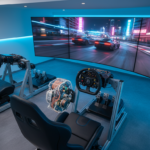
To get a realistic driving simulation, you need more than a fast computer and a steering wheel. It’s about mixing software and hardware in a special way. This mix lets fans feel like they’re racing from home.
Good visuals are key for feeling like you’re in the race. Modern simulators use cool tech to make tracks and weather look real. When you see the track change under your tires, it feels like you’re really racing.
Sound is also super important. High-quality sound lets you hear the engine, tires, and wind. These sounds help you know what’s happening with your car.
While visuals set the scene, force feedback systems connect you to the car. They turn digital info into real feelings. You can feel the car turn or the tiny shakes of understeer through the wheel.
To make a top-notch setup, you’ll need:
Together, these techs make you feel the car’s limits. By feeling the car’s grip through your hands, you learn more about driving. This is why sim racing is great for both fun and serious drivers looking for a realistic driving simulation.
Looking at comparison sim racing real life, we see a big difference. But, the brain work needed to drive is very similar. Many wonder, is sim racing close to real life? The answer is yes, because both need a lot of thinking.
Top drivers use simulators to get better without risking real crashes. They practice online, learning to build up to an overtaking maneuver carefully. This skill is key for real racing.
They also get better at staying focused for long times. They learn to manage their car’s tires and fuel, just like in real races. This transfer of knowledge helps them know the track well when they get in a real car.
A big difference between virtual racing versus real racing is how we react to danger. In real life, adrenaline makes us more alert but also tired. Simulators let drivers practice making quick decisions without real danger.
But, staying calm is just as important in both worlds. Mastering your emotions is crucial in sim racing and real racing. Learning to stay calm in tight spots builds mental strength for big races.
Top racing groups are now focusing on linking virtual racing versus real racing. They see digital tools as key for getting ahead before racing starts.
Top drivers spend lots of time in simulators. They learn circuits and check data without the cost of real tracks.
They compare with teammates to find small ways to get better. This meticulous preparation helps them know the track well before racing.
Esports has changed how we see digital racing. It’s grown from a hobby to a real training spot and a key part of team plans.
Looking at comparison sim racing real life, we see they work together. Teams have esports teams to find new drivers and test cars virtually.
| Feature | Real-World Racing | Sim Racing |
|---|---|---|
| Cost per Session | High | Low |
| Data Accuracy | Absolute | High |
| Risk Factor | Physical Injury | None |
| Accessibility | Limited | High |
The mind is as important as the gear in sim racing. It’s not just about the wheel or pedals. The real challenge is in the driver’s head. Simulators test your brain as much as your reflexes.
Simulators keep drivers sharp when they’re not on the real track. Drivers like Simon Pagenaud say they keep their minds sharp. This helps them make quick decisions when racing for real.
Staying focused in fast corners is a skill that needs practice. Sim racing lets drivers practice without risk. It helps them get ready for real races.
Online racing communities make drivers better. Racing against others worldwide is intense. It’s a great way to learn and grow.
Sim racing is more than just graphics or physics. It’s about the human side of racing. It helps drivers get better and stronger.
Getting digital tracks to feel like real life is hard. Modern software is very smart, but sim racing realism is still limited by what we can buy.
The brake pedal is a big problem in sim racing accuracy. Most pedals don’t feel like real brakes when you lock up.
Drivers have to look or listen instead of feeling it. Also, the software can’t always get the tire grip right because it’s too busy.
Every person’s sim racing experience is different. This is because of all the different gear out there. A fancy wheel feels way different than a simple one.
How well your computer and monitor work also matters a lot. If they’re not good, the game doesn’t feel right.
| Hardware Tier | Feedback Quality | Realism Level |
|---|---|---|
| Entry-Level | Basic vibration | Low |
| Mid-Range | Force feedback | Moderate |
| Professional | Hydraulic/Direct Drive | High |
To get sim racing realism just right, we need both great software and top-notch gear. We’ve made a lot of progress, but we’re still working on making it feel just like real life.
Starting your sim racing journey is exciting. It begins with picking the right gear. You don’t need a fancy cockpit to start. A simple setup that fits your space and budget is enough.
A good force feedback wheel and sturdy pedals are key. Force feedback lets you feel the road. Look for entry-level wheels that are affordable but still perform well.
Don’t forget about your display and chair. A single monitor with high refresh rate is a good start. Make sure your chair is stable to avoid slipping.
| Equipment Type | Entry-Level Choice | Key Benefit |
|---|---|---|
| Steering Wheel | Logitech G923 | Reliable force feedback |
| Pedals | Thrustmaster T-LCM | Load cell precision |
| Cockpit | Wheel Stand Pro | Space-saving design |
Picking the right game is crucial. Choose based on the cars and tracks you like. For GT3 series fans, iRacing or Assetto Corsa Competizione are great choices.
The best game keeps you wanting to play more. Focus on what you love, and you’ll get better fast.
The world of digital driving is changing fast. Developers are making big steps forward. The difference between real racing and virtual racing is getting smaller.
New tech brings better feel and motion. It makes racing feel real. Companies like Fanatec and Simucube are leading the way.
They’re making systems that feel like real cars. This makes racing at home feel more real.
Software updates bring new features. Tracks and weather change in real time. This keeps racing true to life.
You can look forward to even better racing soon. Tires and engines will feel more real.
Virtual reality makes racing feel real. It adds depth and scale. Monitors can’t compare.
Drivers can judge corners and heights better. It feels like you’re really there. As tech gets better, it will feel even more real.
Are you ready for a new level of racing? Join the community and share your racing stories. Your journey into high-fidelity racing begins today.