Physical Address
304 North Cardinal St.
Dorchester Center, MA 02124
Physical Address
304 North Cardinal St.
Dorchester Center, MA 02124

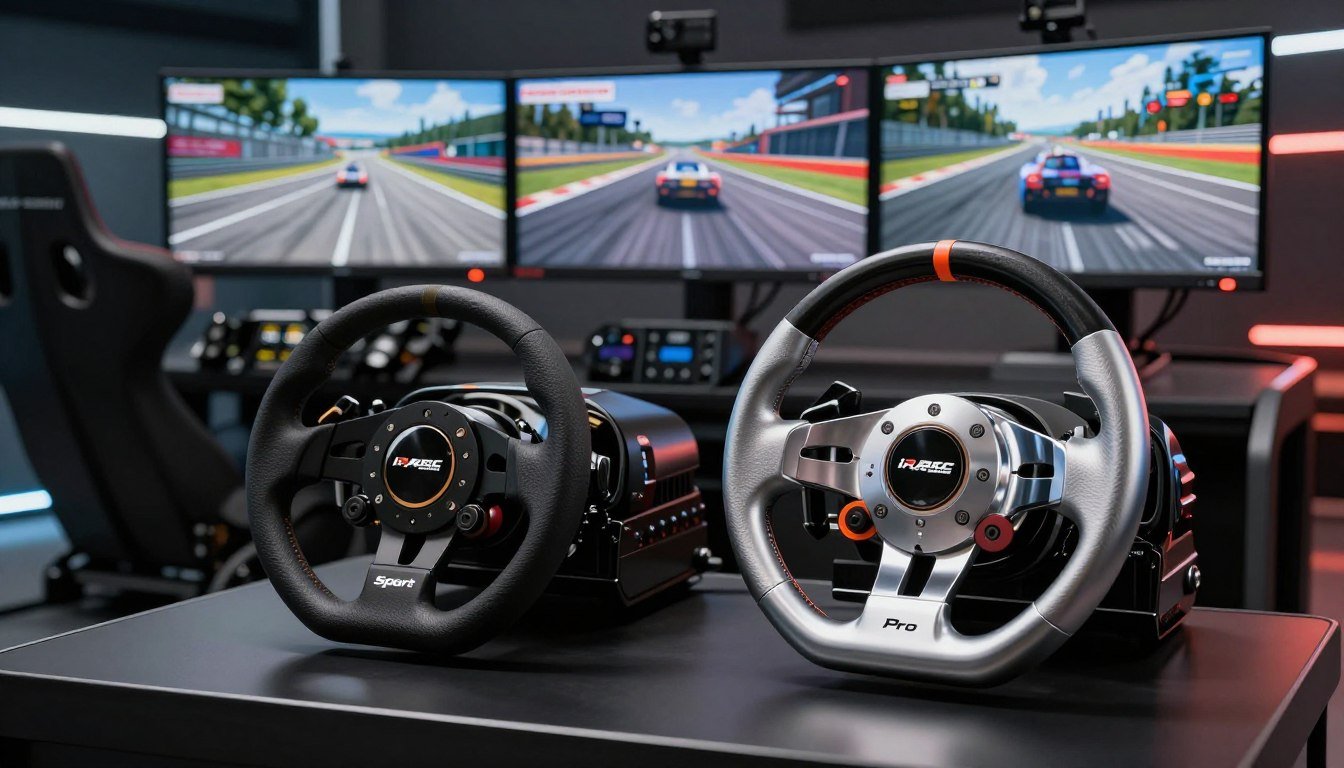
Simucube 2 Sport vs Pro for iRacing 2026: Which direct drive SIM wheel is best for your racing needs? Compare now.
Picture yourself strapped into your rig, hands gripping the wheel as you approach turn one at Watkins Glen. You feel every bump and curb through the force feedback. But something nags at you. Could a better wheelbase make you faster, more consistent, more immersed?
That moment of curiosity is where many sim racers find themselves. You’ve reached a level where equipment matters. The difference between good and great force feedback can shave tenths off your lap times.
Choosing the right direct drive wheelbase is a significant decision. It’s about matching raw torque with precision, budget with performance. This guide cuts through the noise to help you make that choice confidently.
We’ll explore what truly separates premium models. You’ll get clear insights on whether the extra cost delivers tangible benefits for your racing. Let’s find your perfect match.
Your journey into high-fidelity sim racing begins with one critical choice. Selecting the heart of your setup, the wheelbase that translates digital physics into physical sensation. This decision shapes every virtual lap you’ll ever drive.
It’s about more than just raw power. The right system delivers communicative detail that makes you faster and more consistent. You feel the car’s weight transfer and the grip limit approaching.
Many enthusiasts compare premium brands when building their rig. A common question arises: how does this manufacturer stack up against alternatives like Fanatec? The answer lies in a reputation for exceptional build quality and force feedback precision.
Professional motorsport teams often choose this gear for their simulators. That endorsement speaks volumes about its performance pedigree. You’re investing in technology trusted by those who drive for a living.
The manufacturer offers three distinct direct drive bases. They range from 17 Nm to 32 Nm of torque, catering to different needs and budgets. Understanding this hierarchy is your first step.
The Sport model serves as the entry point into this premium ecosystem. It delivers substantial performance that satisfies most dedicated drivers. Don’t let the “entry-level” label fool you—it’s a formidable piece of equipment.
The Pro variant sits in the middle, offering increased torque and enhanced responsiveness. This creates a noticeable difference in how the force feedback communicates road surface details and car behavior.
What about the legendary Ultimate model? This powerhouse was the flagship, boasting the highest torque rating. While it established the brand’s top-tier reputation, its production status has changed. Many people wonder if it’s still available through official channels.
Here’s the current landscape:
This tiered approach means there’s a model aligned with your commitment level. You won’t pay for capability you’ll never use. The cost difference between tiers reflects genuine engineering and material upgrades.
Your wheelbase is the fundamental translator between game and driver. In a simulation like iRacing, where physics accuracy is paramount, this translation needs to be flawless. The right choice enhances immersion dramatically.
Think about the long-term satisfaction of your purchase. A wheelbase isn’t something you replace every year. It’s the cornerstone of a setup you might use for thousands of hours. This makes the initial decision profoundly important.
Reviews from experienced competitors consistently highlight specific advantages. The detail resolution and smoothness of force feedback receive particular praise. These qualities help you catch slides earlier and drive with more confidence.
Your budget for a complete rig involves many components. Allocating your money wisely across pedals, cockpit, and wheel is crucial. The wheelbase deserves a significant portion of that investment because it defines your primary interface with the car.
Consider these factors for your racing future:
The market for high-end sim gear has expanded significantly. While this gives you more options, it also makes research essential. Visiting manufacturer websites and trusted retailer sites provides specifications and real user feedback.
Some retailers offer promotions that can ease the financial commitment. For instance, you might find a discount code through partners like Boosted Media. These codes can provide meaningful savings on your entire order.
Retailers such as Boosted also sell compatible wheels from brands like Ascher Racing. This creates convenient one-stop shopping for your complete wireless wheel setup. They often ship globally from locations like Slovakia or California.
When you search for local dealers, consider both regional and international options. Some shops in the EU ship from Montreal, offering good value. Always verify shipping costs and warranty support before purchasing.
Your choice today builds the foundation for countless virtual racing victories tomorrow. Take the time to understand what each model offers. Your future self will thank you for making an informed, confident decision.
Before considering how a wheelbase feels, you must understand what makes it tick on a fundamental level. The numbers on a spec sheet translate directly to sensations through your steering wheel. This is where the real difference between models becomes clear.
Comparing the Sport and Pro variants means examining their engineering DNA. Both share a premium pedigree, but their capabilities diverge in key areas. These specifications determine your experience in every racing session.
Let’s break down the technical details that separate these two high-performance options. Understanding these elements helps you make an informed choice for your sim setup.
The most discussed specification is peak torque. The Sport model delivers 17 Newton-meters of rotational force. The Pro variant increases this to 25 Nm, offering substantial headroom.
This difference isn’t just about raw strength. Higher torque capacity means the system doesn’t need to work at its limits during normal driving. You maintain detailed feedback even during intense moments.
Think of it like a powerful car engine cruising at highway speed versus one straining at maximum RPM. The 25 Nm Pro model has reserve power for sudden corrections and heavy impacts. The 17 Nm Sport still provides plenty of force for most scenarios.
“Torque headroom prevents clipping, ensuring you feel every nuance of the car’s behavior right at the grip limit.”
Your personal preference matters here. Some drivers never use maximum strength, while others crave that extra punch. Consider how you drive and what feels right for your style.
Torque slew rate measures how quickly the wheelbase can change its force output. The Sport offers up to 4.8 Nm per millisecond. This determines the immediacy of feedback through your hands.
A higher slew rate means faster response to road surfaces and car dynamics. You feel curbs, bumps, and loss of traction almost instantly. This parameter significantly affects realism in racing simulations.
Both models use optimized ultra-low torque ripple motors. This engineering minimizes unwanted vibrations and ensures buttery-smooth operation. The result is exceptionally clean force feedback that many reviews praise.
The Sport includes adjustable slew rate from 1 to 4.8 Nm/ms. This lets you tailor responsiveness to your preference. You can match the feel to different cars and tracks for optimal immersion.
Integration into your cockpit depends on physical characteristics. The Sport model weighs approximately 8 kilograms with dimensions of 130 x 130 x 250 millimeters. This compact, robust design fits most rigs easily.
The Pro variant is slightly larger and heavier, reflecting its more powerful motor assembly. Both feature full metal construction with precision CNC machining. This ensures durability and minimizes flex during intense use.
Consider your mounting solution and available space. The Sport’s lighter weight might simplify installation on certain frames. Either option demands a solid mounting platform for best performance.
Power requirements also differ. The Sport uses a 280-watt supply, while the Pro needs more electrical capacity. Factor this into your overall setup cost and available circuits.
Examining these core specifications reveals the engineering philosophy behind each model. The price gap reflects genuine improvements in materials and performance. Your decision should balance these technical advantages with your budget and racing goals.
What separates good equipment from great equipment isn’t just raw power—it’s how that power communicates the road to you. The difference in force feedback quality becomes crystal clear when you’re on the limit. This is where the sport pro comparison matters most for your immersion.
Feel every curb rumble and catch slides before they happen. That’s the promise of premium direct drive. Your ability to understand grip levels depends entirely on this communication.
Headroom is your secret weapon for feeling detail. Think of it like audio equipment. If your speakers are already at maximum volume, they can’t get louder for sudden sounds.
The same happens with force feedback. When a wheelbase outputs all its available torque, it has nowhere to go for extra signals. This creates clipping—a compressed, flat feeling that hides subtle details.
“Running your wheel well below its maximum limit preserves headroom. You maintain the dynamic range needed to feel every bump and traction loss.”
Many people underestimate how much headroom they need. They only realize its value when experiencing detailed feedback that doesn’t clip during heavy cornering. This awareness often changes their perspective on equipment cost.
Having sufficient headroom means feeling everything. You detect weight transfer nuances and catch slides milliseconds earlier. This directly improves your consistency in racing simulations.
The way a system manages mechanical imperfections determines its feel. Torque ripple, cogging, and notchiness create artificial vibrations. These mask the genuine signals from the simulation.
Premium direct drive bases eliminate these artifacts completely. There’s absolutely no hint of graininess or mechanical interference. The result is buttery-smooth operation that feels consistently immersive.
This purity allows the simulation’s true details to shine through. You feel the texture of different asphalt types and subtle curb strikes. Reviews consistently praise this communicative quality for helping drivers understand grip levels.
The level of smoothness affects how quickly you react. Clean feedback means you process information faster. Your brain isn’t filtering out unwanted vibrations or noise.
Modern simulations continue advancing their physics engines. iRacing now supports 360Hz force feedback—a significant leap in responsiveness. This means the game updates feedback to your wheel 360 times per second.
Both the Sport and Pro models leverage this advancement. The higher update rate provides more immediate road feel and car behavior communication. You experience fewer “steps” or delays in feedback transmission.
This technology represents where the market is heading. Future titles will likely demand similar high-frequency capabilities. Investing in compatible hardware today prepares you for tomorrow’s simulations.
Checking the manufacturer’s website confirms which features each model supports. You’ll find detailed specifications about compatibility with various racing titles. This research helps justify your investment based on long-term value.
Your money should buy equipment that grows with the simulation landscape. The right choice today will still deliver exceptional performance years from now. That’s true value in the sim racing world.
Marketing specs love to boast about massive torque numbers, but what do those numbers actually mean when you’re fighting for grip in a high-speed corner? The conversation often gets stuck on bigger being better, missing the practical reality of how force feedback works in your hands.
Understanding torque means looking beyond the peak figure. It’s about how that power gets delivered during every moment of your drive. Let’s break down what Newton-meters really mean for your virtual racing experience.
A Newton-meter measures rotational force. Think of it as how hard the motor can twist your steering wheel. Higher numbers mean more potential strength, but they don’t tell the whole story.
Real-world usage varies dramatically. Driving a light, nimble formula car feels completely different from wrestling a heavy GT3 machine around a bumpy track. Your actual torque needs change with each vehicle and circuit combination.
Most drivers operate well below the maximum. Forum discussions reveal a common truth: “99% of people will have tons of headroom even at 17 Nm max.” This means the available force often exceeds what you’ll actually use during normal competition.
| Racing Scenario | Typical Torque Demand | Headroom Importance |
|---|---|---|
| Light Formula Car on Smooth Track | 8-12 Nm | Moderate – preserves subtle curb feel |
| Heavy GT Car on Bumpy Circuit | 12-16 Nm | High – prevents clipping in hard corners |
| Drifting or Rally | Variable, sudden peaks | Critical – handles rapid direction changes |
| General Practice Sessions | 6-10 Nm | Low – consistent forces only |
“Honestly, I think 99% of people would be fine with the Sport even if they want headroom for lots of power. The difference becomes more about personal preference than actual necessity.”
Headroom is your safety margin. It’s the extra capacity that keeps details clear when forces spike. Without it, you experience clipping—a flat, compressed feeling that hides information.
As one experienced driver notes: “If you are loaded up in a corner and the motor is already pushing hard and it gets a signal beyond that it will clip which won’t feel good.” This loss of detail can mean missing subtle tire slip or curb strikes.
The 17 Nm available in one model provides substantial overhead for most situations. “You can be loaded up at 15 or 16 Nm and still feel more,” according to community feedback. This capacity handles the vast majority of iRacing’s content beautifully.
Your personal settings affect this dramatically. Running at 100% strength leaves no room for extra signals. Most competitive drivers operate between 70-85% of maximum to preserve that crucial dynamic range.
The way you use this headroom directly impacts your consistency. Feeling every nuance helps you catch slides earlier and maintain better control. This is where the true value of quality equipment shines through.
So when does moving to 25 Nm actually matter? The extra power benefits specific use cases rather than general driving. It’s not about constant brute force but about maintaining resolution during extreme moments.
High-downforce cars in fast corners can demand sustained high forces. The additional headroom here ensures no detail gets lost. Similarly, heavy impacts with walls or other cars benefit from the extra capacity to handle sudden spikes.
Some drivers simply prefer stronger feedback. They want that intense physical connection, even if it means operating at a lower percentage of a more powerful system. This personal preference justifies the upgrade for them.
Filter settings play a crucial role here. Forum experts note: “The only way to limit this unrealism (with current FFB tech) is to add/increase filter-settings.” More powerful bases can run lighter filtering while maintaining smoothness, preserving more raw detail.
The cost difference between tiers must be weighed against these specific benefits. For many, the additional expense doesn’t translate to noticeable performance gains in their regular racing. Reviews from top competitors often confirm that 17 Nm satisfies even at the highest levels of competition.
Before deciding, check manufacturer websites for detailed specifications. Reputable retailers like Boosted Media offer additional insights and sometimes provide a discount code for sim racing gear. Their shop ships globally from multiple locations, making premium equipment more accessible.
Remember that your money should buy what you’ll actually use. The sim racing market offers incredible options at every price point. Choose the level that matches your current needs while leaving room for your skills to grow.
While torque numbers grab headlines, it’s the software customization that truly defines your personal connection to the virtual track. The included TrueDrive application unlocks your wheelbase’s full potential. This is where you sculpt force feedback to match your exact preferences.
Many people overlook software when choosing their sim racing gear. They focus on hardware specs alone. Yet the way you configure filters and profiles dramatically impacts your experience.
TrueDrive represents a crucial aspect of the premium ecosystem. It offers extensive customization for your force feedback. Understanding its capabilities helps justify the cost compared to competitors.
Confusion has swirled around filter availability between models. Some believed advanced features were exclusive to higher tiers. Community discussions have clarified this important difference.
According to forum evidence, key filters are available on both. One user shared a picture showing torque slew rate adjustment on the Sport. Another noted the non-linear force saturation filter was also present.
“If the ‘torque slew rate limit’ and ‘non-linear force saturation’ is also available on the Sport which it is (according to alfye’s picture) then I am even more in favour of the Sport.”
This revelation changes the value proposition. Both models offer the same software toolkit. Your customization options don’t depend on spending more money.
The sport pro comparison becomes less about software limitations. Instead, it focuses on hardware performance headroom. This clarity helps you make an informed choice.
Here are the key filters available across the lineup:
Your driving style is unique. TrueDrive recognizes this with granular adjustment options. You can create a setup that feels perfectly natural to you.
Some drivers prefer sharp, immediate feedback. Others want smoother, more damped responses. The software accommodates both preferences through careful tuning.
Configuring filters affects how the wheel feels during intense racing. Proper damping helps catch slides without overcorrecting. Appropriate inertia makes heavy cars feel authentically weighty.
The level of customization available is impressive. You’re not stuck with factory presets that might not suit you. This flexibility enhances both performance and immersion.
Consider these tuning approaches for different scenarios:
Experimenting with settings becomes part of the fun. You learn how each adjustment changes car behavior. This knowledge makes you a more sensitive driver.
Starting from scratch can feel overwhelming. TrueDrive includes pre-built profiles for popular titles. These give you an excellent foundation to build upon.
The community shares settings through forums and reviews. Experienced drivers post their configurations for different cars and tracks. This collective knowledge accelerates your learning curve.
Many people find these shared settings invaluable. They provide a proven starting point that you can then personalize. This approach saves hours of trial and error.
When visiting the manufacturer’s website, check their resources section. You’ll often find updated profiles for new game releases. Staying current ensures optimal performance.
Retailers in the market also contribute to this ecosystem. For example, Boosted Media provides setup guides and sometimes offers a discount code boosted for customers. Their shop ships fromslovakia and other global locations.
The boosted shop ships internationally, making premium gear accessible. They also sells ascher racing wheels and other compatible components. Using a discount code boosted can reduce your overall price.
Here’s how to leverage community resources effectively:
TrueDrive’s intuitive interface makes this process straightforward. You see immediate results from each adjustment. This real-time feedback helps you dial in perfect settings.
The software represents significant value in the premium wheelbase ecosystem. Its capabilities often surprise newcomers to high-end sim equipment. This flexibility contributes to long-term satisfaction with your investment.
The true test of any high-end equipment comes not just during intense racing sessions, but in the everyday handling and durability over time. When you invest serious money, you expect the physical product to match the performance promises. This is where premium manufacturers truly separate themselves in the competitive market.
Your wheelbase isn’t just an electronic component. It’s a physical object you interact with daily. The build quality affects everything from mounting stability to long-term reliability.
Many people report that unboxing their gear provides the first “wow” moment. The weight, finish, and solid construction immediately communicate value. This initial impression often justifies the premium price point for them.
Both models in this comparison share exceptional construction standards. They feature all-metal cabinets machined with top-quality CNC equipment. The finish is exemplary in every respect, according to detailed product reviews.
This manufacturing excellence creates a tangible sense of quality. You feel the precision in every component. The robust construction minimizes flex during intense driving moments.
The difference in weight between models reflects their internal components. The lighter model weighs approximately 8 kilograms. This affects how securely it mounts to your cockpit frame.
Here’s how the shared manufacturing excellence translates to user benefits:
| Manufacturing Feature | User Benefit | Long-Term Value |
|---|---|---|
| CNC Machined Metal Housing | Zero flex, consistent performance | Durability through years of use |
| Exemplary Surface Finish | Premium look and feel | Resists wear and maintains appearance |
| Precision Internal Components | Smooth, consistent operation | Reliable performance over time |
| Robust Connector Design | Secure electrical connections | Reduces maintenance issues |
This shared legacy means you get exceptional quality at either performance level. The cost difference reflects internal motor capabilities rather than build quality compromises.
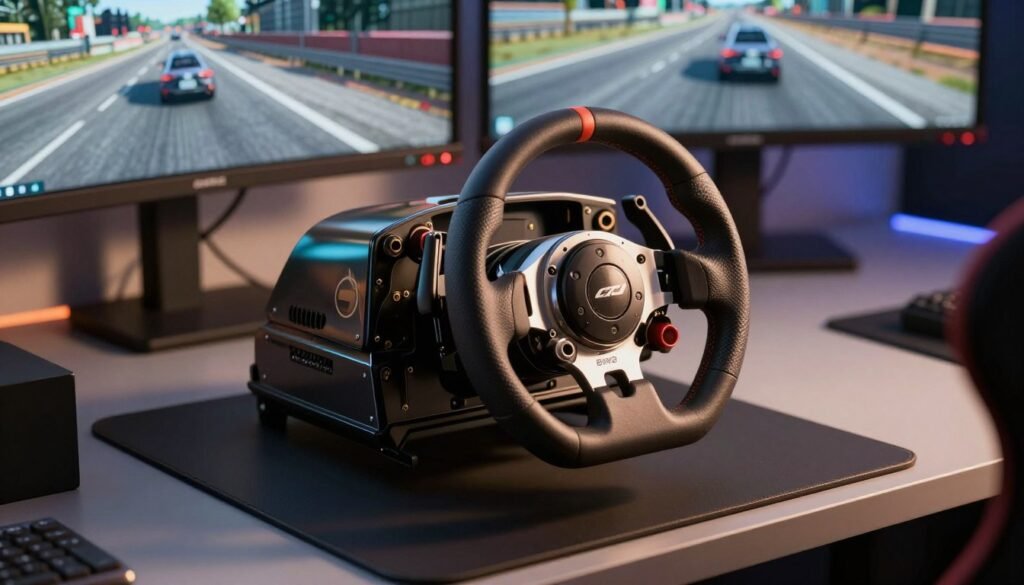
The proprietary quick release system offers excellent mechanical solidity. It effectively eliminates play on the drive shaft, creating a direct connection. This rigidity enhances force feedback transmission during competitive sim sessions.
However, the operation of coupling the wheel to the base isn’t particularly quick. This represents a trade-off between ultimate rigidity and convenience. Some users prefer competing designs that offer faster wheel changes.
“The Simucube Quick Release system is very solid, eliminating play on the drive shaft. However, the operation of coupling the wheel to the base through Simucube’s QR is not really quick to do.”
The ecosystem supports various compatibility options. Third-party solutions exist for those wanting different quick release experiences. For a comprehensive understanding of available systems, check out this complete guide to QR hubs.
Universal adapters enable mounting of other quick release hubs. This flexibility allows you to customize your setup. You can choose the system that best matches your personal preferences.
Consider these factors when evaluating quick release options:
These wheelbases use front-mounting with four supplied screws. This installation method requires proper cockpit compatibility. Your rig needs appropriate mounting points and sufficient structural strength.
The 8-kilogram weight of the lighter model affects mounting considerations. Heavier models may require more robust support. Either option demands a solid platform for optimal performance.
Integration with popular cockpit brands is generally straightforward. Manufacturers like Next Level Racing design their products for compatibility with premium direct drive systems. Always verify specific compatibility before purchasing.
Everyday usability depends on this integration quality. A well-mounted base feels rock-solid during intense moments. Poor integration can introduce vibrations and reduce immersion.
Here are key integration considerations for your setup:
The way your wheelbase integrates affects long-term satisfaction. A clean, professional installation enhances daily enjoyment. It also protects your investment through proper support.
When shopping for sim racing gear, consider the total integration cost. Some retailers like Boosted Media offer package deals that simplify compatibility. They also sells Ascher Racing wheels and other compatible components.
Using a discount code boosted can reduce your overall investment. Their shop global ships from multiple locations worldwide. This makes premium equipment more accessible regardless of your location.
Your choice today builds the foundation for countless virtual racing experiences. Take time to ensure proper integration. Your future self will appreciate the thoughtful setup.
High-end sim gear thrives within interconnected ecosystems. Your choice affects how components work together. Understanding this landscape prevents costly mistakes and ensures future flexibility.
The difference between good and great setups often lies in integration quality. You want gear that plays nicely with your existing or planned equipment. This consideration protects your money and enhances long-term satisfaction.
Wireless support opens a world of premium steering wheel choices. You eliminate cable clutter and enjoy unrestricted rotation. This freedom significantly improves your racing experience.
Both models in the sport pro comparison offer identical wireless compatibility. You can choose from the manufacturer’s own wheels or third-party options. Brands like Ascher Racing and Gomez Sim Industries produce excellent compatible wheels.
Retailers like Boosted Media also sells Ascher Racing wheels alongside these bases. Their shop global ships from multiple locations worldwide. Using a discount code boosted can reduce your total cost.
| Wheel Manufacturer | Compatibility Type | Typical Price Range | Key Features |
|---|---|---|---|
| Ascher Racing | Wireless, Full Compatibility | $400-$800 | Ultra-lightweight, premium buttons |
| Gomez Sim Industries | Wireless, Adapter Required | $300-$600 | Unique designs, durable construction |
| Manufacturer’s Own Wheels | Native Wireless | $500-$1000+ | Seamless integration, official support |
| Third-Party with Adapter | Wired or Wireless via Adapter | $200-$700 | Maximum flexibility, mixed ecosystems |
“The 2 Sport is fully compatible with the brand’s ecosystem and other products, including the brand’s steering wheels and crankset, but you can also use this base with products from other racing manufacturers.”
This flexibility means you’re not locked into a single vendor. You can mix and match components based on quality and price. Many people appreciate this open approach in the market.
These wheelbases connect exclusively to Windows PCs. This limitation matters if you also game on consoles. For serious sim enthusiasts, PC is the standard platform anyway.
iRacing receives particular optimization attention. The force feedback implementation takes full advantage of the simulation’s physics. You experience exceptional detail and responsiveness.
Checking the manufacturer’s website confirms specific game compatibility. You’ll find detailed profiles for popular titles. This research ensures your investment works perfectly with your favorite racing games.
The way these bases handle iRacing’s 360Hz force feedback deserves praise. Reviews consistently highlight the smooth, detailed communication. This optimization provides tangible performance benefits.
Your complete setup involves more than just a wheelbase. Pedals, shifters, and handbrakes must work harmoniously. Compatibility here affects your overall sim racing gear investment.
Most high-end pedals use USB connections, ensuring broad compatibility. You connect them directly to your PC alongside the wheelbase. This approach provides maximum flexibility for mixing brands.
Consider cockpit compatibility too. Brands like Next Level Racing design their rigs for premium direct drive systems. Proper mounting ensures optimal force feedback transmission.
Additional cost considerations include adapters and mounting hardware. Some retailers offer package deals that simplify integration. Their boosted shop ships complete setups globally.
Here’s a smart approach to building your ecosystem:
Using a discount code boosted at checkout makes premium integration more affordable. Retailers frequently offer these codes through partner channels. They help offset the price of building a complete, compatible system.
Your ecosystem choices today determine tomorrow’s racing enjoyment. Take time to understand how components interact. This knowledge ensures every piece of your setup performs at its best.
From cardboard box to cockpit mount, the installation process reveals much about a product’s design philosophy and user-friendliness. Many people wonder if premium gear delivers a seamless experience right out of the box. The answer depends on your definition of “plug and play.”
High-end sim racing gear requires thoughtful setup for optimal performance. You’ll spend time configuring software and fine-tuning settings. This investment pays off with exceptional force feedback quality.
The difference in setup complexity between models is minimal. Both follow similar installation processes with comprehensive included accessories. Your preparation and attention to detail make the biggest impact.
Opening your new wheelbase feels like unwrapping precision engineering. The packaging protects every component securely. You’ll find everything needed for installation right in the box.
According to product reviews, mounting the lighter model offers a practical advantage. One hands-on report states: “Mounting the base is easier for the simple reason that it is lighter, weighing just 8 kg. As a result, you can align the base with one hand, and start attaching it with the other without too much trouble.”
This weight difference matters during physical installation. The heavier variant requires more careful positioning on your cockpit. Either option demands a solid mounting platform for best performance.
Your package includes these essential components:
Check your cockpit’s compatibility before beginning. Most modern rigs support direct drive mounting patterns. Verify bolt hole alignment before tightening anything permanently.
TrueDrive software transforms hardware potential into personalized feel. This configuration step separates basic operation from optimized performance. You’ll create your perfect force feedback profile here.
First-time calibration ensures accurate wheel positioning and range detection. The software guides you through this process step by step. Follow the on-screen instructions carefully for best results.
Configuration involves several key adjustments:
Many drivers start with manufacturer presets for popular titles. These provide excellent baseline configurations. You can then fine-tune settings based on personal preference.
The way you configure TrueDrive affects every racing session. Proper calibration ensures accurate force transmission. Take time to get this right during initial setup.
iRacing offers exceptional force feedback when properly configured. The combination of game settings and wheelbase tuning creates immersive realism. You’ll feel every nuance of track surface and car behavior.
Start with iRacing’s in-game force feedback settings. Set overall strength to a moderate level initially. You can increase this gradually as you become accustomed to the system.
Match these settings with your TrueDrive configuration for harmony. The table below shows recommended starting points:
| Configuration Area | iRacing Setting | TrueDrive Adjustment | Expected Result |
|---|---|---|---|
| Overall Strength | 12-15 Nm | 70-80% maximum torque | Strong feedback with headroom |
| Linear Mode | Disabled | Non-linear saturation enabled | Natural feeling force curve |
| Damping | 0-5% | Light damping filter | Crisp response without oscillation |
| Min Force | 0% | Friction filter off | Eliminates artificial resistance |
| 360Hz Mode | Enabled | Automatic detection | Maximum detail resolution |
Test your configuration with familiar cars and tracks. Make small adjustments rather than large changes. This incremental approach helps you identify what each setting affects.
Community resources offer valuable guidance. Many experienced drivers share their configurations online. These provide excellent reference points for your own tuning.
Retailers like Boosted Media offer setup advice alongside their products. Their shop global ships from multiple locations worldwide. Using a discount code boosted can reduce your overall investment.
They also sells Ascher Racing wheels and other compatible components. This creates convenient one-stop shopping for your complete setup. Their expertise helps customers achieve optimal configuration.
Remember that perfect setup takes time and experimentation. Your preferences will evolve as you gain experience. Save multiple profiles for different racing conditions and car types.
The initial effort delivers long-term satisfaction. A well-configured system feels like an extension of your senses. You’ll enjoy consistent, communicative feedback through every virtual lap.
When the price tags start climbing into four figures, you naturally ask one question: am I getting what I pay for? This section breaks down the value proposition of each model. We’ll examine where your money creates the most noticeable improvement.
Value isn’t just about the lowest number. It’s about performance received for every dollar spent. Your budget allocation affects your entire racing experience.
Many enthusiasts wonder about the real difference. They compare specifications against the price gap. We’ll provide clear analysis to guide your decision.
The Sport model delivers exceptional value at its position. According to product analysis, it retails for around €1,300 on the official website. Many online retailers offer it for less.
This wheelbase provides premium performance for most competitors. The 17 Nm of torque satisfies even experienced drivers. You get outstanding build quality and smooth operation.
Community feedback consistently praises its value. One detailed review notes its versatility and high. It’s particularly suitable for those who don’t require extreme force.
Here’s what your money buys with this option:
| Investment Area | What You Get | Value Rating |
|---|---|---|
| Peak Torque | 17 Nm – substantial headroom for most scenarios | Excellent |
| Build Quality | All-metal CNC construction, exemplary finish | Outstanding |
| Compatibility | Full ecosystem support, wireless wheel options | Very Good |
| Software Features | TrueDrive with full filter suite included | Excellent |
| Long-Term Support | Regular firmware updates, community profiles | Very Good |
The cost represents smart spending for serious competitors. You invest in proven technology without overpaying. This leaves budget for other crucial components.
The Pro model commands a higher price that requires justification. The additional investment buys increased torque capacity and headroom. You must assess whether these benefits matter for your specific needs.
So, is the Pro worth the extra money? For most people, the answer leans toward no. The performance difference becomes noticeable only in specific situations.
“If I knew the Sport would receive all the filters the Pro would receive then I would have easily purchased the Sport over the Pro and put the $200 USD (or more after taxes) towards a set of pedals.”
This perspective highlights the value question. The extra funds could significantly upgrade your pedal set instead. Better brakes often improve lap times more than additional wheel force.
The Pro makes sense for certain use cases. If you consistently drive high-downforce cars on demanding circuits, the headroom helps. Those who prefer extremely strong feedback might appreciate the capacity.
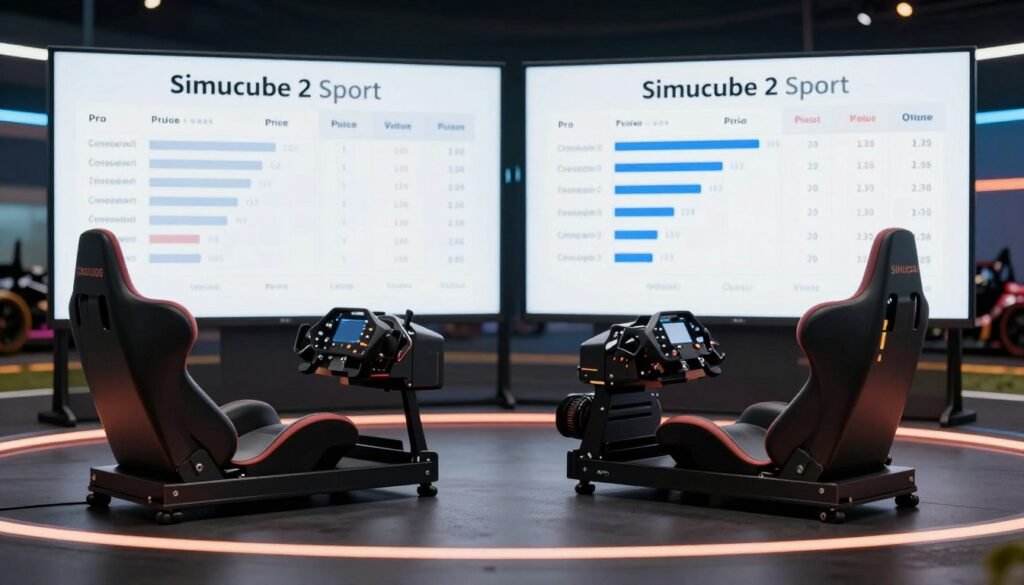
Consider your personal driving style honestly. Most competitors operate well below 17 Nm during normal sessions. The Pro’s 25 Nm represents capability you may never fully utilize.
Your wheelbase represents one part of a complete system. Smart budget allocation considers pedals, cockpit, and accessories too. The way you distribute funds affects overall satisfaction.
The market offers incredible options at every price point. You must balance initial investment with long-term enjoyment. This holistic view reveals the true value of each component.
Here’s how a typical budget might allocate funds:
| Component Category | Recommended Allocation | Performance Impact | Value Priority |
|---|---|---|---|
| Pedals (Load Cell) | 25-35% of total budget | Very High – consistency and braking | Top Priority |
| Wheelbase | 30-40% of total budget | High – feel and detail communication | High Priority |
| Cockpit/Rig | 20-30% of total budget | Medium – stability and comfort | Medium Priority |
| Wheel Rims | 10-15% of total budget | Medium – immersion and control | Lower Priority |
| Accessories | 5-10% of total budget | Low – convenience and extras | Optional |
This framework shows why redirecting funds often makes sense. The difference between Sport and Pro could buy better pedals. Those pedals might improve your performance more dramatically.
Retailers like Boosted Media understand this balance. They also sells Ascher Racing wheels and other compatible components. Using a discount code boosted can reduce your overall investment.
Their shop global ships from multiple locations worldwide. This makes premium sim racing gear accessible regardless of location. Always check for current promotions before purchasing.
Your final decision should reflect total system thinking. Consider how each component contributes to your goals. This approach ensures maximum value from every dollar spent.
Value analysis reveals the Sport as the smarter choice for most competitors. The Pro offers legitimate benefits for specific scenarios. Your personal needs and budget determine which represents better value for you.
Finding the perfect match between driver and equipment transforms how you experience every virtual lap. The right choice feels like an extension of your senses rather than just another piece of hardware.
Understanding who each model was designed for reveals which one will become your perfect partner. This isn’t about finding flaws but matching strengths to needs.
The difference in target audience reflects varying priorities. Some value maximum performance regardless of cost. Others seek premium quality at a smarter price point.
Reviews from different types of sim racers provide clear insights. They show which model suits various driving styles and commitment levels. Let’s explore these ideal user profiles.
This driver seeks premium performance without needing extreme torque levels. They want exceptional feel and detail for their racing experience. Value matters alongside quality.
According to a detailed product assessment, this model is “a base that I can wholeheartedly recommend to all players who want to go upmarket and treat themselves to a real gem of a sensation.” This endorsement speaks volumes about its appeal.
The ideal user appreciates smart budgeting. They might redirect saved funds toward better pedals or a sturdier cockpit. This holistic approach maximizes their entire setup’s performance.
This driver typically operates within sensible force feedback ranges. They understand that headroom matters but don’t require excessive capacity. Their wheel feels communicative and detailed at moderate settings.
Community feedback supports this profile. One forum participant noted, “Honestly, I think 99% of people would be fine with the Sport even if they want headroom for lots of power.” This perspective highlights the model’s broad suitability.
Here are key characteristics of this ideal driver:
This user represents the majority of serious competitors. They want premium gear that delivers without unnecessary extravagance. The sport pro comparison often leads them to this logical choice.
This driver demands maximum headroom and future-proofing. They have specific needs that justify the extra investment. Their approach to sim competition involves no compromises.
The ideal Pro user often drives high-downforce vehicles on demanding circuits. They experience sustained high forces during fast corners. The additional capacity ensures no detail gets lost.
Some simply prefer stronger feedback as a matter of personal taste. They want that intense physical connection at all times. This preference alone can justify the upgrade for them.
This driver might compete at the highest levels where every nuance matters. They benefit from running lighter filtering while maintaining smooth operation. This preserves more raw detail from the simulation.
The Pro makes sense for specific use cases rather than general driving. Consider these scenarios where the extra power creates noticeable benefits:
| Racing Scenario | Why Pro Excels | Typical User Profile |
|---|---|---|
| Formula Cars at Fast Circuits | Sustained high forces without clipping | Competitive league racer specializing in open-wheel |
| Heavy Impacts and Collisions | Handles sudden force spikes gracefully | Aggressive driver who pushes limits regularly |
| Extreme Force Preference | Operates at lower percentage of maximum | Driver who enjoys very strong physical feedback |
| Future-Proofing Investment | Headroom for next-generation simulations | Enthusiast who keeps gear for many years |
| Professional Training | Maximum detail resolution for skill development | Serious competitor or aspiring real-world racer |
The additional money spent here delivers tangible benefits for these specific users. They would notice the difference in their regular racing sessions. For them, the investment makes perfect sense.
Honest self-assessment determines your ideal match. Many people overestimate their need for high torque levels. We’ll help you evaluate what’s right for your actual skill level.
Start by examining your current approach to virtual competition. Are you chasing tenths in competitive leagues? Or enjoying casual sessions with friends? Your answer guides your equipment choice.
The way you approach sim racing affects which model better suits your needs. Casual enjoyment versus serious pursuit creates different requirements. Be realistic about your current commitment.
“Understanding target audiences ensures you choose a wheelbase that matches not just your budget but your actual sim racing needs.”
Consider these questions for your self-assessment:
Your answers reveal whether you’re among the majority perfectly satisfied with one option. Or if you genuinely need the additional capabilities of the other.
Remember that your skills will evolve. Choose equipment that supports your growth without limiting your potential. The right wheelbase should feel challenging yet accessible as you improve.
When researching, check the manufacturer’s website for detailed specifications. Reputable retailers like Boosted Media offer additional guidance. They understand how different gear suits various driver profiles.
Their shop global ships from multiple locations worldwide. Using a discount code boosted can make your decision more affordable. They also sells Ascher Racing wheels and other compatible components.
The market offers incredible options at every price point. Your choice should reflect your authentic self as a virtual competitor. Match the equipment to the driver you are today and aspire to become tomorrow.
Future-proofing isn’t about guessing what comes next—it’s about choosing gear that adapts to evolving technology. Your decision today should still feel relevant when new racing titles arrive. This long-term view separates impulsive purchases from strategic investments.
Many enthusiasts focus only on immediate performance. They overlook how equipment ages in a fast-moving market. Your wheelbase should grow with your skills and the simulation landscape.
The difference in future readiness between tiers matters. It may justify the additional cost for drivers planning years of involvement. Let’s explore what makes gear stand the test of time.
The manufacturer demonstrates strong commitment to existing products. Regular firmware updates add features and refine performance. This support extends the useful life of your investment significantly.
Older models continue receiving improvements years after launch. This philosophy builds customer loyalty and protects your money. You’re not abandoned when the next generation arrives.
Checking the official website reveals this update history. You’ll see consistent enhancements for previous hardware. This track record provides confidence in long-term satisfaction.
Community reviews of older products show excellent longevity. Many users report their bases feel better today than at purchase. Ongoing software optimization makes this possible.
Consider these benefits of strong firmware support:
This approach affects resale value positively. Well-supported equipment holds its worth better in the secondhand market. Buyers know they’ll receive ongoing improvements.
The leading simulation continues advancing its physics engine. Future updates may demand more from your hardware. Understanding this trajectory helps you choose wisely today.
Current 360Hz force feedback represents significant progress. This high update rate provides exceptional detail resolution. Tomorrow’s simulations might push this technology further.
Additional torque headroom becomes valuable as physics complexity increases. More detailed road surfaces and car behaviors require dynamic range. Your wheel must communicate these nuances without compression.
The sport pro comparison gains importance here. Higher maximum force capacity offers insurance against future demands. This doesn’t mean you’ll use all that power daily.
It means your system won’t struggle with more complex simulations. Consider these potential developments:
Your equipment should handle these advancements gracefully. Premium gear today often meets tomorrow’s standards. This forward compatibility protects your investment.
Retailers like Boosted Media understand this evolution. Their shop global ships premium gear worldwide. Using a discount code boosted can make future-proofing more affordable.
They also sells Ascher Racing wheels and compatible components. This creates complete setups ready for coming developments. Their expertise helps customers plan ahead.
Premium sim racing gear often retains value surprisingly well. Build quality and reputation create strong secondary markets. This resale potential reduces your net investment over time.
Well-maintained equipment from respected brands commands good prices. Buyers trust products with proven reliability records. Your careful usage and original packaging enhance value further.
The initial price difference between tiers affects depreciation rates. Higher-end models sometimes hold value better percentage-wise. This consideration matters if you upgrade frequently.
Long-term satisfaction involves more than financial aspects. How the gear feels after thousands of hours matters most. Does it still excite you when you sit down to race?
Many people report their premium bases feel fresh years later. The consistent performance and build quality deliver ongoing enjoyment. This emotional return justifies the initial outlay.
Consider these factors for long-term value:
| Value Factor | Sport Model | Pro Model |
|---|---|---|
| Initial Investment | Lower cost, easier entry | Higher price, more commitment |
| Depreciation Rate | Good retention for premium gear | Excellent retention for top tier |
| Future Compatibility | Strong for current simulations | Maximum headroom for advances |
| Upgrade Path | Direct to higher tier when ready | Potentially end-game solution |
| Community Support | Large user base, many settings | Enthusiast focus, advanced tips |
“The real test comes after the new gear excitement fades. Does your wheelbase still put a smile on your face during every session? That’s true long-term value.”
Your personal trajectory matters most. Are you deepening your involvement in virtual competition? Or maintaining a consistent hobby level? Honest answers guide your future-proofing decision.
The way manufacturers support products affects everything. Regular updates and community engagement extend usefulness. These intangible benefits often outweigh raw specifications.
When researching, check multiple sources beyond the manufacturer website. Forums and long-term user reviews reveal how gear ages. This real-world data proves more valuable than marketing claims.
Remember that future-proofing involves your entire setup. A wheelbase alone won’t guarantee satisfaction years from now. Consider cockpit stability, pedal quality, and display technology too.
Smart planning today creates rewarding experiences tomorrow. Choose gear that matches both current needs and future aspirations. Your future self will appreciate this thoughtful approach.
After weighing all the technical details, the decision ultimately rests on how you value different aspects of the driving experience.
The difference between models becomes clear when matched to your specific goals. For most people, the Sport represents smarter spending with premium performance at an accessible price.
The Pro offers extra torque headroom and maximum capability for demanding drivers. Your choice should balance current needs with future aspirations in the sim racing world.
Reviews from both sides provide real-world perspectives. Consider your budget and how you’ll use the wheelbase for years of immersive competition.
Understanding all factors ensures you make a decision that brings lasting satisfaction to your virtual cockpit.

[…] the world of sim racing, every detail matters, and pedal stability is at the forefront of ensuring optimal performance. The effectiveness of a sim […]