Physical Address
304 North Cardinal St.
Dorchester Center, MA 02124
Physical Address
304 North Cardinal St.
Dorchester Center, MA 02124

Explore the world of sim racing and understand what it means. Learn the basics of this immersive virtual motorsport.
Did you know that top-tier Formula 1 drivers spend more time in virtual cockpits than they do on actual tracks? This surprising reality highlights how far digital motorsport has evolved. It is no longer just a casual pastime for gamers; it is a sophisticated discipline that mirrors the intensity of professional athletics.
So, what does sim racing mean? At its core, it involves using high-fidelity software and specialized hardware to replicate the physics of driving a real vehicle. Enthusiasts utilize force-feedback steering wheels and pedal sets to feel every bump, slide, and turn from their own homes.
This hobby bridges the gap between digital entertainment and professional development. Many aspiring drivers now use these platforms as a legitimate training ground to sharpen their skills before stepping into a real car. By blending cutting-edge technology with authentic racing techniques, this community has transformed how we perceive virtual competition.
If you have ever wondered what separates a casual game from a professional training tool, you are in the right place. While many people enjoy picking up a controller for a quick race, this hobby goes much deeper. It is a dedicated pursuit of realism and technical precision that bridges the gap between gaming and professional motorsport.
At its core, the sim racing definition centers on the pursuit of authentic driving experiences. Unlike arcade titles that prioritize fun and simplified handling, a sim racing simulator is designed to replicate the actual dynamics of a vehicle. These programs are used by professional drivers to learn new tracks and refine their skills from the comfort of their homes.
The goal is to provide a platform where the driver feels every nuance of the car. When you sit behind the wheel, you are not just playing a game; you are engaging with a complex mathematical model. This level of detail is exactly why the automotive community holds this niche in such high regard.
What does sim racing mean for the average user? It means paying attention to the small details that dictate how a car behaves on the asphalt. Developers spend thousands of hours coding variables like tire temperature and suspension geometry to ensure the car reacts exactly as it would in the real world.
Because these systems are so advanced, they require a different mindset than traditional gaming. You must learn to manage your equipment and understand how mechanical changes affect your lap times. Here are a few core elements that define the experience:
By focusing on these technical aspects, the hobby offers a rewarding challenge for those who crave authenticity. It turns the act of driving into a science, making every victory feel earned through skill and preparation.
Understanding the roots of sim racing reveals how far technology has pushed the boundaries of digital motorsport. What began as simple, pixelated entertainment has blossomed into a complex field that demands genuine athletic skill. It is truly remarkable to see how these virtual environments now mirror the intensity of real-world tracks.
In the early days, racing games focused primarily on arcade-style fun rather than technical accuracy. Developers prioritized speed and visual flair over the nuances of tire grip or suspension geometry. As computing power increased, creators began to integrate more realistic physics engines into their software.
This shift marked the transition from casual gaming to a serious pursuit of realism. Enthusiasts started demanding hardware that could replicate the tactile feedback of a real steering column. This demand paved the way for the sophisticated peripherals we see in modern home setups today.
A significant turning point occurred during the global pandemic, which triggered a golden age for the industry. With physical tracks closed, professional drivers flocked to their home rigs to maintain their competitive edge. This period proved that virtual platforms could effectively replicate the high-pressure environment of professional racing.
Today, the industry has reached a level of maturity where real-world teams like Ferrari and Mercedes rely on these simulators to train their drivers. These organizations use high-fidelity software to prepare for upcoming races and test vehicle setups. The line between the virtual and physical worlds has never been thinner, cementing the status of simulation as an essential tool in modern motorsport.
The world of virtual motorsport is incredibly diverse, offering experiences that range from casual fun to intense professional training. While arcade games provide a pick-up-and-play experience, true simulation requires a deep understanding of vehicle dynamics and complex physics engines.
Every driver has a unique preference, whether they want to emulate legendary Formula 1 stars or master the art of sliding through loose gravel. Choosing the right discipline helps you focus your practice and find a community that shares your specific passion.
Circuit racing is perhaps the most popular form of virtual competition. It involves driving on paved tracks, ranging from historic road courses to modern street circuits. Drivers must master braking points, racing lines, and tire management to succeed.
This category includes everything from high-downforce open-wheel cars to production-based GT vehicles. Precision is the ultimate goal here, as even a tiny mistake can cost you valuable seconds on the leaderboard.
If you prefer unpredictable surfaces, rally racing offers a thrilling alternative to the pavement. You will navigate narrow forest stages, snowy mountain passes, and dusty tracks where the grip is constantly changing.
Success in this discipline relies on your ability to read the road and react to the car’s weight transfer. It is a demanding test of reflexes that requires total concentration from start to finish.
Karting serves as the foundation for many real-world professional drivers. In the virtual world, these nimble machines provide an intense, close-quarters racing experience that emphasizes agility and momentum.
Because karts are lightweight and lack electronic driver aids, they are perfect for learning the fundamentals of car control. They offer a raw, unfiltered connection between the driver and the track surface.
| Discipline | Primary Surface | Key Skill Focus |
|---|---|---|
| Circuit Racing | Asphalt/Tarmac | Precision and Consistency |
| Rally Racing | Gravel/Dirt/Snow | Car Control and Adaptability |
| Kart Racing | Asphalt/Concrete | Momentum and Agility |
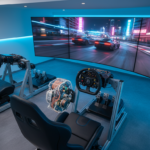
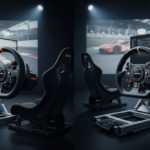
Selecting the right gear is the most important step in creating the best sim racing setup. Your hardware choices directly impact how you feel the car and track surface during a race. You can explore my guide to various tiers of sim racing to understand which level of investment fits your current goals.
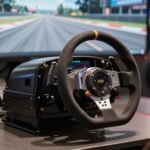
The steering wheel and pedal set serve as your primary connection to the virtual vehicle. High-end sim racing equipment often features direct drive systems, which provide more powerful and precise force feedback than traditional belt-driven versions. This technology allows you to feel every bump and tire slip with incredible clarity.
Pedals are equally vital for consistency. Look for load-cell brake pedals, as they measure the pressure you apply rather than just the distance the pedal travels. This mimics real-world braking, helping you develop the muscle memory needed for faster lap times.
Visual immersion is key to maintaining focus during long endurance races. Many drivers prefer triple-monitor setups to achieve a wide field of view, which helps with spatial awareness in tight corners. Alternatively, VR headsets offer a truly immersive 3D experience that makes you feel like you are sitting inside the cockpit.
Choosing between a console and a PC depends on your budget and technical comfort. Consoles offer a “plug-and-play” experience that is very user-friendly for beginners. However, a dedicated PC provides access to a wider range of hardware peripherals and more advanced simulation software.
If you want the best sim racing setup for competitive leagues, a PC is usually the preferred choice. It allows for greater customization and better graphical performance, ensuring your hardware never limits your potential on the track.
The world of digital racing offers a variety of platforms tailored to different driving styles. Selecting the right software is a critical step for anyone looking to improve their skills or simply enjoy the thrill of the track. These sim racing games provide unique experiences ranging from hardcore professional simulation to fun, casual competition.
For those who crave the most authentic experience, iRacing stands out as the industry leader. It operates on a subscription-based model, which ensures that the servers remain stable and the competition stays high. With over 200,000 active users, you will always find a race that matches your skill level.
The platform is famous for its laser-scanned tracks and highly accurate vehicle physics. It is the go-to choice for drivers who want to pursue a serious career in virtual motorsports.
If you prefer a platform that evolves with your personal tastes, Assetto Corsa is an excellent choice. This title is widely celebrated for its modding flexibility, allowing users to add custom cars, tracks, and physics tweaks created by the community.
Because of this open nature, the game remains fresh even years after its initial release. It is perfect for players who enjoy tinkering with their setup and exploring a massive library of user-generated content.
Forza Motorsport bridges the gap between casual gaming and realistic simulation. It is highly accessible, making it a great entry point for newcomers who are just starting to explore various sim racing games on their consoles or PCs.
The game offers a polished, cinematic experience that focuses on fun and progression. While it may not offer the same level of technical depth as dedicated simulators, it provides a fantastic environment for competitive racing without the steep learning curve.
The true heart of this hobby lies in the vibrant sim racing community that supports it. While driving alone can be fun, the real magic happens when you connect with others who share your passion for speed and precision.
This global network transforms a solitary digital activity into a social experience. Whether you are looking for advice or friendly competition, you will find a welcoming space to grow your skills.
Participating in sim racing leagues is the best way to test your abilities against drivers of similar skill levels. These organized groups provide structure, rules, and a sense of belonging that keeps the hobby exciting.
Platforms like The SimGrid have revolutionized how we race by hosting over 1,000 communities for daily and weekly events. Engaging in sim racing online allows you to build a reputation and climb the ranks in a fair, competitive environment.
The internet serves as a massive hub for drivers to exchange knowledge and build friendships. Dedicated forums and social media groups are essential resources for anyone looking to improve their craft.
In these spaces, you can easily share setups, discuss hardware upgrades, or simply vent about a tough race. It is common to find experienced veterans who are happy to mentor newcomers, making the sim racing community feel like a tight-knit family.
While the hobby is primarily digital, the bonds formed online often lead to real-world connections. Many enthusiasts organize local meetups to visit professional racing tracks or attend gaming conventions together.
These events bridge the gap between virtual and physical racing, allowing fans to meet their teammates in person. Whether you are racing sim racing online or meeting up at a local track day, the social aspect remains a core pillar of the experience.
Engaging with a high-quality sim racing simulator provides more than just a fun way to spend an afternoon. It serves as a bridge between digital entertainment and the intense world of professional motorsport. Many enthusiasts find that the hobby sharpens their mind while offering a unique sense of accomplishment.
Virtual racing is a mental game that demands extreme focus and quick decision-making. Drivers must process complex data while maintaining control of their vehicle at high speeds. This cognitive load mirrors the demands placed on professional drivers during actual races.
Because of this, many professional teams now use a sim racing simulator to train their drivers. The muscle memory and spatial awareness gained in a virtual environment are highly transferable to real-world tracks. It allows drivers to practice specific corners and braking points without the risk of physical injury.
“Racing is a mental sport. You have to be completely present, anticipating every movement of the car and the competition around you.”
One of the greatest advantages of this hobby is its cost-effectiveness. Real-world track days require expensive tires, fuel, and vehicle maintenance that can quickly drain a budget. A sim racing simulator allows you to experience the thrill of high-speed competition from the comfort of your home.
The barrier to entry is significantly lower than traditional motorsports. You can start with basic equipment and upgrade your setup as your passion grows. This accessibility ensures that anyone with a computer or console can participate in competitive racing.
| Feature | Virtual Racing | Real-World Racing |
|---|---|---|
| Initial Cost | Low to Moderate | Very High |
| Maintenance | Minimal | Extensive |
| Safety Risk | None | High |
| Accessibility | High | Low |
Beyond the technical skills, virtual racing acts as a powerful outlet for stress relief. Immersing yourself in a digital race allows you to disconnect from daily pressures and focus entirely on the road ahead. The pure excitement of crossing the finish line provides a rewarding experience that is both fun and engaging.
Whether you are competing in a global league or just enjoying a casual lap, the entertainment value is immense. It creates a sense of community and achievement that keeps players coming back for more. This hobby proves that you do not need a million-dollar budget to enjoy the heart-pounding intensity of motorsport.
You do not need a professional racing rig to start enjoying the thrill of the track today. Many newcomers feel overwhelmed by the high-end gear seen in videos, but the reality is much more accessible. Patience is your greatest asset when you begin this hobby.
When looking for sim racing equipment, it is wise to prioritize value over complexity. You can achieve a fantastic experience without spending thousands of dollars on a full-motion cockpit. Starting with a reliable entry-level wheel and pedal set is the perfect foundation for any driver.
For those with limited space, desk mounts are a practical and affordable option. These allow you to attach your gear to a standard table, keeping your room tidy while you learn the basics. Consider these essential items for your first setup:
The world of sim racing for beginners is vast, offering titles that cater to every skill level. Some games focus on realistic physics, while others prioritize fun and accessibility. It is helpful to choose a platform that has a strong community to help you learn the ropes.
“The best way to improve is to focus on consistency rather than speed. Once you find your rhythm, the lap times will naturally follow.”
Creating your home environment should be a gradual process. You do not need to buy everything at once; instead, focus on building a space where you feel comfortable and focused. Consistency in your practice sessions will yield better results than expensive hardware upgrades.
Start by ensuring your monitor or screen is positioned at the correct height to reduce eye strain. As you grow more confident, you can slowly add accessories like shifters or handbrakes. Remember that the goal is to enjoy the experience of driving while developing your skills on the track.
The landscape of digital motorsport shifts rapidly as new innovations emerge. Drivers now stand at the edge of a new era where virtual skills translate directly into real-world opportunities.
Hardware manufacturers continue to push the boundaries of immersion. High-fidelity force feedback and motion platforms make the line between a simulator and a real cockpit thinner than ever. These tools allow drivers to refine their craft with incredible precision.
Professional gaming leagues now command massive global audiences. Major brands invest heavily in these digital championships to capture the attention of a new generation of fans. This shift turns bedroom racers into household names within the competitive gaming circuit.
The barrier between virtual and physical racing is crumbling. Winners of the rFactor 2 series now earn the chance to complete test days in actual Formula E cars. This pathway proves that talent behind a screen carries weight on the track. You have the potential to start your journey today and see where the checkered flag takes you.