Physical Address
304 North Cardinal St.
Dorchester Center, MA 02124
Physical Address
304 North Cardinal St.
Dorchester Center, MA 02124

What is Max Verstappen's sim team? Find out the details on the F1 star's new esports project.
Did you know that professional esports racing now attracts over 100 million viewers annually, rivaling traditional sports broadcasts? This massive surge in popularity has pushed elite athletes to invest heavily in virtual competition. Max Verstappen, the reigning Formula 1 champion, stands at the forefront of this digital revolution.
The racing icon recently announced a major shift for his long-standing virtual outfit. By moving away from the familiar Team Redline branding, he has launched his own dedicated banner. This transition aligns his digital project directly with his professional racing enterprise.
Many fans often ask, What is Max Verstappen’s sim team? The new identity represents a bold step toward professionalizing virtual motorsport. It signals a commitment to excellence that mirrors his real-world success on the track.
Many fans often ask, what is Max Verstappen’s sim team?, and why does it matter in the modern racing landscape? This initiative represents a serious commitment to the digital track, blending the precision of Formula 1 with the accessibility of virtual platforms. It is not merely a hobby for the champion; it is a professional extension of his racing career.
At its core, sim racing is a sophisticated form of digital motorsport that replicates the physics and dynamics of real-world driving. Unlike standard arcade games, these platforms require deep technical knowledge of vehicle setups, tire wear, and fuel management. It effectively bridges the gap between casual gaming and professional motorsport, offering a realistic environment for drivers to hone their craft.
The level of immersion provided by modern software allows athletes to practice tracks and race conditions with incredible accuracy. This transition from the living room to the virtual cockpit has turned digital racing into a legitimate career path for many talented individuals.
Success in high-level digital championships requires more than just raw talent behind the wheel. A dedicated team provides the strategic support necessary to analyze data, optimize car performance, and coordinate complex race tactics. Without a structured group, even the fastest drivers struggle to maintain a competitive edge against organized squads.
The following table highlights the key differences between casual play and professional team-based competition:
| Feature | Casual Sim Racing | Professional Team Racing |
|---|---|---|
| Data Analysis | Minimal or none | Advanced telemetry review |
| Setup Strategy | Standard presets | Custom engineering |
| Communication | Individual focus | Real-time race engineering |
| Goal Orientation | Personal enjoyment | Championship victory |
By fostering a collaborative environment, the team ensures that every member can perform at their peak. This synergy is what separates top-tier competitors from the rest of the field in the fast-paced world of virtual racing.
While many know him for his prowess with Red Bull Racing, Max Verstappen has a long-standing history of pushing limits in the sim racing community. His digital journey began as a personal escape, but it quickly evolved into a serious pursuit that complemented his real-world racing skills.
In his early days, Max Verstappen viewed virtual racing as a way to sharpen his reflexes outside of the cockpit. He found that the digital environment offered a unique space to experiment with different racing lines and car setups without the physical constraints of a track.
Balancing this hobby with the intense demands of the F1 calendar was no small feat. He often treated his home rig as a critical extension of his professional training, ensuring he stayed sharp even during the off-season.
As his interest deepened, his involvement in the virtual scene became more formal and structured. He famously spent hours on his rig, often practicing until the early hours of the morning before a major race weekend.
This relentless dedication eventually led him to align with Team Redline, a powerhouse in the virtual racing world. By joining forces with such a prestigious group, he transformed his passion into a collaborative effort. This historical commitment to excellence is exactly why he eventually chose to formalize his presence by building his own competitive team.
Max Verstappen has officially transitioned his passion for digital competition into a structured professional venture. This strategic move reflects a deep commitment to the evolution of competitive gaming. By formalizing his involvement, he aims to bridge the gap between casual play and elite-level performance.
The branding of the organization is carefully crafted to reflect a legacy of excellence. By aligning the team with the Verstappen Racing identity, the group establishes a clear link to his real-world success with Red Bull Racing. This branding strategy ensures that the team maintains a professional image while honoring its roots in the community.
The team maintains a strong collaborative spirit, often drawing inspiration from established groups like Team Redline. This connection helps the organization leverage years of collective experience. The result is a cohesive identity that resonates with fans and competitors alike.
The primary objective is to create a unified ecosystem that spans from high-stakes esports to real-world GT3 racing. This virtual racing team serves as a professional development pathway for aspiring drivers looking to hone their craft. By providing access to top-tier resources, the team helps talent bridge the gap between the screen and the track.
Long-term growth remains a central pillar of the organization’s mission. The team is not just focused on winning individual races but on building a sustainable future for digital motorsport. Through this structured approach, the team aims to set a new benchmark for professional recognition in the world of esports and beyond.
Building a world-class virtual racing team requires more than just fast drivers; it demands a synergy of talent and technical expertise. The success of the Verstappen Sim Racing organization is built upon the dedication of individuals who treat digital competition with the same intensity as professional motorsport.
The roster features a mix of seasoned veterans and rising stars who have mastered the art of high-speed simulation. Many of these competitors have successfully bridged the gap between the digital world and real-world racing circuits, proving that precision on the screen translates to performance on the asphalt.
“Success in sim racing is not just about the hardware; it is about the people who push the boundaries of what is possible in a virtual environment.”
These athletes are selected not only for their raw speed but for their ability to remain calm under immense pressure. By fostering a culture of excellence, the team ensures that every member contributes to the collective goal of winning championships.
Managing a competitive virtual racing team involves a diverse set of specialized roles. Beyond the drivers, the organization relies on a backbone of support staff to maintain a competitive edge:
Each role is vital to the team’s overall performance. By clearly defining these responsibilities, the organization creates a seamless workflow that allows drivers to focus entirely on their craft. This human-centric approach remains the cornerstone of their continued dominance in the global sim racing scene.
To compete at the highest level, the team relies on a sophisticated blend of software and hardware. Success in sim racing is not just about the driver’s reflexes; it is about the synergy between the digital environment and the physical controls.
The team primarily utilizes iRacing for its unparalleled online infrastructure and realistic physics engine. This platform provides the most competitive environment for global championships, ensuring that every millisecond counts.
Additionally, they incorporate rFactor 2 into their training sessions. This software is highly regarded for its advanced tire modeling and dynamic track conditions, which help drivers adapt to changing environments during long-distance endurance events.
High-end equipment is essential to replicate the forces experienced in a real-world cockpit. The team uses direct drive steering wheels that provide instantaneous force feedback, allowing drivers to feel every bump and slide on the virtual track.
“The quality of your gear defines the ceiling of your potential. When you are pushing the limits of sim racing, you need equipment that communicates the car’s behavior with absolute clarity.”
Advanced load cell pedals are another critical component of their setup. These pedals require significant pressure to operate, which helps drivers develop the muscle memory needed for consistent braking performance.
| Equipment Type | Primary Function | Performance Benefit |
|---|---|---|
| Direct Drive Wheel | Steering Input | High fidelity feedback |
| Load Cell Pedals | Braking/Throttle | Consistent pressure control |
| Motion Rig | Physical Simulation | Enhanced spatial awareness |
By investing in these professional-grade tools, the team ensures they maintain a competitive edge. Every piece of hardware is calibrated to provide a seamless experience, bridging the gap between the virtual world and professional motorsport.
Success on the virtual track is built upon a foundation of disciplined training habits. To compete at the highest level, team members follow a structured approach that mirrors professional motorsport. This dedication ensures that every driver is prepared to handle the intense pressure of competitive racing.
The daily schedule for these drivers is far from casual. They spend hours behind the wheel, focusing on specific technical elements like braking points and high-speed cornering. By repeating these maneuvers, they build the muscle memory needed to shave precious milliseconds off their lap times.
Consistency is the hallmark of a top-tier racer. Drivers often dedicate entire sessions to mastering a single turn or a specific track sector. This granular approach allows them to find the absolute limit of grip without pushing the car into a spin.
“Consistency is the key to speed. If you cannot repeat your best lap time, you have not yet mastered the track.”
Beyond raw seat time, the team relies heavily on data-driven preparation. Every session is recorded and analyzed using advanced telemetry software. This allows drivers to compare their throttle inputs and steering angles against their teammates or top-tier benchmarks.
Coach-led feedback sessions provide a critical layer of development. These meetings help drivers identify bad habits that might be slowing them down. By reviewing their performance with an objective eye, they can make the necessary adjustments to their driving style.
| Focus Area | Training Method | Expected Outcome |
|---|---|---|
| Braking Precision | Telemetry Analysis | Reduced stopping distance |
| Cornering Speed | Sector Repetition | Higher exit velocity |
| Tire Management | Long-run Simulations | Consistent lap times |
From the grueling Nürburgring circuits to global championships, the team has carved out a reputation for dominance. Their journey is defined by a relentless pursuit of excellence that pushes the boundaries of virtual motorsport. Every race serves as a testament to their technical preparation and mental fortitude.
The team treats every event as a learning opportunity, whether they stand on the top step of the podium or face a difficult retirement. This balanced approach to victory and defeat has solidified their status as a formidable force in the international sim racing community.
The team frequently tests its limits in high-stakes environments, most notably during the NLS races at the Nürburgring. These endurance events require perfect coordination and extreme focus over several hours of intense racing. Navigating the “Green Hell” in a virtual space demands a level of precision that few teams can consistently maintain.
Beyond the Nürburgring, the squad participates in various global championships that attract the best drivers in the world. They have faced numerous challenges, from server stability issues to aggressive tactical maneuvers by rivals. Their ability to adapt to these high-pressure situations is what separates them from the rest of the field.
| Competition Type | Primary Challenge | Team Focus |
|---|---|---|
| Endurance Racing | Consistency | Strategy |
| Sprint Series | Raw Pace | Aggression |
| Global Championships | Adaptability | Teamwork |
Over the years, the team has accumulated a collection of accolades that reflect their consistent performance at the highest level. These awards are not just trophies; they represent the respect earned from peers and organizers alike. Being recognized as a top-tier team in the sim racing scene is a direct result of their dedication to the craft.
The team continues to set new benchmarks for what is possible in digital racing. Their influence extends beyond the track, as they inspire a new generation of sim racers to pursue their own competitive dreams. By maintaining high standards, they ensure their legacy remains firmly cemented in the history of the sport.
Engaging with a passionate audience transforms a private team into a global phenomenon. In the fast-paced world of esports, the connection between drivers and their supporters is what truly fuels long-term success. By fostering an open dialogue, the team ensures that fans feel like an integral part of the journey.
The team leverages platforms like Instagram and YouTube to pull back the curtain on their daily operations. These channels serve as a direct line to the fanbase, offering behind-the-scenes looks at training sessions and setup tweaks. Sharing this content helps humanize the drivers and makes the technical side of Formula 1 simulation more accessible to everyone.
Regular updates on social media keep the community buzzing with excitement. Whether it is a highlight reel from a recent practice or a quick Q&A session, these interactions build a loyal following. Fans appreciate the transparency, which in turn encourages them to support the team during major events.
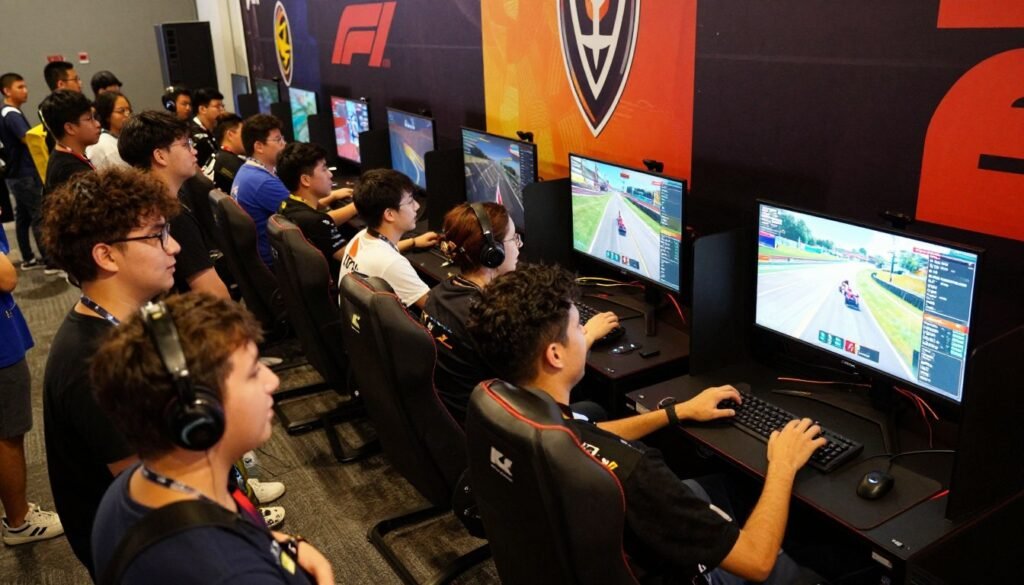
Participation in high-profile tournaments is another vital way the team stays connected with the public. Competing in prestigious events like the Formula 1 Sim Racing World Championship allows the team to showcase their skills on a global stage. These competitions are not just about winning; they are about proving the team’s dedication to the craft of esports.
Public events and live-streamed races provide unique opportunities for real-time fan interaction. During these broadcasts, viewers can engage with the team, ask questions, and share their enthusiasm for the sport. This level of involvement is essential for promoting the growth of virtual racing and ensuring that the community continues to thrive for years to come.
Max Verstappen is building a legacy that extends far beyond the physical tracks of Formula 1. His digital racing outfit stands at a pivotal moment as it prepares to bridge the gap between virtual simulation and professional motorsport.
The team faces a landscape of rapidly evolving technology and intense global competition. Maintaining a competitive edge requires constant innovation in software integration and driver performance metrics. The squad must adapt to new physics engines and hardware standards to stay ahead of rival organizations.
The long-term vision centers on creating a premier development platform for aspiring drivers. By scouting raw talent, the team aims to provide a structured path for gamers to transition into real-world racing series. This initiative serves as a bridge for the next generation of stars to prove their skills in a high-pressure environment.
The influence of this project continues to grow within the gaming community and the broader automotive industry. You can join the conversation by following their latest events on social media platforms. Your support helps drive the evolution of digital sports as they redefine what is possible in the world of competitive racing.