Physical Address
304 North Cardinal St.
Dorchester Center, MA 02124
Physical Address
304 North Cardinal St.
Dorchester Center, MA 02124

What is Verstappen's racing team called? Dive into the world of Red Bull Racing, the Formula 1 team that has propelled their star driver to success.
Did you know that a single energy drink company has transformed the landscape of modern Formula 1? This powerhouse organization currently dominates the grid, setting records that leave competitors in the dust.
Many fans often ask, what is Verstappen’s racing team called? The answer lies with the iconic Oracle Red Bull Racing squad. This elite group operates under the umbrella of the global giant, Red Bull GmbH.
Success defines this legendary outfit in every sense of the word. They combine cutting-edge engineering with world-class driving talent to maintain their status as a premier force in motorsports. Understanding their history provides a deeper appreciation for the speed and precision seen on the track today.
The story of the team behind Max Verstappen is one of ambition and relentless innovation. While many fans recognize the Verstappen racing team name as a powerhouse, its roots lie in a bold vision to challenge the status quo of motorsport. Dietrich Mateschitz, the visionary founder, sought to create a brand that embodied energy, speed, and a fearless approach to competition.
The team officially entered the Formula 1 grid in 2005 after acquiring the Jaguar Racing team. This transition marked the beginning of a new era, characterized by rapid growth and a commitment to technical excellence. A significant milestone occurred on February 16, 2021, when the organization established Red Bull Powertrains in Milton Keynes, England.
This strategic move allowed the team to take full control of its engine development. By bringing power unit production in-house, the team ensured that its chassis and engine designs worked in perfect harmony. This level of integration has been a cornerstone of their recent success on the track.
“We are not here to just participate; we are here to win and push the boundaries of what is possible in racing.”
Since its inception, the team has secured numerous accolades that solidify its place in history. The Verstappen racing team name is now synonymous with championship-winning performance and tactical brilliance. Their journey to the top includes several key accomplishments:
The team continues to demonstrate unmatched resilience in a highly competitive environment. By focusing on long-term goals and fostering a culture of continuous improvement, they remain a dominant force. Their ability to adapt to changing regulations while maintaining high performance levels is truly impressive.
When fans ask, “What is Verstappen’s racing team called?”, they are really asking about the heart of a championship dynasty. This partnership represents a perfect synergy between a world-class driver and a dedicated engineering crew. Understanding Verstappen’s team in F1 is essential to grasping how they have dominated the modern era of motorsport.
Max Verstappen joined the organization as a young, raw talent with immense potential. The team provided him with the environment needed to refine his aggressive driving style into a calculated, championship-winning approach. Early on, the focus remained on steady growth and building trust between the driver and his mechanics.
This period was defined by learning the nuances of the car and the technical language of the garage. By fostering a supportive atmosphere, the team allowed him to mature into the leader he is today. This foundation proved vital for the success that followed in later seasons.
Since his arrival, Max has been the central figure in the team’s rise to the top of the standings. He has secured multiple Drivers’ Championships, cementing his status as a cornerstone of the organization. His ability to provide precise feedback has helped engineers push the limits of vehicle performance.
Beyond his raw speed, his unwavering commitment to the team’s development goals has been a game-changer. He works closely with the technical staff to ensure every upgrade translates into a competitive advantage on the track. This collaborative spirit remains the driving force behind their ongoing pursuit of excellence in every race.
The consistent success of Max Verstappen’s racing team relies on a highly disciplined organizational structure. This framework ensures that every department works in harmony to achieve peak performance on the track. By maintaining clear lines of communication, the team remains agile even when facing the intense demands of a global racing season.
At the heart of the operation, leadership roles are divided to maximize efficiency. Christian Horner provides the overarching vision as Team Principal, guiding the squad through the complexities of the sport. His ability to foster talent has been a cornerstone of the team’s long-term stability.
Technical excellence is managed by specialized directors who oversee car development and engineering. Furthermore, Laurent Mekies serves as the CEO of Red Bull Powertrains, overseeing critical operations that power the cars. This division of labor allows the team to focus on both immediate race results and long-term mechanical innovation.
The management style within Max Verstappen’s racing team is built on the principle of rapid decision-making. In a high-pressure environment, leaders must act decisively to address technical issues or strategic shifts during a race. This proactive approach helps the team stay ahead of competitors who may struggle with slower internal processes.
Building a winning culture is another vital component of their strategy. By empowering individual departments to take ownership of their tasks, the team fosters a sense of accountability. This collective mindset ensures that everyone, from the pit crew to the engineers, feels responsible for the final outcome.
| Leadership Role | Primary Responsibility | Strategic Focus |
|---|---|---|
| Team Principal | Overall Operations | Team Vision & Culture |
| CEO of Powertrains | Engine Development | Technical Performance |
| Technical Director | Car Design | Aerodynamic Efficiency |
The Red Bull Racing team name has become synonymous with groundbreaking engineering and relentless innovation on the Formula 1 circuit. By consistently challenging traditional design limits, the team maintains a competitive edge that keeps them at the front of the pack.
At the heart of their success lies a sophisticated approach to aerodynamics. The team utilizes advanced wind tunnel testing and computational fluid dynamics to refine every curve of the chassis. This meticulous design process ensures that the car slices through the air with minimal drag while maximizing downforce.
Engineers work in tight collaboration to ensure that the bodywork integrates perfectly with the mechanical components. By focusing on airflow efficiency, they create a vehicle that remains stable even during the most demanding high-speed corners.
The transition to in-house power unit development marks a bold new chapter for the organization. Red Bull Powertrains now operates out of a specialized 5,000-square-foot facility located conveniently near the chassis department in Milton Keynes.
This proximity allows for seamless integration between the engine team and the car designers. By controlling their own power unit destiny, the Red Bull Racing team name ensures that every aspect of the car is optimized for peak performance. This strategic shift toward internal development is essential for adapting to the evolving landscape of modern engine technologies.
| Innovation Area | Primary Focus | Key Benefit |
|---|---|---|
| Aerodynamics | Downforce Optimization | Higher Cornering Speeds |
| Chassis Design | Weight Reduction | Improved Agility |
| Power Units | Energy Efficiency | Superior Acceleration |
The history of Verstappen’s F1 team is marked by intense battles against legendary competitors who pushed them to their limits. These rivalries serve as the primary catalyst for technical evolution and strategic brilliance on the track. By facing off against the best in the world, the team has consistently found ways to improve its performance under pressure.
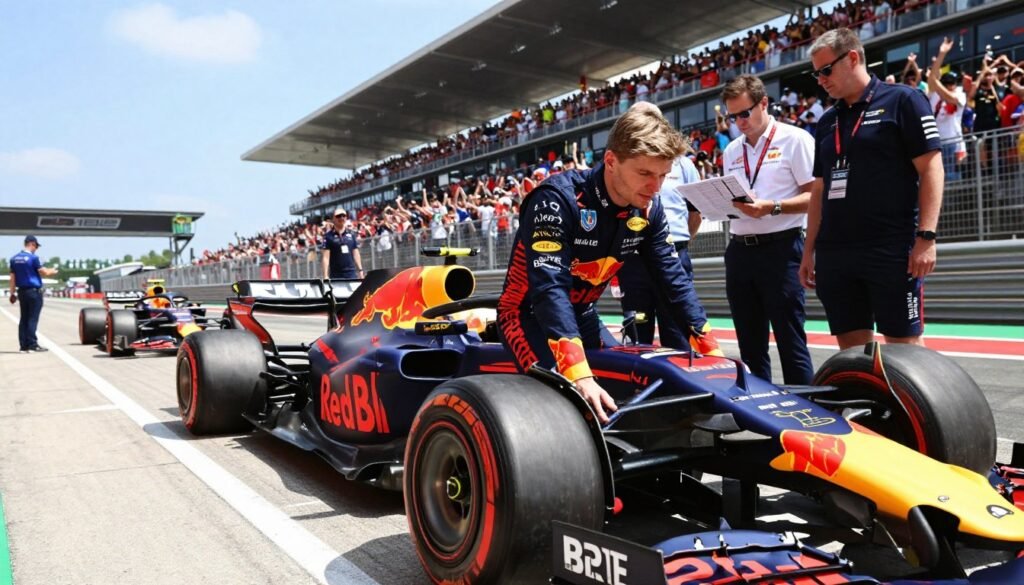
Over the years, the team has locked horns with established giants like Mercedes and Ferrari. These organizations have challenged the status quo, forcing the team to refine its aerodynamics and engine management. Collaboration has also been a key factor in staying ahead, particularly with Honda providing vital technical support and race operation assistance between 2022 and 2025.
The competitive landscape remains dynamic, with teams like McLaren also emerging as significant threats. Each rival brings a unique set of strengths, requiring Verstappen’s F1 team to remain agile and innovative. This constant pressure ensures that no race weekend is ever predictable.
Some of the most iconic moments in recent history have come from these high-stakes duels. Whether it is a last-lap overtake or a strategic masterclass in the pits, these races define the legacy of the sport. The following table outlines some of the most significant rivalries that have shaped the competitive journey of the team.
| Rival Team | Primary Focus | Impact on Development |
|---|---|---|
| Mercedes | Aerodynamic Efficiency | High-speed cornering gains |
| Ferrari | Engine Power | Improved power unit reliability |
| McLaren | Chassis Balance | Enhanced vehicle stability |
These rivalries are not just about winning trophies; they are about pushing the boundaries of what is possible in engineering. As Verstappen’s F1 team continues to compete at the highest level, these historic battles remain a testament to their resilience and drive for excellence.
Beyond the high-speed track action, a unique culture thrives within the global community of Verstappen’s Formula 1 team. This organization has successfully cultivated an image that feels both highly professional and remarkably approachable to fans everywhere. By bridging the gap between elite engineering and everyday passion, they have created a loyal following that spans continents.
The supporters of this team are known for their unwavering enthusiasm and vibrant presence at circuits around the world. Whether they are cheering from the grandstands or engaging through social media, these fans feel like a genuine part of the racing journey. This connection is essential for Verstappen’s Formula 1 team as it builds a lasting legacy beyond just podium finishes.
The team works hard to ensure that their supporters feel valued and heard. By maintaining a transparent and open communication style, they have fostered a sense of belonging among diverse groups of people. This inclusive environment is a cornerstone of their brand identity.
To keep the momentum going, the team organizes a variety of interactive experiences that bring the sport closer to the public. These initiatives are designed to celebrate the shared love for racing and innovation. Some of the most popular ways they engage with their audience include:
These efforts ensure that Verstappen’s Formula 1 team remains a central figure in the hearts of motorsport enthusiasts. By blending physical events with digital accessibility, they continue to grow their community while keeping the spirit of competition alive and well.
The financial engine driving Dutch driver Verstappen’s team is as sophisticated as the cars themselves. In the world of Formula 1, success requires more than just talent behind the wheel; it demands massive capital for research and development. Strategic partnerships act as the lifeblood that keeps the team at the front of the grid.
Red Bull Racing maintains a diverse portfolio of partners that span across various global industries. These relationships provide the necessary funding to push the boundaries of automotive engineering. A standout development is the strategic partnership with Ford Motor Company, which focuses on the creation of advanced power units for the 2026 season.
This collaboration represents a significant shift in the team’s technical trajectory. By aligning with a global automotive giant, the team ensures it has the resources to remain competitive in a changing regulatory environment. Such alliances are vital for maintaining the high standards expected of Dutch driver Verstappen’s team.
Commercial success translates directly into on-track performance through improved logistics and cutting-edge technology. Sponsorship funds allow the team to invest in wind tunnel testing and high-fidelity simulations. These tools are essential for refining aerodynamics and maximizing engine efficiency during the race weekend.
The following table outlines how different partnership categories contribute to the overall operational excellence of the team:
| Partnership Type | Primary Focus | Operational Benefit |
|---|---|---|
| Automotive Partners | Engine Development | Enhanced Power Units |
| Technology Partners | Data Analytics | Real-time Strategy |
| Logistics Partners | Global Transport | Efficient Equipment Flow |
| Lifestyle Brands | Fan Engagement | Global Brand Reach |
Ultimately, these partnerships create a stable foundation for long-term growth. By securing reliable financial backing, the team can focus on its primary goal: winning championships. This synergy between commercial partners and engineering teams remains the gold standard in modern motorsport.
Building on a legacy of speed, the team is now setting its sights on the challenges of the 2026 season and beyond. The organization remains committed to refining Verstappen’s race team identity while navigating the complex landscape of modern motorsport. By focusing on long-term stability, they aim to stay at the front of the grid.
The primary goal for the coming years is to maintain a dominant presence in Formula 1. As technical regulations evolve, the team is investing heavily in research and development to ensure their cars remain the fastest on the track. They understand that staying ahead requires constant adaptation and a willingness to push boundaries.
Strategic planning is at the heart of their operations. The team is currently prioritizing several key areas to ensure they remain competitive:
A crucial part of the team’s future success lies in the Red Bull Junior Team. This program serves as a vital pipeline for identifying and nurturing the next generation of world-class drivers. By investing in young stars early, the team ensures a smooth transition when it is time to refresh their lineup.
Looking toward the 2026 season, the team has already made significant moves to secure its future. Isack Hadjar is officially listed as a 2026 race driver, representing the next wave of talent ready to make an impact. This commitment to youth development helps solidify Verstappen’s race team identity as a forward-thinking organization that values both experience and raw potential.
When evaluating the landscape of modern motorsport, few organizations command the same level of respect as this Formula 1 powerhouse. While traditional manufacturers often rely on decades of legacy, this team has carved its own path through sheer innovation and bold decision-making. Their rise to the top of the sport remains a fascinating study in efficiency and speed.
The team distinguishes itself through an agile management structure that allows for rapid development cycles. Unlike larger, more bureaucratic automotive giants, they prioritize quick decision-making and calculated risk-taking. This strategic flexibility ensures they can adapt to changing technical regulations faster than their competitors.
Furthermore, their unique culture fosters a high-performance environment where engineers and drivers work in perfect harmony. By focusing on a flat hierarchy, they empower their staff to push the boundaries of aerodynamics and vehicle dynamics. This approach has turned them into a true Formula 1 powerhouse that consistently challenges the status quo.
When looking at the history of the sport, the team’s championship record stands as a testament to their dominance. They have successfully transitioned from a newcomer to a perennial title contender, rivaling the longevity of historic marques. Their ability to maintain peak performance across different engine eras highlights their technical superiority.
The following table illustrates how their operational metrics compare to other legendary teams in the sport:
| Team Name | Championship Era | Primary Strength |
|---|---|---|
| Red Bull Racing | 2010–Present | Aerodynamic Innovation |
| Ferrari | 1950–Present | Historical Legacy |
| Mercedes | 2014–2021 | Engine Efficiency |
| McLaren | 1980–1990s | Chassis Versatility |
Ultimately, the team’s success is not just about raw speed but about consistent excellence. By analyzing their trajectory, it becomes clear why they remain a dominant force in the paddock. Their legacy continues to grow as they set new benchmarks for what a modern racing organization can achieve.
Max Verstappen has transformed the landscape of modern Formula 1 through his relentless drive and precision. His presence on the grid pushes every competitor to reach new heights of performance.
Young drivers now look to his aggressive style and technical mastery as the gold standard for racing. This shift in approach changes how teams scout and develop talent for the future. The Red Bull Racing success story serves as a blueprint for those aiming to reach the pinnacle of motorsport.
The partnership between this world champion and his team continues to redefine what is possible on the track. Fans can expect even more thrilling battles as he cements his place in history. We hope this guide clarifies the identity of his team and highlights the importance of their ongoing journey.
What do you think will be the next major milestone for this powerhouse duo? Share your thoughts with other racing enthusiasts to keep the conversation moving forward.