Physical Address
304 North Cardinal St.
Dorchester Center, MA 02124
Physical Address
304 North Cardinal St.
Dorchester Center, MA 02124

Curious about professional racing gear? Discover what SIM setup do F1 drivers use in our latest buyer's guide to help you build your own pro rig today.
Did you know that top Formula 1 stars spend over 200 hours a year in a virtual cockpit? Since real track testing is limited, these sophisticated athletes rely on high-tech racing tools to stay sharp. It is how they help develop a faster car without burning fuel in the real world.
Modern sim racing has evolved dramatically and moved far beyond simple video games. Today, the same technology used by pro drivers is trickling down to home enthusiasts. This allows anyone to enjoy a truly authentic racing experience at home.
Exploring a pro simulator is the best way to start your journey. It is amazing how virtual cars now feel just like the real thing on your screen. You can find a great sim rig that fits your budget and space requirements.
We will explore how advanced racing tools bridge the gap between pixels and pavement. Getting the right experience at home starts with knowing what the experts prioritize in their rigs. A professional sim racing rig offers a great sim challenge for any user.
Team engineers rely on high-end simulator tech to prepare for every grand prix event. This makes a home sim more exciting for those into sim racing. The competitive racing world is now at your fingertips with a quality sim and a dream for racing fans.
When fans ask, “What SIM setup do F1 drivers use?“, they often imagine a high-end gaming desk with a few monitors. In reality, these elite athletes utilize multi-million dollar engineering marvels that bridge the gap between the virtual and physical worlds. F1 teams rely on two primary simulation paths: physical driver-in-loop systems and massive computer clusters that crunch numbers around the clock.
A driver-in-loop (DiL) simulator acts as a highly advanced virtual test track located directly inside the team’s factory. The cockpit looks exactly like a real Formula 1 car, featuring a bespoke steering wheel and custom pedals. These systems are similar to professional flight simulators but focus on high-speed ground physics instead of aviation.
Professional drivers can complete over a full race distance in a single session to find the right direction for the car’s setup. This physical sim environment allows them to feel every bump and weight transfer through sophisticated motion platforms. It creates a seamless transition from the factory to the actual circuit on race weekends.
While a driver is busy in the cockpit, computer systems run thousands of laps in parallel to test different variables. These digital trials help engineers optimize performance in record time without needing a human behind the steering wheel. This massive data collection allows teams to refine vehicle dynamics and race strategy before the car ever hits the asphalt.
Computer simulations can log thousands of virtual laps in the same timeframe it takes a person to finish just one. These systems process terabytes of information to predict how tires will wear or how fuel loads impact balance. This parallel processing is crucial for staying competitive in the modern racing era.
Teams use laser-based Lidar technology to map every track with incredible 3D precision. The specialized rFpro software then provides a photorealistic environment so racing stars can spot every curb and braking marker. This high-fidelity sim environment ensures that the virtual car behaves exactly like its real-world counterpart.
F1 simulation is not about playing a game; it is about gathering actionable data to find that last tenth of a second.
Extensive correlation work ensures that a setup change in the simulator produces the same results seen on the GPS. This accuracy is vital when preparing for a racing weekend at a new or unfamiliar venue. It ensures that drivers arrive at the circuit with total confidence in their equipment’s behavior and their own time management.
| Feature | Driver-in-Loop (DiL) | Computer Simulation |
|---|---|---|
| Primary Purpose | Driver feel and training | Strategy and data analysis |
| Lap Capacity | Limited by human endurance | Thousands of parallel laps |
| Main Focus | Physical cockpit feedback | Mathematical vehicle dynamics |
| Hardware | Bespoke motion rig | High-performance server clusters |
When you look at an elite racing setup, the first thing you notice is how much it mimics a real cockpit. An F1 simulator recreates the layout and overall feel of professional racing. It is an integrated system where every component works together to build immersion. Achieving true realism requires more than just high-end pedals and a fancy wheel.
The biggest difference lies in the signature seating position. Unlike the upright posture of a GT car, you sit much lower and more reclined here. Your legs stretch forward and stay elevated, just like in a formula car.
This specific driving position isn’t just for looks; it changes how you interact with the car. It impacts your steering control and your consistency during heavy braking. A proper formula seat ensures your body mechanics align with the physics of the virtual car.
Professional-grade simulator accuracy sets elite rigs apart from standard consumer options. Most home rigs make a difference in how they handle rigidity or space. A high-end sim racing setup focuses on extreme precision to prevent any flex in the frame.
Rigidity is vital because even tiny movements in the wheel mount can ruin your feedback. Serious racers prioritize the geometry of their racing setup over simple aesthetics. This foundation allows you to get the most out of even a high-end sim.
Correlation describes the relationship between virtual data and real-world behavior. Professional teams spend hours ensuring their sim feels exactly like the track. Few generic racing setups offer this level of technical detail.
A high-quality sim racing setup helps you develop muscle memory that translates to the real world. By maintaining a precise driving position, you ensure every input is accurate and repeatable. Using a specialized formula seat in the correct position is what separates the top tier from casual enthusiasts.
| Feature | Consumer Rig | Professional Setup |
|---|---|---|
| Seating Position | Upright / GT Style | Reclined / Ideal seating position |
| Pedal position | Floor-based | Elevated and Inverted |
| Frame Type | Lightweight / Folding | Consistent racing setup |
| Sim Reliability | Variable | Industrial-Grade Pro sim |
| Force Feedback | Approximate racing feel | True racing physics |
Achieving professional-grade immersion starts with selecting the right core parts for your racing setup. A complete setup isn’t just about raw speed; it involves how every piece of hardware works as a single system. When your components align perfectly, you can focus on the track with total confidence.
The foundation of a pro sim racing setup is a high-quality cockpit. You need a cockpit frame that handles the intense forces of direct drive wheels without any flex. Many drivers prefer aluminum extrusion because it is modular and extremely strong.
| Material Type | Rigidity Level | Adjustability | Total Weight |
|---|---|---|---|
| Aluminum Extrusion | Maximum | High | Moderate |
| Steel Tube | High | Low | Heavy |
| Folding Plate | Low | Moderate | Light |
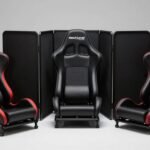
Your seating choice determines your posture and long-term comfort while driving. A specialized seat supports your body during heavy braking maneuvers in the cockpit. This seating arrangement usually features a 30 to 45-degree recline to mimic an F1 car.
High-quality seating keeps you stable so your control over the car remains precise. An ergonomic seat helps you maintain the correct distance from the pedals. Proper setup allows for hours of intense racing without physical fatigue.
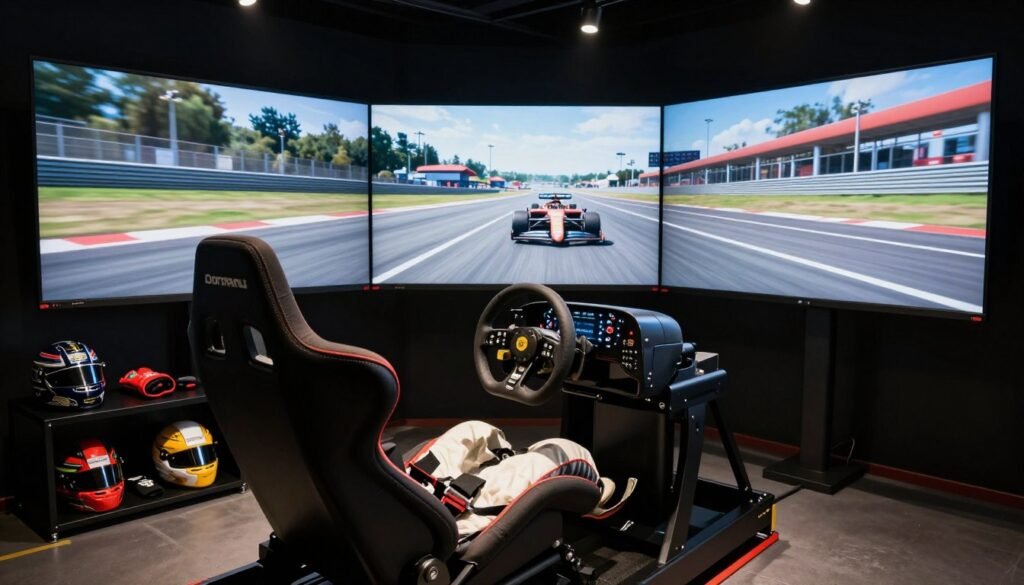
Modern gaming demands high-end visuals to help you judge every corner. You can choose triple monitors or a VR headset for your racing experience. These gaming displays require a powerful PC to keep the sim running smoothly at high frame rates.
Fast graphics are essential for competitive racing and avoiding motion sickness. A smooth racing setup ensures you react to changes in grip instantly. Consistent frame rates are the secret to predictable handling and better lap times.
Securely mounting your wheelbase and pedals is vital for a racing setup. A sturdy cockpit ensures that your hardware stays in place under heavy pressure. This control integration allows for a consistent sim experience every time you drive.
Having a solid cockpit and a reliable sim setup makes all the difference in your performance. A good gaming setup should always feel as rigid as a real car. This sim racing setup will help you master any track with a high-performance gaming feel. Every sim enthusiast knows that stability is the key to racing success.
Your interface with the car starts at the steering wheel, making the choice of a direct drive wheelbase a critical decision for realism. This hardware serves as the primary link between your physical movements and the virtual tarmac. Proper equipment ensures that every input you make translates perfectly into the digital world.
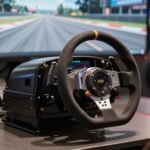
Direct drive technology has become the gold standard for any serious sim racing setup. Unlike older systems, a direct drive wheel connects the steering shaft directly to the motor. This removes belts or gears that often filter out subtle track details and feedback nuances.
You will feel every kerb impact and change in tire slip angles with high precision. This unfiltered feedback allows for better control through high-speed corners. Most pros prefer a D-shaped steering wheel between 280-300mm for the best racing response.
Using a smaller wheel helps mimic the quick movements found in real Formula cars. It allows you to catch slides faster than a larger GT-style wheel would permit.
For a true F1 sim setup, you need a base with significant torque. These units usually range from 12 to 25+ Nm of peak force. High torque isn’t just about strength; it provides headroom to prevent signal clipping during heavy cornering.
This ensures the steering remains smooth and detailed even under extreme loads. Proper positioning of the wheel is also vital for the reclined Formula seating posture. If the steering wheel is too far away, you lose leverage and the realistic experience.
You want the wheel close enough to maintain bent elbows for optimal steering power. A well-mounted Formula wheel allows you to drive for hours without unnecessary muscle strain.
Several brands lead the sim racing market today with impressive hardware. Fanatec offers a great ecosystem that balances performance with easy access for most users. Simucube is often the choice for esports competitors who demand professional-grade steering accuracy.
Meanwhile, Moza provides competitive technology at very compelling price points for a modern racing rig. Using an F1-style steering wheel with integrated button boxes lets you adjust brake bias on the fly. This level of racing immersion enhances the overall sim racing experience significantly.
A quality steering wheel on a sturdy base makes all the difference in sim racing performance. The racing sim community values gear that lasts through intense sessions. A solid steering wheel paired with a great wheel base ensures you are ready for any sim challenge.
Dedicated drivers often keep a spare wheel for different car classes. However, the core sim steering motor remains the heart of the entire operation. Choosing the right wheel is the first step toward a podium finish.
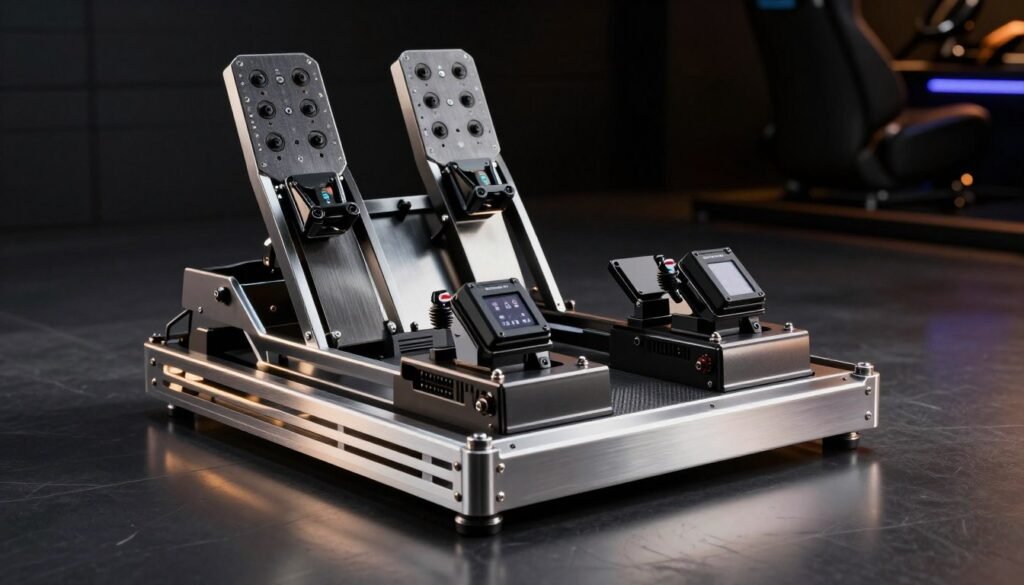
Real F1 braking is about raw pressure rather than how far the pedal moves, making specific hardware essential. High-quality pedals provide the muscle memory needed for consistent trail braking in sim racing.
Without the right feel, you will struggle to find those last tenths of a second on the track. These systems ensure that every ounce of force you apply translates directly into stopping power.
A pedal using a load cell measures how hard you press rather than the distance traveled. This matches how professional racing cars measure input through pressure sensors.
It allows you to develop muscle memory based on force, which is more reliable than guessing the position of the pedal. This technology completely revolutionized the way enthusiasts approach their virtual career.
Hydraulic systems take this further by using actual fluid resistance for the most authentic feel. These systems represent the premium tier for any serious sim enthusiast looking for total immersion.
Most wheel pedals mount to a floor plate, but F1 cars use an inverted setup. This position mounts the pedals from above, letting your feet interact with the faces at a natural angle.
Because your seat is so low, this position is vital for proper ankle mechanics and comfort during sim racing. It helps you maintain precise control during long sessions without physical fatigue.
Proper geometry also helps with throttle modulation on corner exits. It ensures you can apply power smoothly without upsetting the car’s balance on a sim track.
Brands like Heusinkveld lead the market with engineering-focused pedals that are highly adjustable. Simtag offers professional-grade hydraulic systems often seen in high-stakes racing competitions.
Meanwhile, Asetek provides innovative inverted designs that bring authentic Formula braking to home users. These wheel pedals are built to withstand the massive forces required for sim racing.
When selecting your pedals, always check the mounting compatibility with your current frame. Upgrading your wheel pedals often yields faster lap times in racing than simply buying a new wheelbase.
High-end pedals allow you to personalize the force requirements to your exact liking. This customization is a hallmark of professional racing setups across the globe.
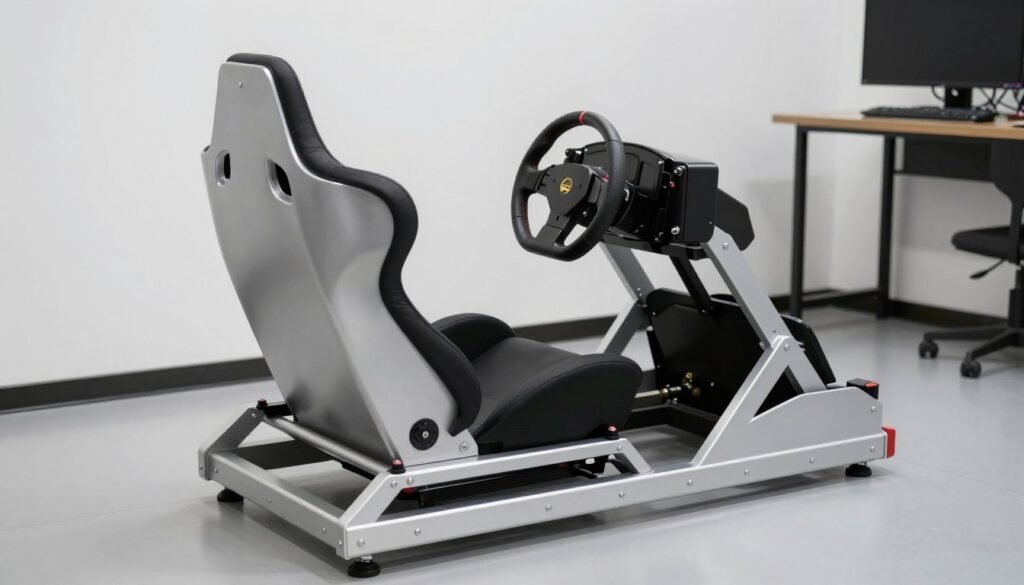
While many focus on wheels, the foundation of any elite racing rig is actually the cockpit. This structure determines your position and provides the stability needed for high-end hardware. In a Formula-style setup, the geometry is more extreme than other categories.
Modern setups require a frame that handles massive forces without bending. The seating must feel secure to give you total control at high speeds. Choosing the right base is the first step toward a pro-level experience.
Aluminum extrusion systems use modular profiles, usually 40mm x 80mm or larger. These options offer incredible rigidity and let you expand your rig easily. You can bolt on new accessories whenever you need them.
Steel tube designs provide great strength and often cost less. However, they are usually heavier and harder to customize than aluminum. Any flex in the frame during hard braking will ruin the feel of your direct drive system.
Authentic formula seating requires a seat recline between 30 and 45 degrees. This unique angle mimics the real position of an F1 driver. A good cockpit must allow you to tilt the seat to reach this level.
Adjustable pedal decks and wheel mounts are also vital for comfort. You should be able to move the pedals higher than your hips. Seat sliders help sim racers of different heights find their perfect fit quickly.
Playseat F1 setups offer licensed aesthetics and a small footprint. They work well if you have limited space in your home. Some models even fold down to save 70% of their floor space when you are not racing.
Serious sim racers often choose Sim-Lab for its modular aluminum frames. These options allow for ultimate customization and extra rigidity. Trak Racer provides robust racing frames that balance professional features with fair pricing.
If you enjoy different styles, look for multi-purpose setups that switch between Formula and GT modes. Dedicated formula seating delivers the best performance for open-wheel fans. Always ensure your cockpit can support future upgrades like motion systems.
Navigating the world of sim racing gear can be tricky, but categorizing hardware by price points makes the process much simpler. Many sim racers find that their needs change as they gain more experience on the virtual track. You must decide which racing setup fits your current skills while leaving room for future growth.
Establishing a clear budget helps you avoid overspending on features you might not need yet. A well-planned setup balances the quality of the cockpit with the power of the internal electronics. This approach ensures that every dollar spent contributes to a faster lap time and better immersion.
At this level, you can achieve a fantastic Formula seating position without breaking the bank. These setups typically use steel tube construction which is lighter than premium frames. They offer a compact footprint that works well for gaming in smaller rooms or shared spaces.
You should expect some minor flex when using a powerful direct drive wheel on these lighter frames. However, for entry-level and mid-range equipment, these options perform admirably and remain very stable. Most packages include a basic direct drive wheel and a solid set of load cell pedals.
Selecting a cockpit that allows for future adjustments is a smart move for your first sim racing setup. Even at this budget, you will experience a massive jump in quality compared to a standard desk setup. It provides the essential ergonomics needed to build proper muscle memory for F1 racing.
Moving up to a mid-range budget allows for significant upgrades in stability and visual immersion. Aluminum extrusion cockpits become the standard here, offering incredible rigidity for stronger gaming hardware. This racing setup usually includes high-end load cell pedals and a sturdier steering wheel base.
Rigidity is the primary benefit of this tier, as it removes any unwanted movement during heavy braking. Serious sim racers often choose this path to support triple monitor displays or high-resolution VR headsets. You can find the best sim racing setup components that balance price and professional-grade performance in this range.
Investing in a stronger wheel with 15-20 Nm of torque provides much more detail through your hands. These setups satisfy competitive online racers who spend many hours training every week. The budget also allows for better gaming PC hardware to maintain high frame rates.
For those seeking the ultimate sim racing setup, the premium tier offers a level of realism with zero compromises. These setups feature competition-spec cockpits and hydraulic pedals that perfectly mimic real F1 resistance. Every component is designed to withstand the forces of a high-torque wheel delivering over 25 Nm.
“The right equipment doesn’t just make you faster; it connects you to the car in a way that makes every corner feel alive.”
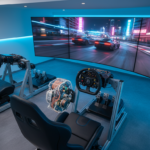
At this budget, you can add motion platforms that tilt and vibrate to simulate G-forces and track surface textures. You will likely use ultra-wide displays or triple 4K gaming monitors for a massive field of view. These options are often used by professional drivers for home training during the off-season.
A premium setup often includes custom-molded seats and advanced steering wheel units with integrated digital dashes. While the budget is high, the durability of these professional parts ensures they last for many years. It is the definitive sim racing setup for anyone wanting the closest experience to a real cockpit.
Regardless of your budget, the goal is to create a space that makes you want to drive every day. Choosing the right wheel and seat early on makes it easier to upgrade individual parts later. Start with what you can afford and grow your gaming rig as your passion for the sport increases.
| Tier | Cockpit Style | Wheel Torque | Pedal Type |
|---|---|---|---|
| Entry-Level | Steel Tube | 5-8 Nm | Load Cell |
| Mid-Range | Aluminum Extrusion | 15-20 Nm | High-End Load Cell |
| Premium | Competition Spec | 25+ Nm | Professional Hydraulic |
Elevating your sim racing experience involves engaging all your senses through advanced hardware upgrades. This stage transforms simple gaming into a multi-sensory driving adventure that mimics reality. You can go from just watching a screen to feeling every force on the track.
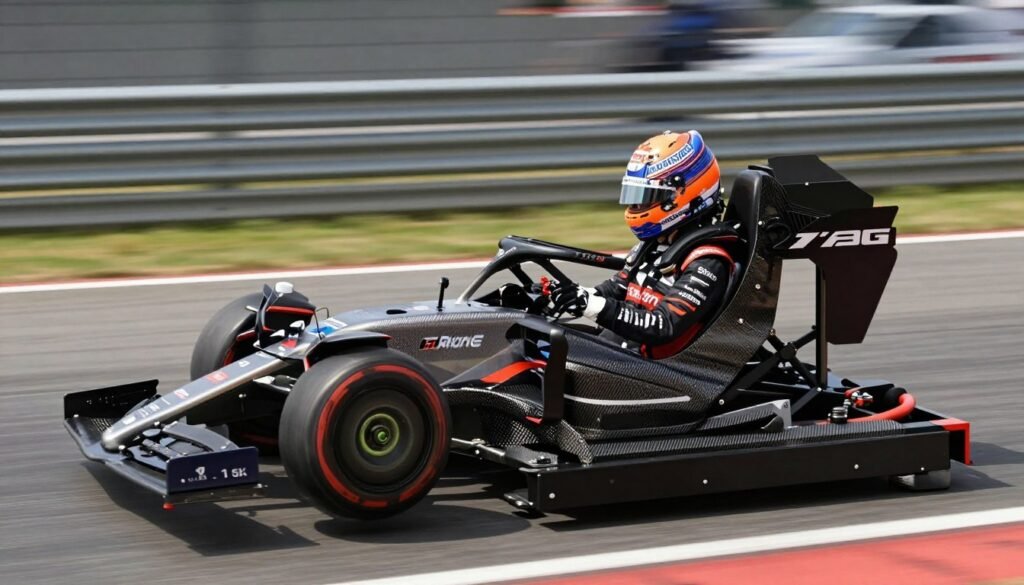
Motion platforms change static sim setups by adding physical movement like pitching and rolling. A DOF reality motion platform can range from simple two-degree systems to full six-DOF setups. These systems deliver essential feedback during hard braking and high-speed cornering.
You will feel the car heave as you hit a kerb or surge forward under heavy acceleration in your gaming session. These movements ensure your body reacts just as it would in a real racing seat. Always check if your cockpit supports these heavy sim additions before you buy.
Choosing between a headset and monitors is a big decision for any sim racing fan. The Meta Quest 3 sim racing experience offers incredible depth perception for hitting every apex perfectly. It provides total immersion, making you feel like you are sitting inside the actual car during gaming.
Triple monitors offer better peripheral vision and more comfort for long gaming hours. While VR is great for short bursts in games, monitors allow you to see your physical controls with ease. Both options significantly improve your reaction time and overall driving precision in modern racing.
Tactile transducers or bass shakers add another layer of immersion to your sim rig. These devices turn low-frequency sounds into vibrations you feel through your seat and pedals. They replicate engine rumbles and tire slip that visual feedback alone cannot capture during gaming.
Adding these tools makes your sim racing feel more organic and alive during intense games. High-end racing setups often combine motion with these shakers for the ultimate immersion. It is a cost-effective way to boost immersion without spending a fortune every time you play games.
Modern sim racing thrives on this immersion to create a realistic gaming environment. Drivers spend a lot of time perfecting their driving skills on the virtual track. This level of immersion makes racing games feel like a professional sim test on a famous track. Total immersion is the goal for any serious sim setup in the world of gaming and competitive sim racing games.
Elevating your home racing environment to match the standards of elite Formula drivers is an achievable and rewarding project. Professional sim racing gear is more accessible than ever, allowing you to build a setup that mirrors a real team facility. Modern sim racers no longer have to settle for basic equipment that lacks realism. Every page of this guide highlights how racers can improve their skills using high-end sim racing technology to bridge the gap between virtual and real-world performance.
Creating an authentic formula environment means focusing on the unique seating position used by professional drivers. Elite racers sit with their legs elevated in a specialized formula cockpit to handle high G-forces. This formula geometry ensures your driving inputs translate directly to the virtual track with maximum precision. Many racers find that specialized cars require this level of detail to feel truly immersive during long sessions.
You don’t need a million-dollar budget to enjoy high-quality formula simulation in your own home. Whether you start with entry-level formula gear or a premium formula rig, you should always focus on performance. Consult each page of your equipment manuals to understand your available space before buying large components. The right setup for racing should accommodate both your budget and your physical space constraints comfortably.
The racing community is growing rapidly, bringing better formula software and more realistic cars to our screens. Investing in a solid setup now will provide years of driving joy as technology continues to improve. Use the information on this page to guide your formula choices carefully. Professional drivers and amateur racers alike spend a lot of page time analyzing track data for faster cars.
Successful sim racing requires a dedicated setup that rewards consistency and patience. Use every page here to learn about high-end cars and how they behave on the limit. Professional drivers know that formula success happens when racers respect the track and their equipment. Keep your racing passion alive by checking each page for the latest formula updates and racers tips. This high-level sim racing approach ensures your racing setup stays competitive for years to come.
| Component Group | Primary Focus | Formula Advantage |
|---|---|---|
| Chassis | Rigidity and Geometry | Replicates the reclined seating position of professional drivers. |
| Wheelbase | Force Feedback Detail | Provides the high torque required for realistic steering resistance. |
| Pedal System | Brake Pressure | Uses load cells to mimic the heavy formula braking feel. |
| Software | Physics Accuracy | Connects the hardware to realistic virtual cars and tracks. |