Physical Address
304 North Cardinal St.
Dorchester Center, MA 02124
Physical Address
304 North Cardinal St.
Dorchester Center, MA 02124

Discover which NASCAR driver's sim racing roots propelled them to the big leagues. Explore the rise of this NASCAR rising star.
Did you know that over 160,000 active members now use advanced digital platforms to sharpen their skills? This massive community has transformed from a simple hobby into a legitimate training ground for professional motorsports.
Rajah Caruth serves as a perfect example of this modern evolution. He successfully leveraged his background in virtual environments to secure a competitive seat in the professional circuit. While he emphasizes that real-life experience remains vital for success, his journey proves that digital practice provides a massive head start.
Many fans often wonder about the path to the track. The rise of NASCAR’s next driver pipeline highlights how gaming setups now mirror high-stakes stock car environments. By mastering these virtual tools, a talented driver can bridge the gap between a home office and the winner’s circle.
Sim racing has transformed from a casual hobby into a serious training ground for elite drivers. It represents a sophisticated evolution in how athletes prepare for the high-stakes environment of professional motorsports.
At its core, this activity is far more than a standard video game. It utilizes a virtual racing platform to replicate the physics and handling of real-world vehicles with incredible accuracy.
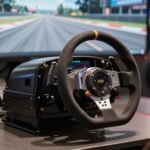
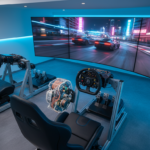
Drivers use high-end hardware, including force-feedback steering wheels and pedal sets, to mimic the physical demands of a cockpit. Many programs feature laser-scanned replicas of famous tracks, ensuring that every bump and curb is positioned exactly as it appears in reality.
The digital racing landscape saw a major turning point when iRacing was launched in 2008. This advanced online service provided a professional-grade environment that allowed drivers to compete against others from across the globe.
Since then, the industry has exploded into a massive e-sports phenomenon. Major organizations now recognize this virtual racing platform as a legitimate pathway for discovering raw talent. The growth of these digital leagues has bridged the gap between gaming enthusiasts and professional athletes.
The transition from a digital screen to a physical track is becoming increasingly seamless. By spending hours in sim racing environments, drivers can refine their decision-making processes without the high costs associated with traditional track time.
The benefits of this training method include:
Precision is the ultimate goal for any competitor using iRacing to sharpen their instincts. As sim racing continues to integrate with traditional motorsports, it remains a vital tool for those aiming to reach the top tier of NASCAR.
Rajah Caruth’s path to the track began long before he ever sat in a real race car. Like many young fans, his fascination with speed started with the animated movie Cars, which ignited a lifelong passion for motorsports.
While most children play with toy cars, Caruth sought a more immersive experience. He discovered the world of digital competition, which provided a unique training ground for his future career.
His formal entry into the competitive scene occurred on June 11, when he turned sixteen. He immediately signed up for the eNASCAR Ignite Series, marking the official start of his journey toward professional racing.
Moving from a home simulator to a high-speed vehicle requires immense dedication and skill. Caruth proved that the skills learned in a digital environment could translate effectively to the asphalt.
The pivotal moment in his career arrived when he joined the Drive for Diversity program. This initiative served as the bridge for his virtual to real transition, allowing him to showcase his talent on actual circuits.
Success in this field demands more than just natural ability; it requires grit and persistence. By mastering the nuances of professional racing through simulation, Caruth successfully navigated the difficult virtual to real leap that many aspiring drivers find impossible to achieve.
If you are wondering which NASCAR driver came from sim racing?, the answer is found in the remarkable story of Rajah Caruth. He represents a new breed of talent that bridges the gap between the digital screen and the asphalt of professional tracks.
Rajah Caruth was born on June 11, 2002, in Atlanta, Georgia. His journey into the world of professional motorsports is anything but traditional. Unlike many drivers who start in karts as toddlers, Caruth honed his craft through intense dedication in the virtual world.
He quickly gained recognition within the eNASCAR community for his precision and race craft. His ability to translate virtual inputs into real-world car control caught the attention of major racing teams. This transition proved that the digital arena is a valid pipeline for future stars.
Caruth’s rise through the ranks has been nothing short of meteoric. He has consistently demonstrated that his time spent in eNASCAR competitions provided a solid foundation for high-stakes racing.
His career is marked by several key milestones that highlight his growth as a professional athlete:
This victory at Las Vegas solidified his status as a trailblazer for the next generation. By proving that virtual experience leads to real-world success, he has opened doors for many other aspiring drivers. His path serves as a blueprint for how modern technology shapes the future of the sport.
Mastering a complex circuit often begins long before a driver sits in a real cockpit. Today, professional athletes use sim racing to bridge the gap between digital practice and physical performance. This shift has fundamentally changed how teams prepare for race day.
Drivers now rely on virtual environments to build muscle memory for specific tracks. By repeating laps in a simulator, they can experiment with different racing lines without the risk of damaging expensive equipment. This process allows them to find the absolute limit of their vehicle’s grip.
When a driver learns to master these virtual circuits, they gain a significant advantage on the actual asphalt. They arrive at the track already knowing the nuances of every turn and elevation change. You can learn more about how NASCAR in sim racing helps bridge this gap by providing realistic feedback that translates directly to the driver’s seat.
The true power of modern training lies in the numbers. Drivers utilize data analysis to scrutinize their braking points and cornering speeds with incredible precision. By comparing their telemetry against top-tier benchmarks, they can identify exactly where they are losing time.
This scientific approach turns sim racing into a powerful tool for performance optimization. Instead of guessing, drivers use objective data to refine their style before they even step into a physical vehicle. This level of preparation ensures that every movement on the track is calculated and efficient.
Professional racing has evolved into a data-driven sport where simulators play a vital role. Teams now rely on these digital environments to refine their strategies before they ever reach the asphalt. This shift ensures that every driver enters the weekend with a clear plan for success.
Modern NASCAR organizations utilize high-fidelity simulators to prepare for race weekends. These systems allow engineers to test various vehicle setups in a controlled environment. By simulating specific track conditions, teams can optimize performance and make split-second decisions with greater confidence.
These tools are not just for practice; they are essential for gathering critical data. Drivers spend hours in the rig to master braking points and throttle control. This rigorous preparation helps them maintain a competitive edge in a field where every millisecond counts.
While virtual platforms offer incredible realism, they still differ from the physical demands of a real cockpit. Professional racing requires a unique blend of mental focus and physical endurance that is hard to replicate perfectly. Understanding these nuances is key for any driver moving between the two worlds.
The primary differences include:
Despite these differences, the core skills remain the same. The ability to process information quickly is what separates the best drivers from the rest of the pack. As technology improves, the line between these two experiences continues to blur, creating better prepared athletes for the future.
Digital racing platforms have become the ultimate proving ground for future NASCAR stars. These virtual arenas offer a competitive environment that mirrors the intensity of professional circuits. Many drivers now view these platforms as a direct pathway to real-world success.
High-level digital competitions attract the most talented drivers from across the globe. These tournaments require immense focus, precision, and a deep understanding of vehicle dynamics. Consistency is often the deciding factor between a podium finish and a disappointing result.
Organizers design these events to replicate the pressure of a live race weekend. By participating in these structured series, drivers learn how to manage tires, fuel, and race strategy under extreme stress. This training is vital for those aiming to transition into professional motorsports.
The platform iRacing has played a pivotal role in shaping the careers of modern racing icons. For instance, William Byron built an incredible foundation by securing over 100 wins and nearly 300 top-five finishes on the platform before his transition to offline racing in 2012. His journey serves as a blueprint for many young talents entering the sport today.
Rajah Caruth is another prime example of a driver who utilized virtual competition to sharpen his skills. His ability to translate digital performance into real-world success proves that the skills learned on iRacing are highly transferable. These achievements highlight how digital mastery can lead to a long and prosperous career on the track.
The path to professional motorsports is rarely a solo journey, even when it begins behind a screen. While the driver sits alone in a cockpit, they are actually part of a massive, interconnected network. This collaborative environment is what makes modern digital competition so effective for skill development.
Most drivers start their journey by joining a dedicated virtual racing platform. These spaces act as digital clubhouses where enthusiasts gather to trade secrets and improve their lap times. By sharing custom car setups and race strategies, members help each other overcome technical hurdles that would take years to learn alone.
These communities are not just about competition; they are about collective growth. When a driver struggles with a specific corner or tire wear, they can post a question and receive feedback from experts within minutes. This rapid exchange of information is a cornerstone of the sim racing culture.
Beyond simple data sharing, many veterans take on the role of mentors. They provide the guidance necessary for newcomers to transition from casual gaming to serious, competitive racing. This mentorship often includes reviewing telemetry data together to identify small mistakes in braking or throttle application.
Having a mentor on a virtual racing platform can drastically shorten the learning curve for a young driver. These experienced figures often share insights on race craft and mental preparation that are hard to find in textbooks. The following table highlights how these support systems function in the sim racing world.
| Support Feature | Primary Benefit | Impact on Driver |
|---|---|---|
| Setup Sharing | Optimized vehicle performance | Faster lap times |
| Telemetry Review | Technical skill refinement | Improved consistency |
| Peer Mentorship | Strategic race knowledge | Better decision making |
| Community Forums | Collaborative problem solving | Reduced learning curve |
Ultimately, the strength of the sim racing community lies in its willingness to help others succeed. By fostering these connections, the industry ensures that the next generation of talent is well-prepared for the challenges of real-world tracks.
Fans and professionals alike are witnessing a revolution where pixels meet pavement in high-stakes competition. The gap between a home setup and a professional cockpit has narrowed significantly, thanks to advanced software like iRacing. This shift allows drivers to sharpen their skills in a virtual environment that mirrors the physics of real-world tracks.
NASCAR has embraced this digital transformation by launching various initiatives that integrate virtual platforms into their official ecosystem. These programs provide a seamless transition for talented gamers to showcase their abilities to team owners and scouts. By treating digital performance as a valid metric, the sport has opened doors for a new generation of competitors.
The rise of eNASCAR events reached a fever pitch during the 2020 pandemic when real-world racing faced unprecedented pauses. Fans flocked to digital broadcasts, discovering that the intensity of virtual racing matches the excitement of a Sunday afternoon at the track. This surge in viewership proved that digital competition is a legitimate branch of the sport, attracting both legendary drivers and curious new fans.
The following table highlights the key differences and similarities between traditional racing and the digital experience:
| Feature | Traditional NASCAR | eNASCAR Competition |
|---|---|---|
| Physical Risk | High | None |
| Accessibility | Limited | High |
| Data Accuracy | Real-time Telemetry | Simulated Physics |
| Primary Platform | Physical Circuit | iRacing Software |
While sim racing builds great instincts, the transition to professional racing presents unique hurdles. Moving from a home setup to a high-speed track requires a driver to bridge the gap from virtual to real environments. This shift involves more than just technical skill; it demands a complete change in how a driver perceives speed and feedback.
The most immediate shock for a new driver is the physical environment of the cockpit. In a simulator, you are safe in a climate-controlled room, but a real stock car is a different beast. Drivers must learn to manage extreme heat, which can often exceed 120 degrees Fahrenheit inside the vehicle.
Furthermore, the sensation of G-forces is entirely absent in home setups. When a car enters a high-banked turn at 180 mph, the physical weight pressing against the driver’s body is intense. Mastering the ability to maintain precise steering inputs while fighting these forces is a critical step in the virtual to real progression.
Success in professional racing requires a level of physical conditioning that goes beyond gaming. Drivers must build significant core and neck strength to withstand the constant vibrations and impacts of a race. Without this foundation, fatigue sets in quickly, leading to dangerous lapses in concentration.
Mental fortitude is equally important during long races. While a simulator allows for a quick reset, a real race demands hours of unwavering focus under high-pressure conditions. The following table highlights the key differences that drivers must navigate during their development.
| Factor | Sim Racing Environment | Real-World Racing |
|---|---|---|
| Physical Feedback | Limited to wheel vibration | Full-body G-force exposure |
| Cockpit Climate | Room temperature | Extreme heat and humidity |
| Mental Load | High, but recoverable | High, with life-safety stakes |
| Weight/Mass | Simulated physics | Actual mechanical inertia |
Looking ahead, the bridge between virtual simulation and the asphalt of NASCAR tracks is becoming a permanent fixture. Teams are no longer viewing digital platforms as mere games, but as essential tools for scouting and development. This shift ensures that the next wave of talent arrives at the track with a deep understanding of vehicle dynamics.
The path to the Cup Series is evolving, with digital mastery serving as a primary indicator of potential. We see this trend clearly as rising stars like Rajah Caruth eye the next step toward Cup racing, following the successful trajectory established by his rival, Corey Heim. These drivers prove that virtual experience translates directly into high-stakes performance.
Future prospects will likely spend thousands of hours in high-fidelity rigs before they ever sit in a physical stock car. This early exposure allows them to learn complex track layouts and tire management strategies at a fraction of the cost. Consequently, the barrier to entry for young, talented drivers is lowering significantly.
Integrating digital practice with physical track time creates a powerful synergy for real-world success. Drivers who utilize both methods can test risky maneuvers in a safe environment, refining their instincts without the danger of damaging expensive equipment. This hybrid approach accelerates the learning curve for rookies and veterans alike.
By leveraging data-driven feedback from simulators, teams can pinpoint specific areas for improvement in a driver’s technique. This precision training leads to consistent real-world success on race day. The following table highlights the distinct advantages of blending these two training worlds.
| Training Feature | Sim Racing | Physical Racing | Combined Benefit |
|---|---|---|---|
| Cost Efficiency | High | Low | Optimized Budget |
| Risk Level | Zero | High | Safe Skill Growth |
| Data Precision | Excellent | Moderate | Advanced Analytics |
| Physical G-Force | Minimal | Extreme | Total Preparation |
The landscape of professional racing continues to shift as virtual platforms gain legitimacy. We see a clear path where a digital racing champion transforms into a household name on the track. This transition proves that high-level gaming skills translate directly to real-world performance.
Sim racing serves as a vital training ground for the next generation of drivers. It provides a cost-effective way to sharpen reflexes and master complex track layouts. Teams now view these virtual environments as essential tools for scouting raw talent.
NASCAR remains at the forefront of this technological shift by integrating digital data into team strategies. Drivers who master these systems gain a competitive edge over those relying solely on traditional methods. You can join the conversation by sharing your thoughts on how these digital tools change the sport. Which virtual driver do you think will dominate the next season?