For 20 years, the Logitech G29 was the top pick for new sim racers. But, the era of gear-driven wheels is coming to an end. In 2026, buying a gear-driven or belt-driven wheel is not the best choice for beginners anymore.
The sim racing world has moved towards direct drive technology. This change brings better performance and realism. It’s not just a trend but a fundamental improvement in sim racing.
When you buy your first sim racing gear in 2026, remember the tech has changed. Choosing the right wheel now means you won’t need to upgrade soon. It also makes sure you get the best experience possible.

Key Takeaways
- The Logitech G29’s dominance in entry-level sim racing is ending.
- Direct drive technology is becoming the new standard.
- Gear-driven wheels are no longer the best choice for newcomers.
- Investing in direct drive technology ensures a longer lifespan for your sim racing setup.
- Upgrading to direct drive can enhance your sim racing experience.
The End of an Era: Farewell to the Logitech G29
The era of gear-driven wheels, led by the Logitech G29, is coming to an end. Direct drive is now the main focus. For years, the Logitech G29 was a top pick for new sim racers. It was reliable and easy on the wallet. But, the world of sim racing is quickly changing.
20 Years of Gear-Driven Dominance
The Logitech G29 has been a market leader for 20 years. Its success can be attributed to several key points:
- Affordability
- Reliability
- Works well with many games and platforms
Why the Entry-Level King Has Been Dethroned
The rise of direct drive technology has led to the Logitech G29’s decline. Direct drive wheels offer better performance, including:
- Better force feedback: Gives a more realistic driving feel
- Lower latency: Makes the wheel more responsive
- Increased durability: Lasts longer, reducing wear
As direct drive tech gets cheaper, more sim racers are choosing it. This marks the end of the Logitech G29’s reign.
Understanding the Technology: Direct Drive versus Gear Drive
The debate between direct drive versus gear drive sim racing wheels is ongoing. Each has its own set of features, but the shift towards direct drive is undeniable. In this article, we will explore the differences in depth.
Knowing the tech behind sim racing wheels is key to making a smart buy. The debate between direct drive and gear drive sim racing wheels is ongoing. Each has its own set of features.
How Gear Drive Technology Works
Gear drive tech uses gears to pass the motor’s power to the wheel. This setup lets a less powerful motor be used, cutting costs. But, it brings issues like cogging and notchiness, which can spoil the sim racing feel.
How Direct Drive Technology Works
Direct drive tech, however, connects the motor straight to the wheel, skipping gears. This design avoids the problems of gear drive systems, giving a smoother and more real driving feel. The direct link between motor and wheel means better control and instant feedback.
The Fundamental Engineering Differences
The engineering differences between direct drive and gear drive tech are big. Direct drive systems need stronger motors and advanced control systems, making them pricier. Yet, they offer better performance and last longer. Gear drive systems, though cheaper, wear out faster because of the stress on gears.
In summary, picking between direct drive and gear drive sim racing wheels depends on what you value most: performance, cost, or realism. As tech improves, direct drive systems are getting more affordable. They offer a more engaging sim racing experience.
The Price Revolution: How Direct Drive Became Affordable
In recent years, the cost of direct drive technology has dropped a lot. This change has made it easier for sim racing fans to get into it. It has really changed the world of sim racing.
Historical Cost Barriers of Direct Drive
Direct drive systems used to be too expensive for most people. They cost over $4,000. This high price made them only available to professional racers and serious fans who could afford them.
The advantages of direct drive versus gear drive include enhanced feedback, which is essential for an immersive racing experience.
How Moza and Fanatec Democratized Premium Technology
Brands like Moza and Fanatec have made direct drive tech more affordable. They’ve found ways to cut costs without losing quality. This has helped make direct drive systems more available to everyone.
- Moza introduced more affordable direct drive options without sacrificing performance.
- Fanatec expanded their product line to include budget-friendly direct drive wheels.
Price Comparison: 2020 vs 2026
Looking at prices from 2020 to 2026 shows a big drop in direct drive system costs. For example:
| Year | Average Price |
|---|---|
| 2020 | $3,500 |
| 2026 | $800 |
This is a 75% reduction in just six years. It has made direct drive technology more accessible to more people.
The Performance Gap: Why Gear Drive Can’t Compete
Sim racing technology keeps getting better, showing how direct drive systems beat gear drive systems. The difference is huge, not just a little bit better. It’s about how they give you the sim racing feel.
Force Feedback Fidelity Comparison
Force feedback is key in sim racing. It’s how the wheel feels like you’re really driving. Direct drive systems are top-notch here because they connect directly to the motor. This means they give you more accurate and nuanced feedback, making driving feel real.
On the other hand, gear drive systems use gears to send the force. This can lead to mechanical noise and less accurate feedback.

Response Time and Latency
How fast and smooth the wheel responds is vital for a great sim racing experience. Direct drive systems are usually faster because they don’t have the mechanical backlash of gear drive systems. So, when you turn the wheel, direct drive systems react almost right away, making the experience more immersive.
Gear drive systems, however, can be slower because of gear backlash. This makes them feel less responsive.
Torque Output and Feel
The torque output of a sim racing wheel greatly affects its feel and realism. Direct drive systems can produce higher torque outputs better than gear drive systems. This lets them more accurately mimic the forces you feel in real driving, like bumps and vibrations.
In short, the gap between gear drive and direct drive systems is clear. Direct drive systems win with better force feedback, quicker response, and more torque. They’re the top pick for a realistic and immersive sim racing experience.
The Hidden Costs of “Budget” Gear Drive Wheels
At first glance, gear drive wheels seem like a budget-friendly option for sim racing. However, their true cost goes beyond the initial price. Many sim racers are attracted to the lower upfront cost of gear drive technology. But, this initial savings often leads to a cycle of extra expenses.
The Upgrade Cycle Trap
The first hidden cost is the upgrade cycle trap. Gear drive wheels have a shorter lifespan and lower performance than direct drive systems. As you get better, you’ll need to upgrade to a better wheel and possibly other parts. This cycle of upgrading can add up to a lot of costs over time.
Total Cost of Ownership Analysis
When looking at the total cost of ownership, consider more than just the initial purchase. You also need to think about maintenance, upgrades, and any extra parts needed for better performance. For gear drive wheels, this might mean replacing worn parts or even the whole unit more often.
When Saving Money Costs More
In the long run, the initial savings from gear drive wheels might not be worth it. The costs of upgrades and replacements can add up. Investing in a direct drive system from the start can help you avoid these costs. It also means you’ll get better performance right away.
The Ecosystem Factor: Why Your First Purchase Matters
Buying a sim racing wheel is more than just a purchase. It’s stepping into a world that will change how you race. Your first choice affects your future upgrades, what accessories you can use, and how well you’ll perform.
Compatible Peripherals and Accessories
Your sim racing wheel is the heart of your setup. Around it, you’ll find peripherals and accessories that can make or break your experience. Compatible pedals, shifters, and button boxes are key for a full, immersive setup. Brands like Fanatec and Moza make sure their parts work together perfectly.
Think about what accessories you might need later when picking your first wheel. Some brands offer more options, making it easier to grow your setup. This can save you money and keep your rig flexible.
When considering a sim racing wheel, the choice between direct drive versus gear drive is crucial. Direct drive wheels offer superior performance, making them the preferred choice for serious racers.
Quick Release Systems and Their Importance
A quick release system lets you switch positions or store your wheel easily. It’s not just for convenience; it’s also about safety and performance. A good system keeps your wheel tight during racing, giving you confidence and top-notch performance.
Quick release systems vary by brand. For example, Fanatec’s are known for being tough and easy to use. But they might not work with other brands’ wheels.
Software Ecosystem Considerations
The software that comes with your wheel is as important as the hardware. Good software means updates, custom options, and game compatibility. Some makers focus a lot on their software, adding cool features like force feedback customization and firmware updates.
When choosing your first wheel, look at its software. It impacts your current and future racing experiences. Good software lets you enjoy new games and tech better.
The “Rig First” Philosophy Explained
A great sim racing experience starts with more than just a wheel. While a top-notch wheel is key, the rig or mounting solution is just as important. It greatly affects your racing performance and how immersed you feel.
Why Your Mounting Solution Matters More Than Your Wheel
Many beginners spend a lot on a high-end wheel but then attach it to a weak desk or mounting solution. This can ruin your sim racing experience. You might feel vibrations, lack stability, and not be fully immersed. A strong rig or mounting solution is vital for stable, precise feedback and control.
Think about this: a $400 wheel on an $800 rig versus a $1,500 wheel on a regular desk. The first setup will likely offer a better, more immersive experience. This is because the dedicated rig provides stability and rigidity.
$400 Wheel + $800 Rig vs $1,500 Wheel + Desk
Let’s look at the two scenarios:
- A $400 direct drive wheel with an $800 sim rig gives you stability, less vibration, and better immersion.
- A $1,500 premium wheel on a standard desk might lack stability, have more vibration, and perform worse.
The real difference isn’t just the wheel. It’s how it’s mounted. A solid rig boosts the wheel’s performance. But a weak mounting solution can hurt even the best wheels.
Stability, Immersion, and Performance Correlation
There’s a clear link between your sim racing setup’s stability and your performance. A stable rig:
- Reduces vibration, making control smoother.
- Enhances immersion, making the experience feel more real.
- Improves performance, by offering a consistent, reliable racing platform.
By focusing on a sturdy mounting solution, you can greatly improve your sim racing experience. This is true, no matter the wheel you pick.
Direct Drive Options for Every Budget in 2026
In 2026, the direct drive market has something for everyone. It’s now easier for sim racers of all budgets to find what they need. This is thanks to the evolution of direct drive technology.
Today, you can find direct drive wheels for all budgets. From entry-level for beginners to premium for pros. This means sim racers can upgrade or start with quality without spending too much.
Entry-Level Direct Drive Options ($500-$700)
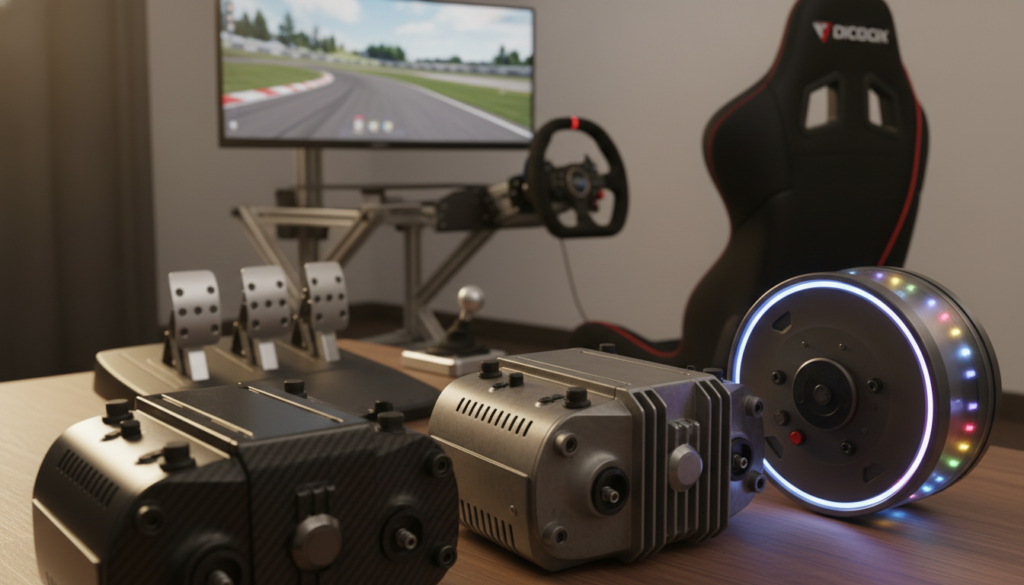
For those new to direct drive or on a budget, there are great options. Moza and Simagic offer affordable yet effective wheels. For example, the Moza R5 is a favorite for beginners, offering a solid direct drive experience at a good price.
These entry-level wheels are a big step up from traditional wheels. They provide better force feedback and last longer. They might not have all the features of more expensive wheels, but they’re a great starting point.
Mid-Range Direct Drive Options ($700-$1,200)
The mid-range offers a good balance of price and performance. Wheels like the Fanatec CSL Elite have higher torque and better force feedback.
These wheels are perfect for serious sim racers. They offer quality without the high cost. They often come with adjustable settings and work with many games and simulators.
Premium Direct Drive Options ($1,200+)
Premium direct drive wheels are for the most dedicated sim racers. Brands like Fanatec and Moza have top models with advanced features. These include high-torque motors and customizable feedback.
These premium options provide the best realism and performance. They come with accessories and software for a complete sim racing experience. They’re for those who want the best.
In conclusion, 2026 has a wide range of direct drive wheels for every budget. Whether you’re starting or upgrading, there’s a wheel for you.
Gear Drive in 2026: The Few Remaining Use Cases
As technology evolves, understanding the differences in direct drive versus gear drive will remain essential for sim racing enthusiasts.
In 2026, sim racing is moving towards direct drive. Yet, gear drive still has its spots. It’s not as popular as direct drive, but it’s still useful in certain situations.
Console Compatibility Considerations
Gear drive wheels are great for console gamers. They work well with PlayStation and Xbox. This makes them a good choice for those who prefer gaming on consoles over PC.
Ultra-Budget Constraints
For those with very little money, gear drive wheels are a budget-friendly option. They might not be as good as direct drive, but they still offer a good gaming experience. This is especially true for those who can’t afford the more expensive tech.
Casual Gaming Scenarios
Gear drive wheels are perfect for casual gamers. They don’t need the high precision and realism of direct drive. For those who play games now and then, a gear drive wheel is a cost-effective choice.
| Use Case | Description | Recommended For |
|---|---|---|
| Console Gaming | Gear drive wheels compatible with consoles like PS5 and Xbox Series X | Gamers using consoles |
| Ultra-Budget | Affordable gear drive options for those on a tight budget | Beginners or those on a budget |
| Casual Gaming | Gear drive wheels for occasional gaming | Casual gamers |
In summary, while direct drive is the trend in sim racing, gear drive still has its uses. It’s good for console gaming, budget-friendly, and casual gaming. Gear drive wheels are a solid option for those who don’t need or can’t afford direct drive’s advanced features.
The Maintenance Factor: Longevity Comparison
Choosing between gear drive and direct drive systems affects your sim racing setup’s maintenance and life span. If you’re buying your first sim racing gear in 2026, knowing these differences is key.
Gear Drive Failure Points and Wear Issues
Gear drive systems wear out quickly because of their mechanical parts. Over time, gears can break down, causing backlash and a less smooth driving feel. Common issues include worn gears, belt slippage, and motor stress.
Direct Drive Durability Advantages
Direct drive systems, however, are much more durable. They have fewer parts, which means less chance of mechanical failure. This technology is stronger and more reliable, cutting down on the need for constant upkeep.
| Feature | Gear Drive | Direct Drive |
|---|---|---|
| Moving Parts | Multiple | Fewer |
| Maintenance Needs | Frequent | Less Frequent |
| Failure Points | Gears, Belts | Minimal |
Long-Term Reliability Considerations
Looking at long-term reliability, direct drive systems are clear winners. They are simpler and more solid. Gear drive systems need more upkeep and might need more parts replaced. But direct drive tech gives a steady and consistent performance over the years.
In summary, direct drive systems are more reliable and durable for sim racing fans. They are a great choice for those wanting a long-lasting sim racing setup.
Real-World Performance: Lap Time Impact Analysis
Lap times are key for sim racers, and direct drive tech is changing the game. It offers a more real and engaging drive. This lets racers go faster and reach new speeds.
Consistency Improvements with Direct Drive
Direct drive systems make racing more consistent. They give a precise steering feel. This helps drivers stay on their best racing line, leading to more consistent lap times.
This consistency is vital for sim racers. It lets them refine their driving and car setup better.
Feedback Detail and Driver Response
Direct drive systems give detailed feedback. This lets drivers make more informed decisions about their driving. They can brake later, turn better, and accelerate sooner.
This all adds up to faster lap times.
Professional Driver Testimonials
Many pro sim racers have seen big improvements with direct drive. They say it lets them push their driving to the next level. The feedback and precision are key.
Switching to direct drive is more than just a hardware upgrade. It unlocks your full potential on the track. It’s a game-changer for anyone serious about sim racing.
Common Misconceptions About Direct Drive
Many sim racers have wrong ideas about direct drive technology. This can stop them from buying it. Direct drive systems are popular because they perform better and feel more real. But, there are myths about them.
“Too Powerful for Beginners”
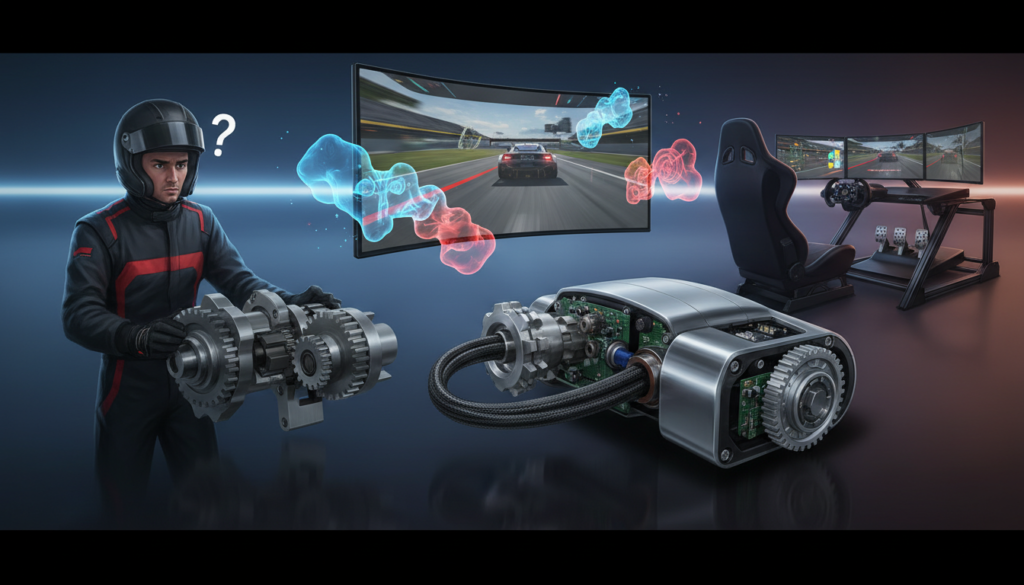
Some think direct drive wheels are too strong for newbies. But, they can adjust the force feedback. This lets beginners start with a lower setting and get used to it.
“Requires Professional Setup”
Many believe direct drive needs a pro to set up. But, most modern wheels are easy to use. Brands like Moza and Fanatec offer guides and support to help beginners.
“Only for Hardcore Sim Racers”
Some think direct drive is only for serious racers. But, it’s great for anyone who wants a better racing feel. It makes racing more fun and real.
In short, direct drive isn’t just for pros. It’s for anyone who wants a better racing experience. Knowing the truth can help sim racers make better choices.
Building Your Complete Sim Racing Ecosystem
To dive into sim racing, you need a full setup around your direct drive wheel. This means picking out gear that makes your racing better.
Matching Pedals to Your Direct Drive Base
Finding the right pedals is key for a real sim racing feel. Look at how well they work with your wheel, if you can adjust them, and what kind they are. Load cell pedals give you exact brake control. Hydraulic pedals make it feel more real.
Here’s a look at some popular pedals:
| Pedal Type | Compatibility | Adjustability | Price Range |
|---|---|---|---|
| Load Cell | Most direct drive systems | High | $200-$500 |
| Hydraulic | Specific high-end systems | Medium | $500-$1,000 |
Shifter and Handbrake Considerations
A good shifter and handbrake make sim racing better. Think about what kind of gearbox you want. Sequential shifters are great for most races. H-pattern shifters are better for certain cars.
Button Boxes and Additional Controls
Button boxes and extra controls let you make your setup your own. You can add pit lane controls and more. Make sure your controls are easy to reach and don’t get in the way of your racing.
Choosing and putting together these parts makes a top-notch sim racing setup. It boosts your racing skills and fun.
Future-Proofing Your Investment
In the fast-changing world of sim racing, it’s key to future-proof your gear. New tech and advanced games mean your equipment must stay current.
Compatibility with Next-Gen Racing Titles
When picking a sim racing wheel, think about its future with new games. Direct drive systems often fit better with new games, thanks to firmware updates. Moza and Fanatec, for example, keep their products up-to-date with regular updates.
Many racers prefer direct drive versus gear drive due to the improved responsiveness and overall performance.
Upgrade Paths Within Ecosystems
It’s also important to consider upgrade options within your chosen ecosystem. Some makers let you boost your system without buying a whole new setup. For instance, you can start with a basic direct drive base and later get a more powerful one from the same brand.
- Check for compatibility with new game titles
- Look for systems with clear upgrade paths
- Consider the resale value of your equipment
Resale Value Considerations
Don’t forget about resale value when future-proofing. High-quality direct drive systems usually hold their value better than gear-driven ones. Brands like Moza and Fanatec have strong resale markets, making it simpler to sell or upgrade your gear later.
The Engineering Behind the Lap Time
Getting the perfect lap time in sim racing depends a lot on your equipment’s engineering. The tech behind your sim racing wheel is key to your track performance.
How Better Feedback Translates to Better Racing
Better feedback from your sim racing wheel means better racing. A direct drive system gives you precise feedback on the track, your tires, and the car. This helps you make smarter driving choices, like when to brake or how to turn.
A study showed that drivers with direct drive wheels kept their lap times consistent. This is crucial for winning in sim racing.
The Physics of Force Feedback and Driver Input
Force feedback simulates the forces you’d feel on a real track. Direct drive tech does this well, making driving feel more real. The feedback system works with your actions, creating a smooth connection with the virtual car.
Why Technical Superiority Matters in Practice
In real racing, direct drive systems outperform gear drive systems. Here’s why:
| Feature | Gear Drive | Direct Drive |
|---|---|---|
| Force Feedback | Limited detail, prone to backlash | High fidelity, precise simulation |
| Response Time | Higher latency | Lower latency, faster response |
| Torque Output | Lower torque | Higher torque, more realistic feel |
Direct drive systems offer a more immersive sim racing experience. This leads to faster lap times.
Conclusion: Why Your First Purchase Should Be Your Last
Choosing the right sim racing wheel for your first purchase is key. It sets the stage for your sim racing journey. Direct drive technology offers better force feedback, lower latency, and more torque than gear drive.
Going for a direct drive wheel means you might not need to buy another one for a while. These systems last longer and are more durable. This saves you money and avoids the hassle of frequent upgrades.
Choosing direct drive is more than just a purchase. It’s an investment in a top-notch sim racing experience. As sim racing technology advances, a direct drive wheel will keep you ahead of the game.
FAQ
What is the main difference between direct drive and gear drive sim racing wheels?
How does direct drive technology improve sim racing performance?
Are direct drive wheels more expensive than gear drive wheels?
What are the maintenance requirements for direct drive versus gear drive wheels?
Can I use a gear drive wheel for console gaming, and is it a good choice?
How do I choose the right pedals and other peripherals for my direct drive wheel?
Will a direct drive wheel be too powerful for a beginner sim racer?
What are the benefits of investing in a high-quality sim racing rig?
Ultimately, the choice between direct drive versus gear drive will impact your racing journey significantly.
When choosing, think about your needs regarding direct drive versus gear drive to ensure you find the right fit for your racing style.
In conclusion, as you make your choice, remember that direct drive versus gear drive offers unique benefits suited to different racers.