
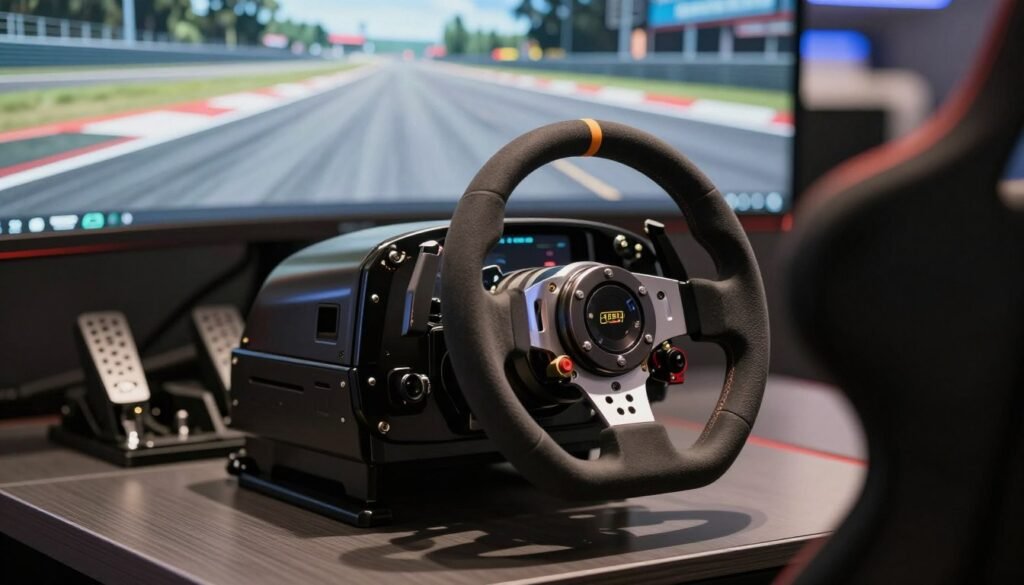
“Technology is best when it brings people together and creates meaningful experiences,” said Matthew Stephens. This is especially true in sim racing force feedback technology.
Imagine driving a high-performance race car where you feel every bump and turn. This is the magic of force feedback. It turns your racing simulation into a real experience.
Force feedback isn’t just about moving your racing wheel. It’s about feeling connected to the virtual racing world. 8Nm of force is the perfect balance. It lets you feel the racing dynamics without overwhelming your hands.
Key Takeaways
- Force feedback provides realistic racing sensations
- 8Nm represents an optimal torque strength for sim racing
- Tactile response technology bridges virtual and physical experiences
- High-quality force feedback enhances driving precision
- Racing wheels with 8Nm offer professional-level performance
What is Force Feedback and Why Does It Matter?
Racing simulation has changed a lot. Gone are the days of just pushing buttons and watching screens. Force feedback technology has made virtual driving feel real, turning games into an adventure for your senses.
Force feedback is a complex system that makes digital racing feel like the real thing. It’s not just about feeling vibrations. It creates detailed physical sensations that tell you how your virtual car is doing.
The Science Behind Tactile Response in Gaming
Your brain is amazing at processing sensory feedback. Force feedback uses this to give you physical resistance and movement. This makes you feel like you’re really driving.
- Develop muscle memory for precise driving techniques
- Understand vehicle dynamics through physical sensations
- Improve reaction times based on realistic input
“Force feedback turns simulation into an authentic driving experience” – Racing Technology Magazine
How Force Feedback Transforms Your Racing Experience
Imagine feeling every detail of your car’s interaction with the road. With force feedback, you can feel when your tires grip the road, sense the car’s weight shift, and predict handling challenges. It makes sim racing feel like the real thing.
Both pros and hobbyists get better at racing with this tech. They learn more about their car’s behavior through direct feedback. This helps them improve their skills and understand their car better.
Breaking Down the Newton-Meter: A Simple Explanation

Understanding force feedback starts with grasping the Newton-meter (Nm). It’s key in racing wheel tech. It shows how much power your wheel can turn.
When you feel force through your steering wheel, the Newton-meter shows how strong it is.
Let’s break down what a Newton-meter really means:
- One Newton-meter is the force needed to move one kilogram of mass.
- It measures the twisting power of your racing wheel.
- The higher the Nm rating, the more realistic your force feedback.
Think of turning a stubborn door handle or opening a tight jar lid. That’s like the force feedback in sim racing. High-quality racing wheels make your gaming feel real and exciting.
Racing fans know force feedback isn’t just random vibes. It’s a detailed simulation of road conditions and car dynamics. An 8Nm wheel, for example, really shows what’s happening under your virtual car’s tires.
“Force feedback turns simulation into reality, one Newton-meter at a time.”
How Force Feedback Works in Racing Wheels
Racing wheel feedback turns sim racing into a real-life experience. It’s not just about pressing buttons and turning a wheel. It’s a mix of digital signals, motors, and engineering that makes virtual racing feel real.
Modern racing wheels use advanced systems to turn digital info into real feelings. They aim to make you feel every detail of the virtual racing world through your hands.
The Role of Motors in Creating Realistic Sensations
Racing wheel feedback depends on special motors for powerful and precise movements. There are three main types of motors in sim racing wheels:
- Belt-driven motors: Lightweight and affordable
- Gear-driven motors: More durable with consistent performance
- Direct-drive motors: Highest fidelity and most powerful feedback
Each motor type has its own way of delivering motion sensation. Direct-drive motors, for example, connect directly to the wheel shaft. They offer the most authentic racing wheel feedback.
Translating Digital Signals into Physical Forces
Turning digital data into physical force happens fast. Racing simulation software uses complex physics models to calculate things like:
- Tire grip dynamics
- Road surface characteristics
- Vehicle suspension interactions
These calculations are sent to the wheel’s control board hundreds of times per second. This creates a smooth and responsive racing experience that feels very real.
| Motor Type | Feedback Quality | Price Range |
|---|---|---|
| Belt-Driven | Good | $150-$300 |
| Gear-Driven | Better | $300-$500 |
| Direct-Drive | Best | $500-$1500 |
The Evolution of Haptic Technology in Sim Racing
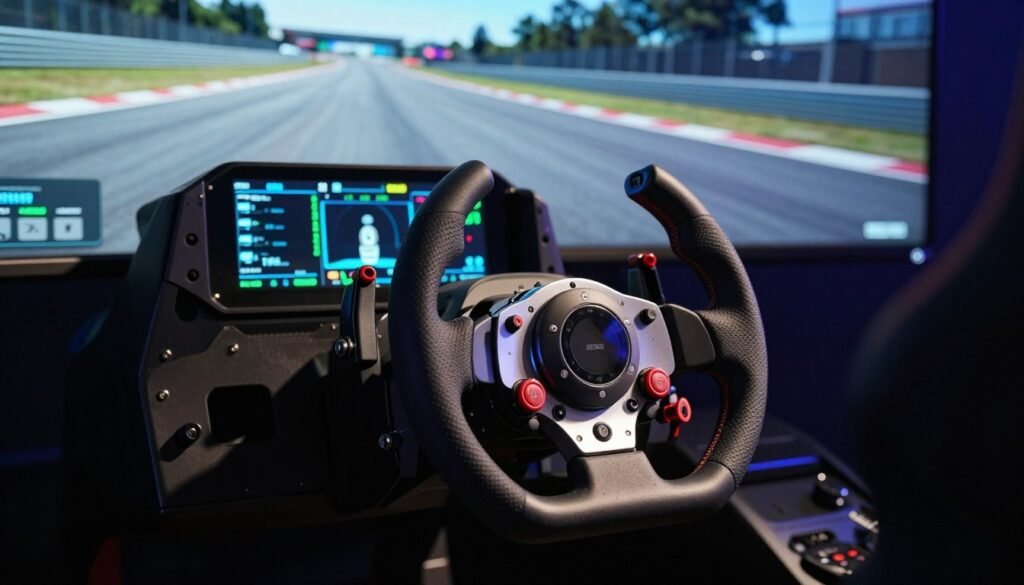
Racing simulation technology has seen a huge change over the years. The story of haptic technology in sim racing is one of innovation and immersive controls. It has changed the way we play games.
In the beginning, racing wheels didn’t give much feedback. They used simple vibration motors that didn’t really feel like real driving. Fans of racing games had to settle for basic touch responses that didn’t feel real.
- First-generation controllers used basic rumble mechanisms
- Early PC wheels generated 1-2 Newton-meters of force
- Limited ability to simulate realistic driving dynamics
Big changes came with new technology. Moving from gear-driven to belt-driven, and then to direct-drive motors, was a huge step forward. These changes made simulations much more realistic.
“Each generation of force feedback brought racers closer to authentic driving sensations.” – Racing Technology Magazine
Important moments in sim racing technology include:
| Era | Technology | Force Feedback Capabilities |
|---|---|---|
| 1990s | Gear-Driven Systems | 1-2 Nm |
| 2000s | Belt-Driven Motors | 3-5 Nm |
| 2010s | Direct-Drive Technology | 8-15 Nm |
Today, we have controls that feel incredibly real. You can feel the road, the weight shifts, and the steering feels just right. The 8Nm force feedback is a big deal. It makes top-notch technology available to all sim racers.
Why 8Nm Has Become the Sweet Spot for Sim Racers
Racing simulation fans have found a game-changing spot in force feedback tech. The 8Nm racing wheel feedback is a perfect mix of performance, realism, and comfort. It has caught the eye of serious sim racers all over the world.
Finding the right force feedback strength can change your racing game. At 8Nm, you get a deeper level of immersion than entry-level wheels can offer. This power level brings several key benefits:
- Enhanced sensory detail that reveals subtle car dynamics
- Realistic tire grip and weight transfer sensations
- Improved driving precision without extreme physical strain
Enhanced Realism Without Breaking the Bank
Professional-grade force feedback is now affordable. The 8Nm sweet spot gives you incredibly realistic sensations. You’ll feel every detail of the road, from small bumps to big weight shifts during corners.
The Perfect Balance Between Power and Comfort
Sim racing is about lasting as much as it is intense. An 8Nm racing wheel offers enough resistance to feel real but doesn’t cause too much fatigue. It’s the perfect mix for racers who want a true-to-life driving experience without getting tired after a few laps.
The 8Nm force feedback is your gateway to professional-level sim racing without the professional-level price tag.
Comparing Force Feedback Strength Across Different Tiers
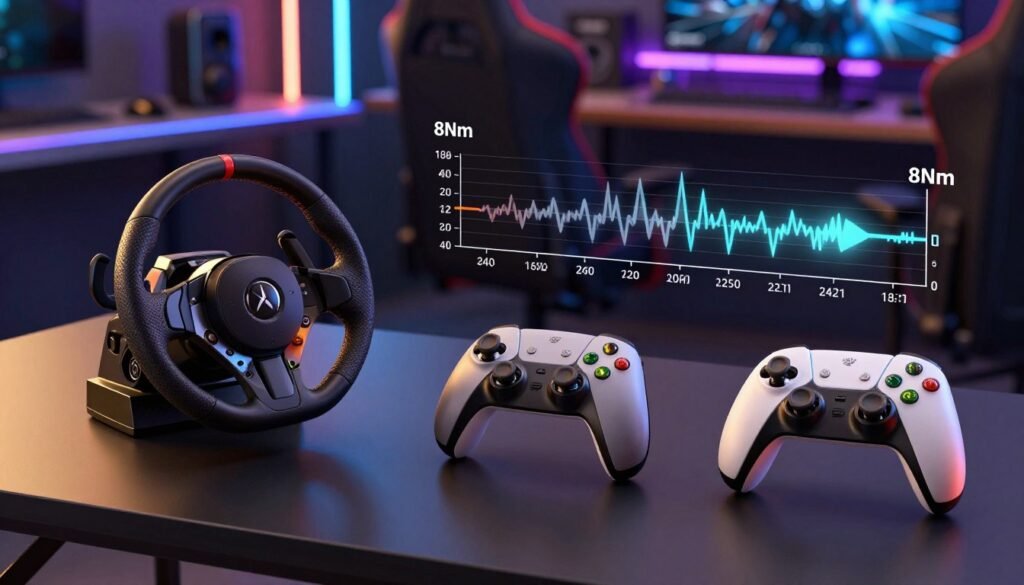
When looking at gaming peripherals for sim racing, knowing about force feedback strength is key. Not all racing wheels are the same. The Newton-meter (Nm) rating greatly affects how you feel in your virtual racing world.
Let’s look at the force feedback tiers that show how good a sim racing experience is:
- Casual Tier (3-8 Nm): Great for beginners and those on a tight budget
- Serious/Sweet Spot Tier (8-12 Nm): Best for serious sim racers
- Hardcore/Pro Tier (18-25+ Nm): For top-level simulation
Each tier gives a different feel of the game, fitting different skill levels and budgets. The casual tier gives basic feedback. The hardcore tier offers extreme realism, which can be tough on your body.
| Tier | Nm Range | Performance Level | Recommended For |
|---|---|---|---|
| Casual | 3-8 Nm | Entry-Level | Beginners |
| Serious | 8-12 Nm | Competitive | Enthusiasts |
| Hardcore | 18-25+ Nm | Professional | Simulation Experts |
“The right force feedback can transform your racing experience from mundane to magnificent.”
Your choice depends on your racing goals, budget, and how serious you are. The 8Nm sweet spot is a good mix of deep immersion and easy access in gaming peripherals.
What You’ll Actually Feel with 8Nm of Force
Exploring high-end racing wheels opens up a new world of touch. An 8Nm force feedback wheel doesn’t just move. It shares the fine details of your virtual drive in ways you’ve never felt.
Tire Grip and Weight Transfer Sensations
When you push your racing wheel to its limits, you’ll feel amazing sensations. The vibration feedback connects you directly to the car’s movements:
- As you approach a corner, the wheel gradually lightens, signaling the front tires nearing their grip limit
- A sudden snap indicates the moment you transition into understeer
- Weight transfer becomes palpable through subtle resistance changes
These subtle feelings help you understand your car’s behavior. They do so without overwhelming your ability to make precise corrections.
Road Texture and Surface Details
The 8Nm force feedback wheel changes your racing experience. It reveals surface characteristics you’ve never noticed before:
- Smooth asphalt feels different from rough concrete
- Painted curbs generate distinct vibration patterns
- Gravel runoff areas create unique resistance sensations
You’ll find that track surfaces are more than just visual. They become a sensory experience you can feel through your hands. This makes every racing session more immersive and realistic.
Who Should Choose an 8Nm Racing Wheel?
Ready to boost your sim racing game? An 8Nm racing wheel could be just what you need. It’s perfect for those serious about gaming and looking to improve their skills. These wheels strike a great balance between top-notch performance and being easy to use for sim racers.
Who should consider an 8Nm racing wheel? Here are some types of gamers:
- Sim racers who have moved past basic gear
- Gamers aiming to cut down their lap times
- Competitors in online racing
- Enthusiasts who spend lots of time in their sim rigs
Feedback from an 8Nm racing wheel is spot-on for sim fans. It offers real-life feels without the high cost of pro gear. You’ll get detailed feedback that lets you feel:
- Small changes in tire grip
- Different road textures
- Complex car movements
Best of all, an 8Nm racing wheel fits well with most sim rigs and desks. You don’t need special gear or strong mounts. It’s a smart pick for gamers wanting top performance without spending too much.
The 8Nm racing wheel: Where serious simulation meets affordable excellence.
The Long-Session Advantage: Stamina and Fatigue Considerations
Sim racing is more than a game; it’s an immersive experience that needs physical endurance. When picking a racing wheel, it’s key to understand how sensory feedback affects your stamina for long sessions.
Racing fans often forget the importance of comfort during long playtimes. An 8Nm force feedback wheel finds the right balance. It offers realistic feedback without being too hard on your body.
Preventing Racing Wheel Fatigue
Too much force can turn a fun race into a tiring challenge. Here’s why it’s important to keep things in check:
- Less muscle strain during long races
- Consistent performance without getting tired
- Keeping precise control during long races
“The best racing wheel isn’t about maximum force, but optimal feedback” – Professional Sim Racing Experts
Understanding Physical Limits
Professional drivers use power steering for a reason. Your sim racing wheel should match real-world driving without stressing your body too much. An 8Nm wheel gives you the right feedback while saving your energy.
| Force Feedback Level | Comfort Rating | Performance Impact |
|---|---|---|
| 4Nm | Low | Limited Realism |
| 8Nm | High | Optimal Realism |
| 18Nm+ | Very Low | Potential Performance Decline |
Choosing an 8Nm wheel means you’re choosing sustainable racing performance. It keeps you comfortable and focused during long racing sessions.
Making the Jump from Entry-Level to 8Nm
Switching to an 8Nm racing wheel is a big step up in sim racing. The controls become more immersive, changing how you play. You’ll feel a new level of force, making your games feel more real.
Going from a basic wheel to an 8Nm one can be tough at first. It takes time for your body and mind to get used to the stronger feedback. Here are some tips to help you:
- Start with lower force settings
- Slowly increase the intensity as you get used to it
- Keep practicing to build muscle memory
- Try out different calibration settings
The better feedback makes you a better racer. You’ll understand your virtual car better. Feeling the tires, weight shifts, and textures becomes very detailed with an 8Nm wheel.
Most racers see big improvements in a few hours of practice. You’ll catch slides easier, brake better, and stay on course. The better force feedback makes your racing more fun and helps you get better.
Pro tip: Take your time adjusting to the new wheel. The learning curve is part of the excitement of upgrading your sim racing equipment.
Conclusion
Choosing an 8Nm force feedback racing wheel is a big step for serious sim racing fans. It moves you from basic gear to top-notch simulators. This tech makes your virtual racing feel real, changing how you enjoy driving.
With 8Nm force feedback, you get to feel every detail of the race. You’ll notice road textures and weight shifts. This realism boosts your racing skills and fun.
Buying an 8Nm wheel is more than just getting better performance. It’s about setting up a comfy, lasting racing spot. It balances strong feedback with design for long, fatigue-free sessions.
When looking at new racing wheels, 8Nm is the perfect mix of tech, performance, and price. Your dedication to sim racing deserves the best gear. It should challenge and improve your skills.