Physical Address
304 North Cardinal St.
Dorchester Center, MA 02124
Physical Address
304 North Cardinal St.
Dorchester Center, MA 02124

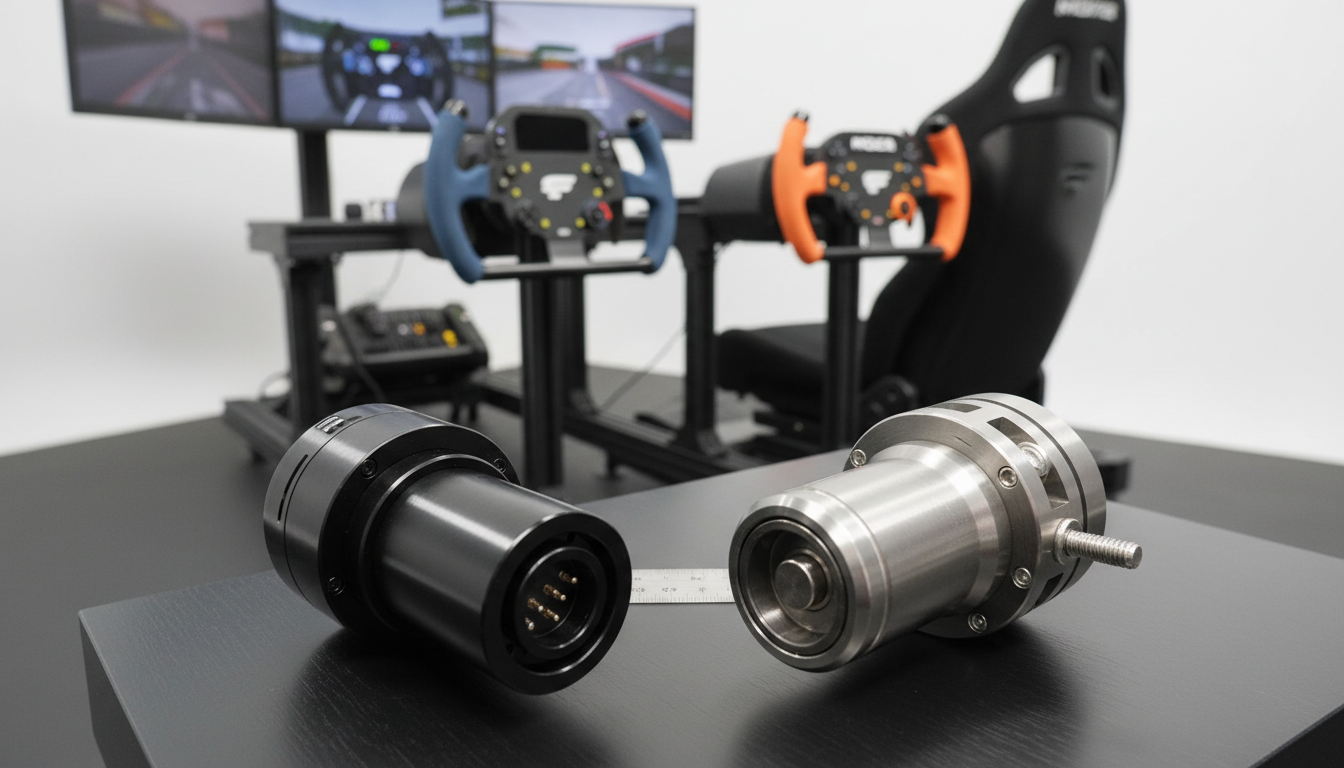
Discover the reliability difference between Fanatec QR2 and Moza Quick Release. Learn which racing wheel quick release is best for you and your sim racing needs.
What if the most critical part of your high-end sim racing setup isn’t the wheel base or the pedals, but the tiny connector that holds it all together?
When you invest in a powerful direct drive wheel, every component matters. The mechanism that connects your steering wheel to the base is far more than a simple attachment point. It is the vital link that transmits every subtle detail of the force feedback directly to your hands.
Any flex or play in this connection can seriously dull your racing experience. You lose the precise feel of the track, which is essential for competitive sim racers. That’s why the debate over which system offers superior performance is so important.
In this detailed comparison, we put two of the most popular systems under the microscope. We’ll look at real-world durability, ease of use, and how well each one lives up to its promise of a rock-solid connection. Our goal is to give you the clear facts you need to decide which system is the right fit for your specific setup and budget.
The revolution in sim racing technology has brought professional-grade equipment within reach of everyday enthusiasts like never before. Just two years ago, a direct drive wheelbase under $1000 seemed impossible. Today, multiple brands compete fiercely in this space.
Direct drive systems have transformed the sim racing experience. They eliminate the belt or gear mechanisms found in older wheels. This gives you unfiltered force feedback that connects you directly to the virtual road.
Every bump, curb, and loss of traction translates instantly to your hands. There’s no mechanical delay or dampening. The level of detail and precision is remarkable.
Understanding the core differences helps appreciate why the connection system matters so much:
| Feature | Direct Drive Systems | Traditional Systems |
|---|---|---|
| Force Feedback | Instant, unfiltered response | Delayed, dampened feel |
| Torque Delivery | Smooth, consistent power | Gear-driven steps |
| Detail Level | High-fidelity road feel | Basic vibration feedback |
Your personal racing passion determines what system works best. Different disciplines benefit from specific torque levels and feedback characteristics. Formula racing, rally, GT cars, and drifting all have unique requirements.
Consider your budget, space constraints, and platform preference. These factors influence which direct drive system will serve you best. Your entire setup matters when making this decision.
The good news is that quality options exist at various price points. This makes professional-grade racing accessible to more enthusiasts than ever before.
Choosing between sim racing brands often comes down to understanding their unique histories and technological approaches. Both companies bring distinct strengths to the table that appeal to different types of racers.
One manufacturer has been a household name for years, building premium products for enthusiasts and professional sim racers. Their extensive development time has created a refined ecosystem.
The other brand entered the scene more recently but quickly earned respect. They release innovative products at competitive prices, challenging established players with impressive build quality.
When it comes to force feedback, each company takes a different approach. The established brand uses patented technologies that optimize motor efficiency. This delivers incredibly detailed feedback that sets industry benchmarks.
The newer competitor introduced rumble technology in their recent drive wheels. This creates unique vibrations that bring track surfaces to life in distinctive ways.
| Feature | Established Brand | Newer Competitor |
|---|---|---|
| Market Presence | Long-standing reputation | Rapidly growing respect |
| Technology Focus | Refined motor efficiency | Innovative sensation creation |
| Product Strategy | Ecosystem compatibility | Competitive value pricing |
So, is the newer brand as good as the established one? It depends on your priorities. The veteran offers extensive compatibility and years of refinement. The challenger delivers cutting-edge technology at excellent value. Both create reliable products that serve sim racers well.
Behind every immersive racing experience is a complex interplay of torque delivery, thermal management, and responsive technology. These technical aspects directly impact how your equipment handles stress over time.
Understanding torque specifications is crucial for long-term performance. The constant torque rating indicates what your system can sustain during extended sessions.
Some wheelbases deliver their maximum force consistently, while others specify peak ratings. This distinction matters because consistent power delivery creates smoother mechanical stress on your connection system.
| Specification | Constant Torque System | Peak Torque System |
|---|---|---|
| Torque Delivery | Sustained full power | Maximum burst capability |
| Session Performance | Consistent throughout | May vary with heat |
| Mechanical Stress | Predictable, even wear | Potential for sharp peaks |
Thermal management protects your investment. Overheating can cause metal expansion, affecting connection tolerances. Both manufacturers employ smart cooling solutions.
One system uses large cooling fins for passive heat dissipation. Another relies on its aluminum chassis to radiate heat effectively. Both approaches maintain optimal operating temperatures.
“Consistent thermal performance ensures your mechanical connections remain precise race after race.”
The small metal connector that joins your steering wheel to the base plays a surprisingly large role in your racing experience. Both systems have undergone significant development to create rock-solid connections that withstand intense force feedback.
One manufacturer completely redesigned their connection system to address previous concerns. The new design features precision-machined metal components that create an incredibly tight fit. You’ll notice the solid feel immediately when attaching your steering wheel.
The other brand’s system has been praised since their earliest wheel bases. Their locking mechanism distributes force evenly around the entire circumference. This prevents wear on any single side of the connection.
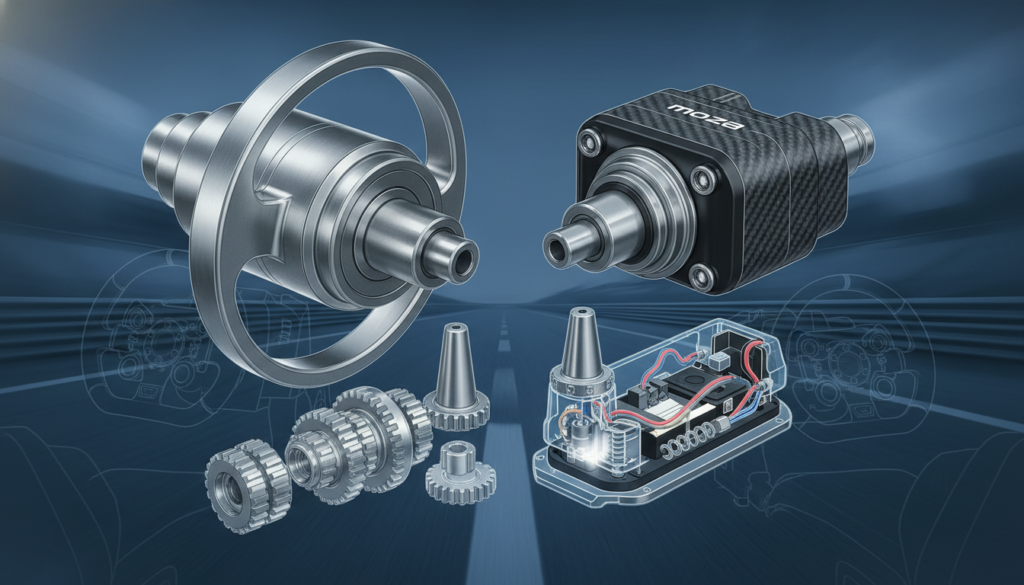
Community feedback reveals both systems maintain their performance over thousands of uses. The clamping mechanisms show minimal degradation even after extensive sim racing sessions. You won’t experience the gradual loosening common with older designs.
Both systems use a simple pull-and-twist action for wheel changes. This intuitive operation makes switching between different wheels quick and effortless. Whether you prefer formula cars or GT racing, the process remains equally smooth.
When comparing long-term performance, both connections excel. Your decision ultimately comes down to which ecosystem better suits your setup. The reliability of either choice will serve you well through countless racing adventures.
Understanding the true cost of ownership requires looking beyond the initial sticker price. Many enthusiasts ask whether one brand is more expensive than the other, but the answer isn’t straightforward.
Tax considerations dramatically affect your final cost. One company includes sales tax in their advertised prices, while the other shows pre-tax figures. This creates an illusion of larger price gaps than actually exist.
When you compare mid-range products side by side, the apparent difference shrinks significantly after tax adjustments. A $589 wheelbase actually costs closer to $707 with typical sales tax, narrowing the gap with competitors.
This pricing strategy affects how consumers perceive value. The brand with inclusive pricing appears more expensive initially but offers transparency. The other requires mental math to understand your actual investment.
| Price Factor | Tax-Inclusive Brand | Tax-Exclusive Brand |
|---|---|---|
| Advertised Price | Final cost shown | Base price before taxes |
| Entry-Level Option | $499.99 when available | Similar bundle at $770 |
| Mid-Range Value | Console compatibility included | PC-focused performance |
Your racing setup benefits from different value propositions. One ecosystem offers console support, which justifies a higher price for multi-platform users. The other delivers exceptional PC performance at competitive rates.
Bundle deals reveal how close these products actually are in total cost. Complete packages from both brands often fall within $20-30 of each other. Your decision then comes down to preferred features rather than pure price.
Ultimately, value depends on your specific needs. Console racers find better value in one system, while PC enthusiasts may prefer the other’s performance-focused approach.
Beyond pure performance, the physical design and construction quality of your wheel base contribute to daily satisfaction. You’ll interact with this equipment every time you race, making its appearance and feel important factors.
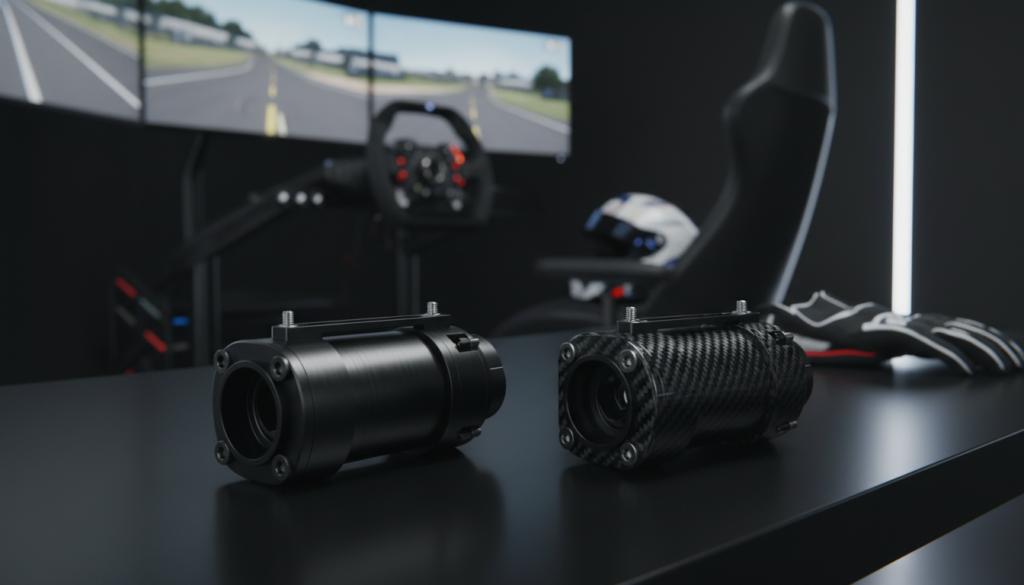
Both manufacturers use aluminum extensively for structural integrity and heat management. The fanatec csl model incorporates plastic elements at the front and rear, while the competing brand limits plastic primarily to the back panel.
Cooling systems showcase different approaches. The fanatec clubsport features larger side fins for superior heat dissipation. The r12 maintains a compact design with smaller but effective cooling vents.
Mounting options affect your setup flexibility. One system supplies t-nuts for hard mounting, while the other uses bottom mounting compatible with most racing cockpits. Both offer optional table clamps for versatile installation.
The clubsport drive presents an aggressive, angular design that appeals to performance-focused racers. Its prominent cooling fins create a purposeful high-performance look.
In contrast, the competing wheelbases feature sleek, minimalist aesthetics. The compact design keeps your setup looking clean and professional while delivering impressive power.
Your choice depends on personal preference. Some prefer equipment that looks as serious as it performs. Others value understated elegance in their racing space.
Your racing platform choice can determine which equipment ecosystem you’ll invest in for years to come. This decision affects your entire setup and future upgrade path.
Platform compatibility is a critical factor for every sim racer. One brand focuses exclusively on PC racing, while the other offers multi-platform support.
The table below shows how each system handles different gaming platforms:
| Platform | PC-Focused System | Multi-Platform System |
|---|---|---|
| PC Support | Full compatibility | Full compatibility |
| Xbox Series X|S | Not supported | Standard with compatible wheels |
| PlayStation 5 | Not supported | Available with premium model |
Can you mix equipment across brands? While steering wheels are locked to their respective bases, you have flexibility with peripherals. Both systems allow third-party pedals, shifters, and handbrakes.
“Professional racers value consistency across their equipment, which often guides their ecosystem choice.”
Do professionals use the established brand’s equipment? Yes, their high-end DD1 and DD2 bases are common in competitive racing. The newer brand is gaining respect for its excellent value and PC optimization.
Your passion for racing should guide your decision. PC-only racers get outstanding performance from specialized systems. Multi-platform enthusiasts benefit from broader compatibility. Learn more about making the right choice for your.
After thoroughly examining both connection systems, the most important finding is that either choice will serve you exceptionally well in your racing adventures. Both deliver exceptional reliability with minimal flex, making this comparison more about personal preference than performance gaps.
Your decision ultimately comes down to your specific needs as a racer. If console compatibility matters for your setup, the established Fanatec ecosystem offers proven support. For PC-focused enthusiasts seeking maximum value, Moza provides cutting-edge technology at competitive prices.
Consider your complete vision for your sim racing setups. Which steering wheels appeal to your passion? What wheelbase fits your budget? These factors matter more than any single specification when building your ideal direct drive system.
Neither choice is wrong—both manufacturers produce quality equipment that enhances your race experience. Trust that whichever system you choose will support your racing journey for years to come.

[…] 2026, Fanatec and Moza have stepped up their game. They offer cool Features like Quick Release and lots of Wheel […]